Gabriel Chevallier - Fear
Здесь есть возможность читать онлайн «Gabriel Chevallier - Fear» весь текст электронной книги совершенно бесплатно (целиком полную версию без сокращений). В некоторых случаях можно слушать аудио, скачать через торрент в формате fb2 и присутствует краткое содержание. Город: New York, Год выпуска: 2014, Издательство: New York Review Books, Жанр: Классическая проза, на английском языке. Описание произведения, (предисловие) а так же отзывы посетителей доступны на портале библиотеки ЛибКат.
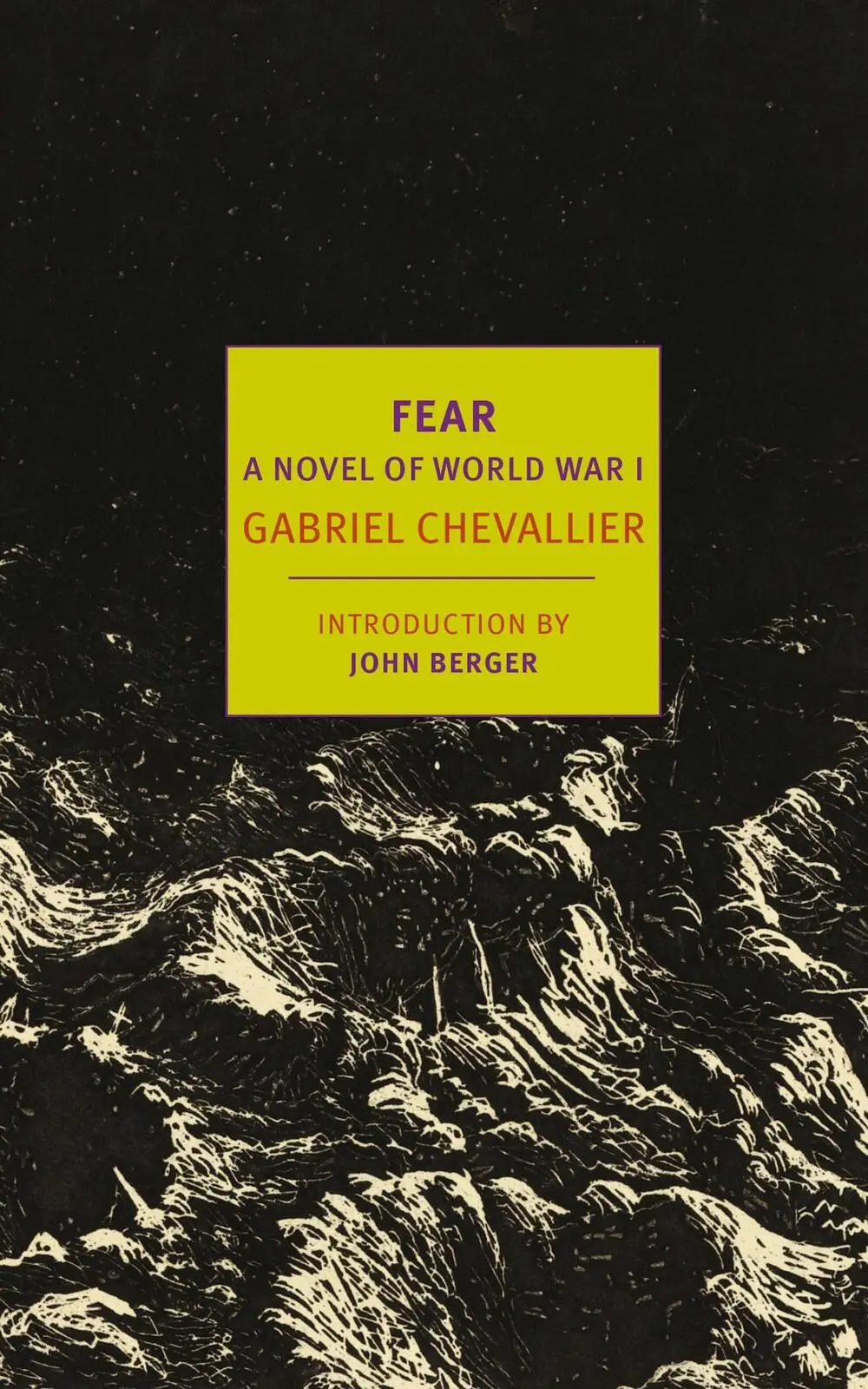
- Название:Fear
- Автор:
- Издательство:New York Review Books
- Жанр:
- Год:2014
- Город:New York
- ISBN:нет данных
- Рейтинг книги:3 / 5. Голосов: 1
-
Избранное:Добавить в избранное
- Отзывы:
-
Ваша оценка:
Fear: краткое содержание, описание и аннотация
Предлагаем к чтению аннотацию, описание, краткое содержание или предисловие (зависит от того, что написал сам автор книги «Fear»). Если вы не нашли необходимую информацию о книге — напишите в комментариях, мы постараемся отыскать её.
1915: Jean Dartemont heads off to the Great War, an eager conscript. The only thing he fears is missing the action. Soon, however, the vaunted “war to end all wars” seems like a war that will never end: whether mired in the trenches or going over the top, Jean finds himself caught in the midst of an unimaginable, unceasing slaughter. After he is wounded, he returns from the front to discover a world where no one knows or wants to know any of this. Both the public and the authorities go on talking about heroes — and sending more men to their graves. But Jean refuses to keep silent. He will speak the forbidden word. He will tell them about fear.
John Berger has called
“a book of the utmost urgency and relevance.” A literary masterpiece, it is also an essential and unforgettable reckoning with the terrible war that gave birth to a century of war.
Fear — читать онлайн бесплатно полную книгу (весь текст) целиком
Ниже представлен текст книги, разбитый по страницам. Система сохранения места последней прочитанной страницы, позволяет с удобством читать онлайн бесплатно книгу «Fear», без необходимости каждый раз заново искать на чём Вы остановились. Поставьте закладку, и сможете в любой момент перейти на страницу, на которой закончили чтение.
Интервал:
Закладка:
As for the infantry, it does its best to avoid disturbing such a peaceful and pleasantly rural sector. Any provocations won’t come from us, unless orders from the rear force us to be aggressive. Activity is limited to rigorous sentry duty, fairly relaxed in the daytime, more attentive at night. We have got used to this sector and all we want is to stay here.
Every two days, a cyclist goes down to get supplies in the village of Saint-Dié. The following day he tours the shelters with his packs like a travelling salesman, distributing shoelaces, pipes, mirrors, combs, soap, toothpaste, notepaper, postcards, tobacco, and jotting down new orders like a proper tradesman.
Each group sends a man laden with water bottles to the canteen and he comes back after a three-hour walk, with thirty or forty kilos of wine hanging from his belt and shoulders. These devoted comrades are usually drunkards and one can be sure that generous sampling en route has lightened their load. ‘Reckon we can hold out here all right!’ say the men.
My duties allow me considerable freedom. In the mornings I sleep in, after staying up late, and by the time I’ve finished washing in a bowl, breakfast arrives. In the afternoons I set off with Baboin. And in the evenings, back at battalion HQ, I work alongside the lieutenant drawing up a map of the sector, using our notes and measurements. Around eleven I take my cane, a revolver and a gas mask, and make a tour of the trenches to find out what’s happening and gather accounts of the day’s events. If any grenades are going off ahead of us or if there is machine-gunning (they use enfilade fire against some communication trenches), I wake up a comrade. If it’s a calm night — as it usually is — I walk alone. I go along the front lines, identifying myself to sentries who recognise my steps and my voice in the darkness, and exchange a few words with them. When I’m not in a hurry, I may stop and keep one of them company for a moment. Sitting on the fire-step, our heads above the parapet, we look out at the night, listen for sounds. I have discussions with the platoon leaders, who wait for me at agreed times. An hour later I wake up our company commandant, a primary school teacher who treats his men cordially and his staff with a hint of camaraderie: ‘Nothing to report, sir!’ ‘All quiet around the 3rd platoon?’ ‘Completely quiet, sir!’ When it rains, I heat up the last of the coffee on Baboin’s spirit lamp. I bid goodnight to the lookout who has his post ten metres from there, and I return to our shelter where my three comrades are snoring.
One night I woke with a start; someone was shaking me roughly. I groaned, eyes still shut. A voice quivering with rage said: ‘Jump to it, for christ’s sake!’
It was the voice of Beaucierge, the runner for the 1st platoon, a good lad, rough and ready, who did not usually speak to me like that.
‘What’s got into you?’ I demanded, crossly.
‘The Boche are at the front line… We’ve got to go and see what’s happening.’
What?… I understood: his voice wasn’t quivering with rage but with panic. Still befuddled by sleep, I got my kit together mechanically, in silence. Outside, the night air was cool on my forehead and eyelids. There were no sounds of fighting. Had the enemy already occupied the forward trench?
‘Where are these Boche?’
‘No one knows. We got to go and look.’
‘Who said we must go and look?’
‘The lieutenant.’
Dirty business! I remember the embankment in Artois. I slip some grenades in my pockets, tighten my chinstrap, cock my pistol which I keep in my hand… who’s going first?
‘You know the trenches better,’ claims Beaucierge.
Behind me I hear him sliding the bolt on his rifle, which he holds in one hand like they do in the colonial infantry.
‘What are you doing?’
‘Putting a round in the chamber.’
‘Oh no, old pal, I don’t want to get a bullet in my arse! In that case, you go in front…’
He prefers to remove the bullet. I move forward slowly, to give myself time to think: we have a choice of three routes to reach the front lines. I finally make up my mind:
‘We’ll take the covered trench.’
It’s an old underground trench, constructed by the Germans, and comes out by the shelter of the leader of the 2nd platoon. If we are at all uncertain we can use our torches to see what’s happening. We advance nervously, trying not to make a sound. The silence of the night is more terrifying than the sound of a grenade fight, which would at least tell us where the danger was. All of a sudden the underground trench opens up in front of us like a trapdoor. We go down a few steps, we lose sight of the sky which guided us, we descend into darkness. Holding one hand out in front of us, feeling the trench wall, we step forward one foot at a time, not putting any weight down until we are sure the ground is solid. It’s fifty metres to the first elbow in the trench, after that it descends straight ahead. It takes us an infinitely long time to cover this distance. All we can hear is our breathing and our heartbeats. Beaucierge (clumsy as ever, the dolt!) bangs into something with his rifle. We freeze in terror, and stay stock still for a minute, dreading the flashes of fire that may be about to pierce the blackness.
But now here we are at the curve… Further down, some sixty metres ahead, a faint light glimmers, and we can make out the murmur of voices. What voices? I stop my companion with my hand.
‘We’ll call out.’
‘What if it’s the Boche?’
‘Then we’ll know it. Better than walking straight into them.’
I call and the answer comes: ‘Who goes there?’
‘France!’
Soon the beam of my torch reveals a man who is one of ours. Phew!… We run up to him in relief. Down in the shelter, everyone is on the alert.
‘So what happened to the Boche?’
‘They’ve left again.’
We learn that three Germans jumped into our trench and attacked a lone sentry who, though taken by surprise, managed to shout the alarm. Luckily, not far to his right, Chassignole was still awake, and he is a man who doesn’t easily lose his nerve. Chassignole is the one who claims that the damp gets into grenades and half of them don’t work. After striking the exterior percussion cap he would hold the grenade up to his ear to make sure that the fuse was burning properly inside: a method of verification that could take your head off! If you pointed out his recklessness, he’d say: ‘You’ve got five seconds, plenty of time!’ So Chassignole started running at the Boches, throwing his famous grenades, his favourite weapon. The attackers took fright, jumped back over the parapet, and disappeared into the night.
The sentry is in a corner of the shelter, still dazed from a blow from a revolver butt that cut his head. We congratulate him for raising the alarm and not letting himself be taken prisoner. It’s agreed that the raid was well planned and could have succeeded, that the Germans had found the weak point in our positions. It seems likely that their patrols had been observing the movements of our reliefs for several nights. And we are careless: sentries make a noise and light cigarettes without any precautions. Always hiding doesn’t suit our temperament.
This was the first event to disturb the calm of the sector for a month. From now on, we will also patrol in front of our lines.
We have decided to celebrate the Fourteenth of July. The Republic has already given the troops one cigar and one orange each, and a bottle of sparkling wine for every four men, but we would hope for something a bit better in the way of festivities than this meagre generosity. The lieutenant had the idea of organising a fireworks display for that night, using flares; he had to abandon the idea of coloured flares in case it alerted the artillery. A conspicuous spot was chosen, in an abandoned trench, and the runners went to tell the platoons so that they could enjoy the show, and also keep on the alert in case the enemy reacted. In the end, it isn’t so much a display of patriotism as a means to break the monotony of our lives for a few short moments.
Читать дальшеИнтервал:
Закладка:
Похожие книги на «Fear»
Представляем Вашему вниманию похожие книги на «Fear» списком для выбора. Мы отобрали схожую по названию и смыслу литературу в надежде предоставить читателям больше вариантов отыскать новые, интересные, ещё непрочитанные произведения.









Обсуждение, отзывы о книге «Fear» и просто собственные мнения читателей. Оставьте ваши комментарии, напишите, что Вы думаете о произведении, его смысле или главных героях. Укажите что конкретно понравилось, а что нет, и почему Вы так считаете.