Pearl Buck - Kinfolk
Здесь есть возможность читать онлайн «Pearl Buck - Kinfolk» весь текст электронной книги совершенно бесплатно (целиком полную версию без сокращений). В некоторых случаях можно слушать аудио, скачать через торрент в формате fb2 и присутствует краткое содержание. Год выпуска: 2012, Издательство: Open Road Media, Жанр: Классическая проза, на английском языке. Описание произведения, (предисловие) а так же отзывы посетителей доступны на портале библиотеки ЛибКат.
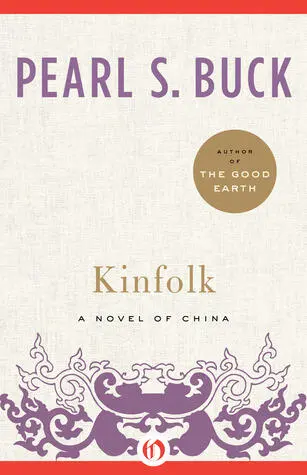
- Название:Kinfolk
- Автор:
- Издательство:Open Road Media
- Жанр:
- Год:2012
- ISBN:нет данных
- Рейтинг книги:4 / 5. Голосов: 1
-
Избранное:Добавить в избранное
- Отзывы:
-
Ваша оценка:
Kinfolk: краткое содержание, описание и аннотация
Предлагаем к чтению аннотацию, описание, краткое содержание или предисловие (зависит от того, что написал сам автор книги «Kinfolk»). Если вы не нашли необходимую информацию о книге — напишите в комментариях, мы постараемся отыскать её.
, a sharp dissection of the expatriate experience, Pearl S. Buck unfurls the story of a Chinese family living in New York. Dr. Liang is a comfortably well-off professor of Confucian philosophy, who spreads the notion of a pure and unchanging homeland. Under his influence, his four grown children decide to move to China, despite having spent their whole lives in America. As the siblings try in various ways to adjust to a new place and culture, they learn that the definition of home is far different from what they expected.
Kinfolk — читать онлайн бесплатно полную книгу (весь текст) целиком
Ниже представлен текст книги, разбитый по страницам. Система сохранения места последней прочитанной страницы, позволяет с удобством читать онлайн бесплатно книгу «Kinfolk», без необходимости каждый раз заново искать на чём Вы остановились. Поставьте закладку, и сможете в любой момент перейти на страницу, на которой закончили чтение.
Интервал:
Закладка:
That day Chen watched Rose and he saw she was pretty and dexterous, and in his own new-found joy he considered within himself whether Rose might not be a good wife for his friend. In the middle of the morning’s work when they had drawn aside to discuss the case of a child with a huge water-filled head, suddenly in the midst of their talk he said in English, “Jim, you too should marry.”
James looked at him somewhat startled. “We were speaking of this sick child—”
“I am thinking of you,” Chen said. “I tell you—”
“It is quite proper that the day after your own marriage you should think all men ought to marry,” James said with a dry smile.
“Well, why not the little Rose?” Chen asked boldly.
“You!” James retorted. “No — Rose is well enough and we ought to marry her off somewhere some day, I suppose, but not to me. Come, come—”
“Have you seen a better?” Chen urged.
“I have seen no woman that I want now for my wife,” James said, too quietly.
They talked of the child again and decided to draw the water from its head, and so they did, warning the mother that she must come often, for this healing was not sure. But while he worked, Chen’s mind was busy far inside itself. James had said he had seen no woman whom now he wished to marry. Then why not one whom he had not seen? If his heart was dead let it be waked by life itself, if not by love. A man should marry and have children, with or without love. Love was blessing but life was good enough.
In the middle of that night, being melted with love, he said to Mary, “Why should we not find a wife for Jim? He will not choose for himself — then let us choose.”
“As if James would let us!”
The thought was too bold and Mary scoffed at it. Chen was pleased that even love could not change Mary. She teased him and opposed him as she always had and this made her yielding all the sweeter.
“No, I mean it,” Chen insisted. “Jim is the very one to let us do it.”
“He never would,” said Mary.
The next day Chen waylaid Mrs. Liang as she came from the kitchens and drawing her aside into a quiet room away from the relatives he proposed to her that they should persuade Jim to return to ancestral ways and allow them to choose a wife for him.
Mrs. Liang was pleased indeed. “How is it I have not thought of this myself?” she exclaimed.
“Mary says he will not do it,” Chen suggested.
Mrs. Liang considered this. “Had he not fallen once in love with that Lili Li, I know he would not. But he is a very single heart. When he was small he once had a dog and when it died he never took another. So when he had one friend it was enough — he never had many friends. This is his temper. We will plot together.”
That evening Mrs. Liang went to Mary and Chen and together they planned what James should have for a wife. She must of course be schooled and she must not be too old-fashioned or perhaps too modern. Something between was well enough. For more important than schooling or fashion was the girl’s own nature. She must be honest, she must be one who could love a man more than herself, a thing which not all women can do. She must be good at sewing and cooking, for James did not notice when his own garments needed mending, and when he worked he often forgot to eat. She need not be pretty, but since there was not love to begin with, neither should she be ugly. Certainly she must be clean, since James would have everything clean, and she must have a sweet breath and a soft voice.
With these matters decided, they laid their plot and let days pass perfecting it and inquiring where such a girl could be found. Chen offered to go to the city and Mary thought of writing to Dr. and Mrs. Su as the best among their new friends. Mrs. Liang even tried to bring to memory the young Chinese women she had seen in New York. She could remember no one except Sonia Pan, and she would be worse than any American, because while her body was Chinese, nothing else was. Besides, Sonia would certainly not live where she could not buy chewing gum, turn on the radio, or have a permanent wave in her hair. Uncle Tao, moreover, would not tolerate her, and she would be of no use to James.
At last Chen said sensibly that they had better lay the whole plan before James himself and with much timidity and laughter and arranging of who should speak first and how it should all be broached, they invited him to take a meal with them in a room at the inn, where Young Wang now being innkeeper and his father-in-law retired, they were sure of a good meal and of being alone in an inner room. They made the excuse of this being the first month day of Mary’s marriage, and Mrs. Liang talked of having to go home in a few more weeks. She longed to stay on, to stay even another month. If James would get himself married—
Outside the little room the inn was full. Young Wang gave meals for barter of flour or wheat and for vegetables, fowl and eggs and for fish or a pig or cow’s meat. Money was useless and the people did business without it.
Young Wang served them himself. He looked like an innkeeper now, his face was fatter than it had been and he ran with sweat as he hurried in and out of the inner room.
“Eh, do not be so busy,” Mrs. Liang told him kindly, but his zeal urged him on. Only when all the food was on the table and his young wife had poured out wine and tea, did he go away and leave the four alone.
Mrs. Liang had been chosen to begin and when they had eaten she said to James, “My son, as your mother, I beg you to let me see you married to a good wife before I leave you again. Then I will not worry. You are the eldest of all my children, and why should you live alone and my youngest be dead?” The tears came to her eyes.
Mary spoke next and she said, “We have been thinking of all our friends to find one whom you might like. Don’t try to fall in love again, Jim. Just choose a nice girl and see what happens of its own accord.”
“After all,” Chen said in turn and before James could speak, “it is only this generation of our own which has so much as thought of choosing wives and husbands for themselves. Remember that it is the custom here still for parents to find husbands and wives for their children.”
To their surprise James answered at once with a sensible gravity. “I have been thinking of such a thing myself, and I have told myself the very words which Chen has just used. Am I different from my ancestors? It may be that they understood better than we do the proper relationship between man and woman.”
“Then who—” Mrs. Liang began joyfully.
James cut her off. “I will not choose for myself, Mother. You may choose for me. You gave me birth and you know me. Mary and Chen can give their advice.”
All three were set back by their easy victory. “But have you no thought about the kind of girl you — you—” Chen ventured.
“Yes, I have thought,” James said calmly. “I should like to have a good-tempered woman, one strong and healthy, and the daughter of a peasant — one of our own peasants.”
The three listening were struck speechless. The daughter of a Liang peasant! This was something too strange even for them. This was going too far back!
James looked at the three solemn faces. “Why not? Goodness and health are all I want.”
“But an ignorant woman, Jim?” Mary asked.
“You shall teach her,” James replied smiling. He put down his chopsticks. “Come, why are you all staring? I have only agreed to do what you have proposed.”
“We did not ask you to go so far,” Chen remonstrated.
“Find my bride,” James said, half teasing them. “When you have found her, I will marry her. Now let us enjoy our feast.”
Why not, he asked his own heart? There was no woman in the world whom he wanted for himself. To this his heart made no answer. It had become a machine to pump the blood through his body and keep him alive that he might do his work.
Читать дальшеИнтервал:
Закладка:
Похожие книги на «Kinfolk»
Представляем Вашему вниманию похожие книги на «Kinfolk» списком для выбора. Мы отобрали схожую по названию и смыслу литературу в надежде предоставить читателям больше вариантов отыскать новые, интересные, ещё непрочитанные произведения.

Обсуждение, отзывы о книге «Kinfolk» и просто собственные мнения читателей. Оставьте ваши комментарии, напишите, что Вы думаете о произведении, его смысле или главных героях. Укажите что конкретно понравилось, а что нет, и почему Вы так считаете.