Pearl Buck - Kinfolk
Здесь есть возможность читать онлайн «Pearl Buck - Kinfolk» весь текст электронной книги совершенно бесплатно (целиком полную версию без сокращений). В некоторых случаях можно слушать аудио, скачать через торрент в формате fb2 и присутствует краткое содержание. Год выпуска: 2012, Издательство: Open Road Media, Жанр: Классическая проза, на английском языке. Описание произведения, (предисловие) а так же отзывы посетителей доступны на портале библиотеки ЛибКат.
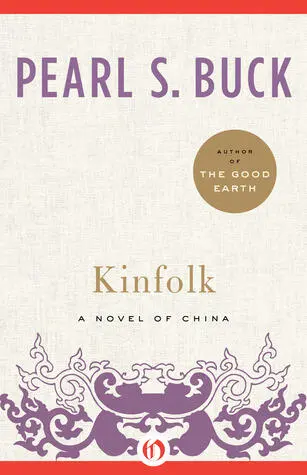
- Название:Kinfolk
- Автор:
- Издательство:Open Road Media
- Жанр:
- Год:2012
- ISBN:нет данных
- Рейтинг книги:4 / 5. Голосов: 1
-
Избранное:Добавить в избранное
- Отзывы:
-
Ваша оценка:
Kinfolk: краткое содержание, описание и аннотация
Предлагаем к чтению аннотацию, описание, краткое содержание или предисловие (зависит от того, что написал сам автор книги «Kinfolk»). Если вы не нашли необходимую информацию о книге — напишите в комментариях, мы постараемся отыскать её.
, a sharp dissection of the expatriate experience, Pearl S. Buck unfurls the story of a Chinese family living in New York. Dr. Liang is a comfortably well-off professor of Confucian philosophy, who spreads the notion of a pure and unchanging homeland. Under his influence, his four grown children decide to move to China, despite having spent their whole lives in America. As the siblings try in various ways to adjust to a new place and culture, they learn that the definition of home is far different from what they expected.
Kinfolk — читать онлайн бесплатно полную книгу (весь текст) целиком
Ниже представлен текст книги, разбитый по страницам. Система сохранения места последней прочитанной страницы, позволяет с удобством читать онлайн бесплатно книгу «Kinfolk», без необходимости каждый раз заново искать на чём Вы остановились. Поставьте закладку, и сможете в любой момент перейти на страницу, на которой закончили чтение.
Интервал:
Закладка:
After nearly three weeks of this well-nigh perfect happiness Violet told him one day over the telephone that she could not see him. She had said something about a headache and a cold. The next day she had called him again, and had said she was flying to London.
All the misery of that moment overwhelmed him again in memory. “But why?” he had kept insisting.
She had answered vaguely that she would write and that it would be better for them not to meet. She would tell him everything.
He had destroyed the letter, but first he had carried it with him to London, and when he had seen her for the last time he had torn it in bits and dropped it from Westminster Bridge where they had met — wishing, but only almost, that he could throw himself after it. The letter had been unsatisfactory to him. She had not told him everything as she had said she would. She had simply said that Ranald Grahame had told her that unless she stopped seeing Dr. Liang, he would cut her off. She had thought about this carefully, she wrote him, and in view of all the lives involved, it seemed better to stay with Ranald. But she was his, always faithfully, Violet Sung. And there was no address below her name.
By the time he had this wretched letter in his hands she was already gone. He was beside himself and so badly did he conceal it that he caught Nellie’s eyes on him hard that day and so he told her he was ill and locked himself in his room. She stopped at the door with the tray and he had to get up and get it, because she declared since they were alone in the house she had better not come into his bedroom. He was insulted at the evil suggestion in this intense virtue but he could do nothing about it, and it insured him privacy when his door was shut.
Twenty-four hours of solitude made the desire to see Violet, to talk with her and to demand her return to him, grow into a ravening hunger in his bosom. He did not care what anyone thought and he would divorce his wife, or at least command her to stay on forever in the ancestral village. He arranged his affairs and told Nellie that he had had a summons from London. This summons he provided for by cabling to old Mr. Li to ask if he might stay with them. The invitation came back at once and he left the cablegram on the dining-room table where Nellie would read it. He used the power of his famous name in the Chinese Embassy and got a priority seat and flew to London within the week.
Once there he had been compelled to submit to maddening delays. He could only say to Mr. and Mrs. Li that he had come on a holiday and he could not say that he wanted to know where Violet Sung was. London was far too huge a place to make it sensible to look for her. He could only pretend to enjoy everything that was done for him and meanwhile ask questions which he hoped sounded innocent. Mr. and Mrs. Li were living comfortably in a villa outside the city, and apparently had no idea of going back to China. If there was another world war, they said they might go to Rio de Janeiro. They were stout and unfashionable, and they were glad of a chance to have a famous visitor to show off and give parties for and provide return for some of the social debts they owed. At none of these parties did Dr. Liang see Violet Sung, and he was in a state of desperation which frightened him.
It was Lili who finally helped him. Lili had not changed at all to the eye. She had no child. She was slender and beautiful in the same pure calm fashion. Her voice was still high, sweet, and childlike, and what she said was still naive and a little stupid. Beneath and behind all this, Lili was neither childlike nor stupid. She had added to the sophistication of Shanghai the sophistication of New York, London, and Paris. She was quite happy with Charlie Ting who was an interestingly degenerate young man and thought nothing was too bad for anybody to do, if it was fun. Indeed, the two words, good and evil, did not exist for him except for diplomatic use. With him Lili lived on several levels of life at once. On one of these levels she heard gossip about Dr. Liang and Violet Sung, and hearing it she had expressed surprise while she instantly and secretly believed all she heard. It explained Dr. Liang’s presence in London and it explained what she saw was his restlessness. Out of indolent curiosity she found that it was true that Violet Sung was in London and that she had a very pretty, though small, flat looking out on a bombed area which was now a new park, and that she went nowhere. She also asked and got the address. Then she went to see Violet Sung.
All this Lili told Dr. Liang one Sunday morning in her sweet tinkling little voice. It came out very naturally. She was spending the week end with her parents and it was easy enough to find Dr. Liang alone after lunch in the garden, walking up and down the narrow flagged path of the small rose plot. She had sauntered out under her pink parasol, for she did not like the fad of being sunburned and kept her skin as pale as a white lotus.
After a few remarks made and exchanged she sat down on a Chinese porcelain garden seat and she said, “Dr. Liang, I saw your old friend yesterday.”
He had looked at her startled and already half guessing.
“Violet Sung,” she said thoughtfully and without a smile. “She is living now in London, do you know?”
“No, I did not,” he had replied. “I have not heard from her for some time.”
“Yes, now she is here,” Lili went on. “I don’t know if you like to have her address.”
“It doesn’t matter,” he lied.
“I think she likes to see you,” Lili persisted. By now she could speak English perfectly but she had discovered that it made her appear more exotic if she did not. “I think she seems somewhat like lonely. She doesn’t talk much, and she looks too thin though quite beautiful.”
He could not trust himself to answer this, for he had no intention of confiding in Lili or in anyone. He knew his own people. They could no more contain gossip than a leaky dish can contain water. They could keep a secret forever but gossip would be told to the next Chinese they met.
Lili opened a small satin bag attached to her diamond bracelet and she took out a bit of paper. “I write it down for you,” she said.
He could not resist taking Violet’s address but he did not look at it. He stuffed it into his pocket. “If I have time I will try to see her,” he said, and hoped Lili could not hear the pounding of his heart.
He had been far too prudent to try to see Violet at once, for he had no intention of meeting the Englishman, whose very name he did not want to remember. He wrote her a letter and sent it by messenger and told the messenger to wait. Not trusting boys, he found an extraordinary old woman with only one arm whose lean rigid face looked reliable.
“Do not come back without an answer,” he had commanded.
“Right you are, sir,” she had replied. Hours later she had come back. “It took a bit of ’angin’ round,” she told him. “The young lydy kep’ tryin’ to put me off like. Said come back tomorrow and all that. I said, me orders is, bring back the arnser. Here it is, sir.”
He had paid what she asked and then had opened Violet’s answer. It was brief enough to break his heart. “Now that we have parted,” Violet said, “why should we meet again? It will only make it harder for us both.”
That was all and it made him very angry. He sent a bold telegram, not caring this time whether the Englishman did see it.
“You owe me an explanation,” he wrote. “I will meet you on the near end of Westminster Bridge tomorrow at six p. m.”
Many people came and went on the bridge and at six it was winter’s dusk. He was there at half past five, not daring to hope that she would come. She was quite capable of not coming. But she came. He saw her before she saw him. She wore a dark fur coat and a small fur hat trimmed with violets and fitting closely to her face.
Читать дальшеИнтервал:
Закладка:
Похожие книги на «Kinfolk»
Представляем Вашему вниманию похожие книги на «Kinfolk» списком для выбора. Мы отобрали схожую по названию и смыслу литературу в надежде предоставить читателям больше вариантов отыскать новые, интересные, ещё непрочитанные произведения.








Обсуждение, отзывы о книге «Kinfolk» и просто собственные мнения читателей. Оставьте ваши комментарии, напишите, что Вы думаете о произведении, его смысле или главных героях. Укажите что конкретно понравилось, а что нет, и почему Вы так считаете.