Pearl Buck - Kinfolk
Здесь есть возможность читать онлайн «Pearl Buck - Kinfolk» весь текст электронной книги совершенно бесплатно (целиком полную версию без сокращений). В некоторых случаях можно слушать аудио, скачать через торрент в формате fb2 и присутствует краткое содержание. Год выпуска: 2012, Издательство: Open Road Media, Жанр: Классическая проза, на английском языке. Описание произведения, (предисловие) а так же отзывы посетителей доступны на портале библиотеки ЛибКат.
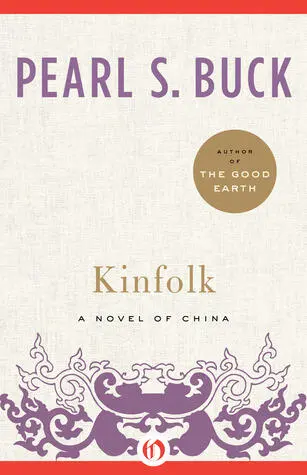
- Название:Kinfolk
- Автор:
- Издательство:Open Road Media
- Жанр:
- Год:2012
- ISBN:нет данных
- Рейтинг книги:4 / 5. Голосов: 1
-
Избранное:Добавить в избранное
- Отзывы:
-
Ваша оценка:
Kinfolk: краткое содержание, описание и аннотация
Предлагаем к чтению аннотацию, описание, краткое содержание или предисловие (зависит от того, что написал сам автор книги «Kinfolk»). Если вы не нашли необходимую информацию о книге — напишите в комментариях, мы постараемся отыскать её.
, a sharp dissection of the expatriate experience, Pearl S. Buck unfurls the story of a Chinese family living in New York. Dr. Liang is a comfortably well-off professor of Confucian philosophy, who spreads the notion of a pure and unchanging homeland. Under his influence, his four grown children decide to move to China, despite having spent their whole lives in America. As the siblings try in various ways to adjust to a new place and culture, they learn that the definition of home is far different from what they expected.
Kinfolk — читать онлайн бесплатно полную книгу (весь текст) целиком
Ниже представлен текст книги, разбитый по страницам. Система сохранения места последней прочитанной страницы, позволяет с удобством читать онлайн бесплатно книгу «Kinfolk», без необходимости каждый раз заново искать на чём Вы остановились. Поставьте закладку, и сможете в любой момент перейти на страницу, на которой закончили чтение.
Интервал:
Закладка:
She had come because she saw that he would never believe that she meant to cut herself off from him forever. She told him so in her lovely soft voice whose cadence he would hear as long as he lived. “Wen Hua, you shouldn’t have made me come. It is really dangerous for me. I promised Ranald that I would never see you again alone.”
“Yet you have come, and that means you wanted to come.”
“You are wrong,” she told him.
The evening had been strangely mild and still. Accustomed now to the violence of cold in New York it did not seem possible to Dr. Liang that it was a winter’s night. The air was chill with river damp, but it was soft. Violet’s cheeks under the lamplight were rose pink, like an English girl’s.
“I did not want to come,” she repeated. “I have made my decision, Wen Hua, and I shan’t change.”
“How can you decide against me?” he demanded.
They were leaning against the rail, their backs to the passing people, and looking down into the river she had mused for a moment.
“It isn’t as if you and I could really love enough to give up everything,” she said at last. “You only want to have me, too.”
“That is not true,” he had said instantly.
“Yes, Wen Hua, it is,” she had replied. “And it is true for me, also. I am not better than you. More than that—”
She broke off and he waited. At last he said, “What is more than that?”
“I have thought so much,” she said slowly. “I haven’t much to do except think. People like you and me — we are not real people, you know, Wen Hua.”
“We exist, don’t we?” he asked with some indignation.
“Oh yes. We have these bodies—”
He waited again and this time he did not press her. He was afraid of what she was going to say — whatever it was.
She said, “We live on other people’s roots. Wen Hua, what makes you real is your wife. She is so real that were you and I to — of course she would not tolerate me. No real woman tolerates polygamy. Even in China, where we think we settled all human relationships centuries ago, the real women do not tolerate the concubine. They kill somebody — maybe the concubine — or they stop loving their husbands and then they stop being themselves and become cruel creatures.”
“I was not thinking of putting away my wife,” he said stiffly.
“No, but you see,” she said, “Ranald is like your wife. I mean, he’s real, too.”
“He doesn’t marry you,” he said with purposeful cruelty.
“No,” she agreed. “But I think I don’t want him to. It doesn’t mean enough to me.”
He had grasped at this. “You don’t love him?”
She shook her head and the little dark curls of her hair, given her by her French mother, danced against her cheek. “No, but I trust him. Some day we will part. Perhaps it will be I who make the parting. But when that day comes he will not leave me destitute. He will provide for me—”
“Money, I suppose you mean,” he had said bitterly.
“Be reasonable,” she had said. “I need a good deal of money and he has a lot of it.”
“Suppose he marries?” He wanted to hurt her but she was not hurt.
“Even if he marries he will be grateful to me. He has a sense of obligation, you know, especially now that I have given you up.”
She had used him to make the Englishman feel an obligation!
When he accused her of this she denied it. “It is not like that,” she replied in her thoughtful musing way. “If you had been quite real, Wen Hua, I might have dared to — do anything. But for two people, both unreal, to leave the people they can trust — it would be very dangerous for us.”
“Why do you not trust me?” he had demanded.
She had lifted her dark eyes to him then. “You know yourself,” she replied.
He had not had the courage to press her. The truth from her lips might have destroyed him and he needed to believe in himself.
She had ended their talk by a soft touch on his hand. “Now you must go away,” she had told him. “You must go back to New York, to your home and to your wife. Please don’t trouble about me. I shall be all right and really quite happy. I like London. I know many people and I don’t lack friends. I am quite clear now in my mind. What has happened is what is better for us.”
“What did the Englishman say?” he demanded.
She seemed surprised. “Do you really want to know? He is very honest and he just said to me that he had heard we were meeting almost every day and he would not forbid it — only I had to make the final choice. He said I could leave him or stay with him — he would not play second fiddle. If I stayed with him, he would look after me as long as I lived. There would be enough for me in his will, if he died in the next war, which he thinks will be quite soon. But if I chose to see you, ever, he would cut me off at once.”
“Yet you have seen me,” he had urged.
“Yes, I am going back now to tell him so,” she had said. “It will be hard for a bit to make him understand that I did not want to see you, but that there was no other way. Then I shall promise never to see you again. I haven’t quite made that promise yet. Tonight I’ll make it — and keep it.”
There was the soft touch again on his hand, and she turned and lost herself in the crowd. He had stayed on, staring down into the misty gently flowing river, and toying with the idea of throwing himself from the bridge. But a passing policeman looked at him once or twice and he grew self-conscious. He did not really want to die.
He had stayed on with Mr. and Mrs. Li for a few days more, accepting now an invitation from Charlie Ting’s parents to visit them. To his surprise he found he quite enjoyed diplomatic life. It was gay and expensive, and money for everything was provided. He had a handsome Rolls-Royce at his disposal and a smart English chauffeur. He might, he thought, offer himself some day as a diplomat — an ambassador, perhaps. The idea gave him a new interest and while he considered it, he could stop thinking for a moment or so about Violet. Somewhere in the few days he found a chance to speak to Lili.
“By the by, I called upon Miss Violet Sung. She seems quite well and happy. I stayed only a few minutes because I was so busy that day.”
The coolness of his voice astonished her but she only smiled. Then he told her that he was going home, that he was quite anxious to see his wife who had been to visit his two elder children in the ancestral village where they were enjoying the old home, and that Mary was married.
Lili gave a little scream, “Oh, can they enjoy such old-fashioned things? And what man is there to marry Mary?”
He had laughed with her. “They will grow tired of the village,” he said. “I should not be surprised if they come back with their mother. My son-in-law, I hear, is a brilliant doctor of Peking — a friend of my son’s, I believe. You remember James?”
Lili dimpled perfunctorily. “Of course, and Charlie thinks he is doing some wonders in China. I am sure it is true.”
Dr. Liang did not believe that Charlie Ting had so spoken, but he inclined his head with the dignity usual to him when he received a compliment.
So he had come home again. In London he thought he had got over everything, but when he reached home he knew he had not. Mingled in his hurt love for a beautiful woman were her words: “You know yourself.” He did not want to know himself. She had shaken him very badly indeed. The affair might have ended sublimely. It might have been a splendid rejection of a selfish love; it might have been a noble acceptance of the obligations life had already put upon them. But she had taken away both splendor and nobility. She had said merely the few words, “You know yourself.” They included these few words more which she had not quite spoken, “and I know you.”
Читать дальшеИнтервал:
Закладка:
Похожие книги на «Kinfolk»
Представляем Вашему вниманию похожие книги на «Kinfolk» списком для выбора. Мы отобрали схожую по названию и смыслу литературу в надежде предоставить читателям больше вариантов отыскать новые, интересные, ещё непрочитанные произведения.
Обсуждение, отзывы о книге «Kinfolk» и просто собственные мнения читателей. Оставьте ваши комментарии, напишите, что Вы думаете о произведении, его смысле или главных героях. Укажите что конкретно понравилось, а что нет, и почему Вы так считаете.