Pearl Buck - Kinfolk
Здесь есть возможность читать онлайн «Pearl Buck - Kinfolk» весь текст электронной книги совершенно бесплатно (целиком полную версию без сокращений). В некоторых случаях можно слушать аудио, скачать через торрент в формате fb2 и присутствует краткое содержание. Год выпуска: 2012, Издательство: Open Road Media, Жанр: Классическая проза, на английском языке. Описание произведения, (предисловие) а так же отзывы посетителей доступны на портале библиотеки ЛибКат.
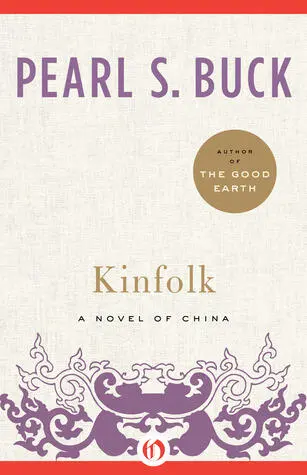
- Название:Kinfolk
- Автор:
- Издательство:Open Road Media
- Жанр:
- Год:2012
- ISBN:нет данных
- Рейтинг книги:4 / 5. Голосов: 1
-
Избранное:Добавить в избранное
- Отзывы:
-
Ваша оценка:
Kinfolk: краткое содержание, описание и аннотация
Предлагаем к чтению аннотацию, описание, краткое содержание или предисловие (зависит от того, что написал сам автор книги «Kinfolk»). Если вы не нашли необходимую информацию о книге — напишите в комментариях, мы постараемся отыскать её.
, a sharp dissection of the expatriate experience, Pearl S. Buck unfurls the story of a Chinese family living in New York. Dr. Liang is a comfortably well-off professor of Confucian philosophy, who spreads the notion of a pure and unchanging homeland. Under his influence, his four grown children decide to move to China, despite having spent their whole lives in America. As the siblings try in various ways to adjust to a new place and culture, they learn that the definition of home is far different from what they expected.
Kinfolk — читать онлайн бесплатно полную книгу (весь текст) целиком
Ниже представлен текст книги, разбитый по страницам. Система сохранения места последней прочитанной страницы, позволяет с удобством читать онлайн бесплатно книгу «Kinfolk», без необходимости каждый раз заново искать на чём Вы остановились. Поставьте закладку, и сможете в любой момент перейти на страницу, на которой закончили чтение.
Интервал:
Закладка:
It was a very successful evening. Dr. Liang was at his best, dignified and quiet. He was courteous to Mr. and Mrs. Wetherston, a little distant perhaps with his son-in-law, and condescending and pleasant to his daughter. Mrs. Liang did most of the talking. Mr. Wetherston asked many questions of a practical nature, as he explained. These questions had to do with what she thought of Chiang Kai-shek, whether the graft was as bad as he had heard it was, how Communist the Chinese Communists really were, whether she thought the Chinese people would ever get together, and so forth. She answered everything briskly, declaring that Chiang Kai-shek was no better and no worse than any man in his position and with his history, that government graft was always bad wherever it was found but perhaps inevitable, that Communists were Communists, that Chinese people had been together on the same piece of land for four thousand or so years and probably would continue there. When Mrs. Wetherston ventured a question about the private life of Madame Chiang, Mrs. Liang laughed heartily behind one hand and said, “Madame Chiang is so special, isn’t he?” Mrs. Liang was always weak on gender, and at this point Dr. Liang felt it necessary to explain. “In our language,” he said, “we do not denote gender in the personal pronoun. Thus ‘he’ and ‘she’ are represented by a single third personal pronoun, namely, ta.”
Mrs. Wetherston turned to her son with reproach. “Alec, you never told me that before.”
“You never asked me, Mother,” he replied, laughing lazily.
Alec, lounging his long frame on the divan, enjoyed the evening hugely. His marriage was turning out well. Chinese wives made a cult of marriage. He felt sorry for his friends who were coping with American girls in their houses. The Chinese had things right. Everything depended on relationships between people.
The many dishes which the Chinese restaurant chef served with a flourish provided conversation for two hours and more, and the last hour of the evening Mrs. Liang used in describing the fabulous ancestral village, its walls, its gates, the home of the Liangs with its courts and many rooms, the hospital which James was building, the school which Mary had already established, the relatives in all their beauty and cleverness and finally Uncle Tao, who presided over them all like a god.
“You make it sound wonderful, Ma,” Louise said with some astonishment.
“In its way, it is also wonderful,” Mrs. Liang declared.
She had not mentioned cold or filth or scald-headed children or beggars or rebellious tenants or quarreling relatives or Uncle Tao’s tantrums or any of those things which Dr. Liang had feared she would. When he perceived she was creating a beautiful China before these foreigners, he felt for her a new and profound tenderness. This woman of his, this old wife, was doing it for him!
That night when she had made honest love to him in her downright wifely fashion, and after he had yielded pleasantly to her inclinations, they lay talking for a long time and she told him about her visit and each detail of each conversation with each relative. But most of all she talked about James and the girl she had found for his wife. The betrothal had been very quick — too quick maybe, she admitted. She had left the day after, which in itself was very bad, for she had not been able to divine anything from James’s face. Of course he had said she was not to worry. Mary and Chen had promised privately to tell her everything.
“Liang,” she now said earnestly, “I tell you, James is spoiled for common marriage. He loved that Lili too much, and yet it is a strange thing he does not love her now. She has killed the love power in him. If he did not marry a woman in an old-fashioned way, he would not marry at all. I saw that after a while. Now, Liang, you know a man cannot live without a wife. Any wife is better than no wife. But I did not take just any wife for our son. I went very carefully through our whole region and found a girl who is not blood kin to the Liangs. Her father came from Shantung when she was small but he never bound her feet because he had heard women do not any more, and he is a good man and he was glad to keep her feet free. They are farming people only, and their lands are beyond the Liang lands, and he owns his land. How he had money is this way: the Americans wanted some land to build a camp during the war and they bought his land and he moved far enough away from there so he would not see Americans and Communists and such strangers any more. I think our place is safe enough maybe, too.”
“What sort of a girl is she?” Dr. Liang inquired.
“A big girl, maybe you would say,” Mrs. Liang replied. “She is not fat, but very strong and she has a round face and big black eyes. She is old-fashioned, you know, Liang. She combs her hair as I did when I was a girl. She wears country clothes — no long robe. But she is quiet and she is very honest and she will think only of James, and their children will be very healthy. The family has five sons and she is the only girl, so maybe she will have plenty of grandsons for us.”
He was so silent that she began to be fearful lest he did not approve.
She spoke in the darkness somewhat shyly. “Liang, I do not know how you think, but for my part I have been very satisfied in our old-fashioned marriage. I know that now our young people like to love by themselves, as for example, Louise and Alec. But Mary is somewhat more Chinese. Judging by everything, Liang, however, I don’t think so much of love.”
“Nor do I,” he said, and then he added firmly, “very little indeed!”
She was so pleased that she could have cried, but she knew this would have been to show too much feeling. “Liang, you must go to sleep, please,” she commanded him. “Tomorrow is your class day.”
To him it was sweet to hear her voice thus bidding him what he wanted to do anyway and he obeyed.
Underneath all she had said Mrs. Liang felt the old bleeding wound that had been left in her by Peter’s death. She did not speak of it because she wanted her return to her children’s father to be without sadness. She had written to Dr. Liang the facts as she knew them, and she had not gone to see where Peter lay under the big pine in the imperial gardens. Later, when times were better, she wanted to go back and see that his young frame was brought back to the village and buried among the ancestors.
She heard Liang’s deepened breathing and she knew he was asleep, and so, lying very still, she wept silently for the dead son. Then she lifted one hand carefully and turning her head she wiped her eyes on the edge of the pillowcase. What was past was gone, she told herself, and for the sake of the living she must think of the future.
She lay thinking instead of the village. Life was wonderful there, so warm and close, all the human beings so close and everybody knowing everybody else, good and bad. The days were crowded with life. It had been so good to be flat on the earth. When she got out of bed in the morning her feet were on the real earth, beaten solid by the feet of Liang ancestors. How intensely did she hate this living high up in the air, and knowing that above and underneath them were strangers!
Yet she knew well enough that Liang could never live in the ancestral village again. Without electricity or running water, he could not live. She understood that now. The fleas alone, jumping down out of the thatched roofs, would be too annoying for him. But nothing could clean the fleas out of the thatch of old ancestral roofs. Perhaps the next time she went back she could take some of this new stuff the Americans used for spraying flies. Of course she would go back again and again. She would not tell Liang so at once — maybe not for many months. But when James and Mary began to have children she must fly back to see them. Perhaps by that time the Americans would have better planes or at least medicines to hold down the stomach. She would go back and forth between the kinfolk, for she belonged to all of them.
Читать дальшеИнтервал:
Закладка:
Похожие книги на «Kinfolk»
Представляем Вашему вниманию похожие книги на «Kinfolk» списком для выбора. Мы отобрали схожую по названию и смыслу литературу в надежде предоставить читателям больше вариантов отыскать новые, интересные, ещё непрочитанные произведения.




Обсуждение, отзывы о книге «Kinfolk» и просто собственные мнения читателей. Оставьте ваши комментарии, напишите, что Вы думаете о произведении, его смысле или главных героях. Укажите что конкретно понравилось, а что нет, и почему Вы так считаете.