Pearl Buck - Kinfolk
Здесь есть возможность читать онлайн «Pearl Buck - Kinfolk» весь текст электронной книги совершенно бесплатно (целиком полную версию без сокращений). В некоторых случаях можно слушать аудио, скачать через торрент в формате fb2 и присутствует краткое содержание. Год выпуска: 2012, Издательство: Open Road Media, Жанр: Классическая проза, на английском языке. Описание произведения, (предисловие) а так же отзывы посетителей доступны на портале библиотеки ЛибКат.
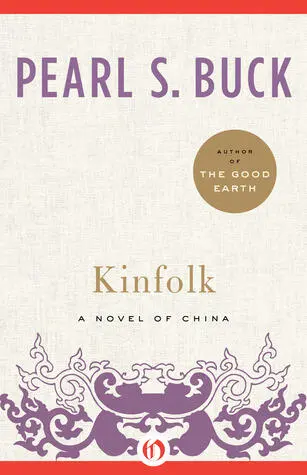
- Название:Kinfolk
- Автор:
- Издательство:Open Road Media
- Жанр:
- Год:2012
- ISBN:нет данных
- Рейтинг книги:4 / 5. Голосов: 1
-
Избранное:Добавить в избранное
- Отзывы:
-
Ваша оценка:
Kinfolk: краткое содержание, описание и аннотация
Предлагаем к чтению аннотацию, описание, краткое содержание или предисловие (зависит от того, что написал сам автор книги «Kinfolk»). Если вы не нашли необходимую информацию о книге — напишите в комментариях, мы постараемся отыскать её.
, a sharp dissection of the expatriate experience, Pearl S. Buck unfurls the story of a Chinese family living in New York. Dr. Liang is a comfortably well-off professor of Confucian philosophy, who spreads the notion of a pure and unchanging homeland. Under his influence, his four grown children decide to move to China, despite having spent their whole lives in America. As the siblings try in various ways to adjust to a new place and culture, they learn that the definition of home is far different from what they expected.
Kinfolk — читать онлайн бесплатно полную книгу (весь текст) целиком
Ниже представлен текст книги, разбитый по страницам. Система сохранения места последней прочитанной страницы, позволяет с удобством читать онлайн бесплатно книгу «Kinfolk», без необходимости каждый раз заново искать на чём Вы остановились. Поставьте закладку, и сможете в любой момент перейти на страницу, на которой закончили чтение.
Интервал:
Закладка:
“Oh, poor Ma,” Mary had answered. “You mustn’t worry about us, at least. I can’t promise about Pa.”
Mrs. Liang had bristled. “Your pa is fine,” she had retorted, and was strengthened in her resolve to return quickly to him.
She busied herself after that and arranged for James to have two more rooms for his share of the house and she bought some good furniture from the local carpenter, who was a Liang tenth cousin. Then she had wrenched herself away from the beloved village.
James had set the wedding day. During the holidays he knew he would have no new patients. He did not intend to take a honeymoon, for he knew that nothing would terrify his unknown wife more than that. Nevertheless he did not wish to have all the hours of the day and many hours of the night busy as they now were with the sick. His marriage, incredible as it would seem to Su and Peng and their kind, excited him with curiosity and wonder, and he wanted time to begin it well. It might be successful. Certainly he would love no one again as he had loved Lili. That fire had burned itself out even to the capacity for renewal. He did not want to love like that. It had been a destructive love.
Half amused at himself, he declared to Mary and Chen that there was sound wisdom in the ancestral way of choosing a wife for a man.
“Take Ma,” he said one evening as they idled for an hour before he went back to settle his patients for the night. “Surely she knows me better than I know myself. She knows the family traits. Who could choose better for me?”
They neither agreed nor disagreed with him. They smiled and listened, aware that this marriage was for him more than marriage. It was reunion with his own people.
Thus did James Liang wait for his wedding day. The idea of this marriage pleased him more and more, and it pleased Uncle Tao and the family, for it was like their own marriages. They drew close to James as they had never done, and he felt this and was made happy by it. The tenants on the land and the villagers, who had so long thought him half foreign, now began to tease him and laugh at it and treat him as one of themselves, and James liked this, too. He found himself laying aside his aloof ways, and he was more lively in his talk and bearing than Mary had ever seen. She said nothing to him lest she damage this new nature, but to Chen she said with much wonder, “I believe Yumei is making a new man of Jim, even before they meet.”
“He has chosen his way, and so he can stop thinking about it,” Chen said. He, too, did not speak to James of his new ways, although the two were together constantly.
Never had James worked so hard. He and Chen had already begun work in the first three rooms of what was to be their hospital. While masons and carpenters built added rooms, the sick lay on the floors and in tiers of beds against the wall. The courtyard swarmed with their families who came to stay and see with their own eyes that no damage was done to their helpless relatives. What patience did it take to try to heal those who were near death! But James had put his dogged will to work at the level at which he found his people. He would heal them in a house like their own, though clean and filled with fresh air. The earthen floors were sprinkled with un-slacked lime and he caught sunshine in every corner that he could. The hospital faced south, and the one-story rooms stood in lines with open courts between, and the places where the sun could not reach were used for fuel and boxes. He had begun with three rooms, easily within the cost of the money his mother had given him of her savings. The people would have to pay for each room as it was needed. He explained this and everyone paid a little and this little was put aside. When he cured a local warlord or a petty official, he asked more and they gave more for the sake of pride. Su and Kang and Peng would have laughed, James knew, but this was his hospital and not theirs, and it was the only way he could build it.
Meanwhile his nights, when he was not called anywhere, were busy with teaching. He and Chen between them were training fifteen young men from neighboring villages as well as the ancestral one. These men when they had enough knowledge to know how little it was, so that they would not pretend to more power than they had, which is the danger of ignorance, would travel through the countryside to wash and disinfect sores and ulcers and bad eyes, to treat malaria and smallpox and to bring to the hospital such as they could not heal.
This was the simple but large plan which James and Chen had made for themselves. There was more than mere healing to be done. Every tool had to be contrived. They built their own operating table, with the Liang cousin’s help. They put up a diet kitchen of earthen walls and plastered the ceiling to keep the dust of the thatch from the cauldrons, and Rose, the good nurse, took this under her charge. When Mary was troubled about her lest she be lonely, lest she should not marry and have her own life, Rose laughed as she laughed at everything. “There are already too many children,” she declared, “why should I think that mine would be better than those already born?” There were many women like Rose in these times of change, women who did not want to submit to the old rules of marriage and yet who did not draw attention to themselves for any special beauty or ability. These are the good women of the world, and Rose was one of them.
His wedding day drew on, and out of deference to his unknown wife, whom now that he had decided upon the old way of marriage, he was determined to hold in respect, whether love grew between them or not, James gave up the hospital to Chen for three days. Since he could be a little idle, he took the time to see that his rooms were neat and his clothes clean and whole, in which Mary helped him. Young Wang came from the inn and they decided upon the wedding feast dishes, and then Young Wang stayed and shaved James’s face for him and cut his hair, as he used to do when he was a serving man. He gave much good advice to his old master while he did so.
“I too married a local girl, as you know,” he told James. “It has turned out well and we are expecting a child. But from the very first I let her see that I am the head and she is the hands. Women need to know their boundaries. They are like fowls. If they see the whole world before them they run everywhere squawking and laying no eggs. But if they see the wall, the fence, the yard, the closed gate, they settle down in peace upon their nests.”
To this James listened with pretended gravity. Within himself he had already determined his course. He would be as he always was, neither yielding nor imposing, and from this vantage he would wait to discover the soul of the woman. He prayed only that she had a sweet temper.
The wedding day was one of those days which are common in dry northern regions where the snow seldom falls. The sky was cloudless and cold and there was no wind. This was luck, for the wild winds of winter, tearing the sand from the deserts and grinding it against human flesh, torturing eyes and turning hair and skin the color of dust, are calamity on a wedding day. James listened when he woke that morning and was grateful for quiet. It was well past dawn, and were there to be wind it would have been already raging.
Instead it was a day of strange and even unusual peace. The house was still and the Liangs slept late, for it was to be a holiday. Then they bestirred themselves and made ready for the noon when the bride would come in her red sedan chair. Uncle Tao was got up and ate and dressed in his best garments and every child was washed and given some new thing to wear. Since fresh garments had been prepared for the new year, it was cheap enough to put them on a little early.
James rose late, too, and he took his breakfast with Chen and Mary as usual. He had wondered how he would feel on his wedding day and was surprised that he felt nothing, neither fear nor joy. This, he told himself, was because he had not seen the face of his bride. Other men had told in his hearing of their old-fashioned wives and how stupid they were and how shy upon their wedding nights, and how often they wept. He would ask nothing of her tonight. He had already planned what he would say to her. “You and I have chosen one another in the old way of our ancestors,” he would tell her. “Yet we are not as our ancestors were. We live in two worlds, the old and the new. Therefore let us be friends for a while, until we know what we are. Then, after we are friends—” He did not believe that his mother would have chosen for him a woman too stupid to understand this.
Читать дальшеИнтервал:
Закладка:
Похожие книги на «Kinfolk»
Представляем Вашему вниманию похожие книги на «Kinfolk» списком для выбора. Мы отобрали схожую по названию и смыслу литературу в надежде предоставить читателям больше вариантов отыскать новые, интересные, ещё непрочитанные произведения.





Обсуждение, отзывы о книге «Kinfolk» и просто собственные мнения читателей. Оставьте ваши комментарии, напишите, что Вы думаете о произведении, его смысле или главных героях. Укажите что конкретно понравилось, а что нет, и почему Вы так считаете.