Pearl Buck - Kinfolk
Здесь есть возможность читать онлайн «Pearl Buck - Kinfolk» весь текст электронной книги совершенно бесплатно (целиком полную версию без сокращений). В некоторых случаях можно слушать аудио, скачать через торрент в формате fb2 и присутствует краткое содержание. Год выпуска: 2012, Издательство: Open Road Media, Жанр: Классическая проза, на английском языке. Описание произведения, (предисловие) а так же отзывы посетителей доступны на портале библиотеки ЛибКат.
- Название:Kinfolk
- Автор:
- Издательство:Open Road Media
- Жанр:
- Год:2012
- ISBN:нет данных
- Рейтинг книги:4 / 5. Голосов: 1
-
Избранное:Добавить в избранное
- Отзывы:
-
Ваша оценка:
Kinfolk: краткое содержание, описание и аннотация
Предлагаем к чтению аннотацию, описание, краткое содержание или предисловие (зависит от того, что написал сам автор книги «Kinfolk»). Если вы не нашли необходимую информацию о книге — напишите в комментариях, мы постараемся отыскать её.
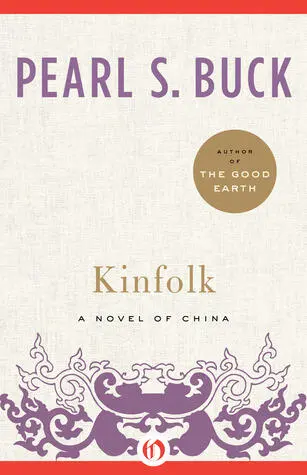
, a sharp dissection of the expatriate experience, Pearl S. Buck unfurls the story of a Chinese family living in New York. Dr. Liang is a comfortably well-off professor of Confucian philosophy, who spreads the notion of a pure and unchanging homeland. Under his influence, his four grown children decide to move to China, despite having spent their whole lives in America. As the siblings try in various ways to adjust to a new place and culture, they learn that the definition of home is far different from what they expected.
Kinfolk — читать онлайн бесплатно полную книгу (весь текст) целиком
Ниже представлен текст книги, разбитый по страницам. Система сохранения места последней прочитанной страницы, позволяет с удобством читать онлайн бесплатно книгу «Kinfolk», без необходимости каждый раз заново искать на чём Вы остановились. Поставьте закладку, и сможете в любой момент перейти на страницу, на которой закончили чтение.
Интервал:
Закладка:
“I will persuade him,” she said.
What Yumei’s persuasion was, none knew. But all knew that some sort of slow powerful gentle argument was going on between the old man and the young woman. She served him every day with a favorite food and she sat with him while he ate and when he had eaten she began her persuasion, urging him to life. For how would the Liang household continue without him, she asked. She pointed out that in such times as these the old and the wise were the only lamps to guide the feet of the people. She so persuaded Uncle Tao that he ceased to think of himself as an aging useless old man. She filled him with the necessity to live. It became his duty to live, and then she made him believe that he could live. When he had reached this place she went and told James.
All were astonished. Uncle Tao’s sons were fearful but he himself put courage into them. The elder daughter-in-law was not too pleased at this success of a newcomer over the older ones who had failed, and Mary, who liked Yumei well, could not but wonder if Uncle Tao were worth so much trouble.
But James gave none of them time to think, either for or against. He knew that he must take this moment when Uncle Tao’s courage was high. He prepared the next day to do the work, and he took no more patients that day and set himself to this one stupendous task. Did he fail with his own flesh and blood, did Uncle Tao die, no one in the ancestral village would believe in him again and he would have to move his hospital elsewhere. This monstrous knowledge was forced upon him by the excitement of the kinfolk in the house and by the villagers and by the men on the land, who came in when they heard what was about to happen, and to stay until they knew Uncle Tao had been cut and sewed up again safely.
Again luck was with James. There was no wind or sand the next day and the small operating room was clean. Early in the morning Uncle Tao was moved there upon a litter carried by his sons, and all the tenants who had spent the night in the courts rose while he passed and groaned in unison. Uncle Tao did not smile or speak. He kept his eyes shut and his lips set. When they lifted him upon the table he was inert. For him everything had begun. Only once did he speak after this. When he felt himself on the table he opened one eye. “Where is that young woman?” he asked.
“I am here,” Yumei replied coming in at this moment. She looked at James with apology. “I had to tell him I would stay with him.”
“Very well,” James said.
Never had he undertaken so heavy a task and never had he been so afraid. Chen was with him and so was Rose, and she saw his hands tremble and she looked at Chen and saw that he saw it, too.
“Steady, Jim,” Chen said in English. “We are here with you.”
“Thanks,” James said. But he knew that still he was alone. His was the hand that held the knife.
Rose put the ether cone over Uncle Tao’s face and he kicked out his legs.
“Our good Old Head, I told you this would be done first,” Yumei said in a quiet voice.
Uncle Tao shouted violently and then less violently and then he gave out only a mumble and then a murmur, and then he was silent.
Now the eldest son of Uncle Tao had demanded to be in the room with his father to see that all went well. He stood against the door to let no one look through it, for the window was painted white, to keep out curious eyes, and he groaned when his father fell silent. “Is he not dying?” he asked.
“No,” Yumei said, “I listen to the breathing.”
James paid no heed to any of them. He had gone into that battlefield where he must make his solitary fight with the enemy who was Death. He must put out of his mind all else except victory. Chen had bared Uncle Tao’s great belly and it was shaven and clean. Now with his knife James drew down a straight clean cut. The elder son moaned and fell to the floor and hid his face against the door. Yumei did not look but she stood by Uncle Tao’s head, hearing his breathing. Once it faltered and she touched Rose’s arm who spoke to Chen, who pressed a needle into Uncle Tao’s arm.
The room was terrible in its silence. In the silence James worked swiftly. He was face to face with his enemy now, and time was on the side of life. Chen was a matchless partner, standing at his side. Veins were clipped and held, and masses of old yellow fat were turned back. Working against time and the slowing breath, James lifted out at last the tumorous weight and threw it into the waste bucket. He did not look at Uncle Tao’s face. Rose was watching that — Yumei, too, he remembered. Chen was handing him the veins, each to be put into place. His hands moved delicately, swiftly, and his courage soared. He had met his enemy and the victory was his. Uncle Tao would live.
Yet life after battle with death is a wary thing, poised always like a bird for flight. Uncle Tao had to be watched day and night, and Yumei never left him. She had some sort of life in herself which caught and held the life in Uncle Tao when it was about to escape. James with all his skill was not so alert as she to know when Uncle Tao needed food quickly or the needle thrust into his arm.
It was Yumei who did a thing at once absurd and yet of great comfort to Uncle Tao. She picked up the tumor from the waste and put it in a big glass bottle which had once held medicines. This bottle she filled with strong kaoliang wine, and she sealed it and put it in Uncle Tao’s room. She knew it would give him pleasure to look at his tumor, even when he was too weak to speak.
He stared at it for a long time one day. Then he had asked, “Is that — it?”
She nodded. “That is what wanted your life, Uncle Tao,” she replied. He lay looking at it often after that and to see it imprisoned and helpless made him feel strong. He knew himself saved.
“Who would have thought of doing such a thing except Yumei?” Mary cried when she heard of it.
“Yumei is close to people and to life,” Chen said. To James, Chen began to speak of Yumei thus. “I begin to think your mother chose you a good woman.”
“I begin to think so, too,” James said. He was brusque because he did not want to speak of Yumei to anyone. Something as delicate as silver, as fine as a dew-laden cobweb, was beginning to be woven between him and his wife. It must not be touched.
When Uncle Tao was well enough to sit up he invited all his friends to come and see what had been taken out of him and he boasted of its size and color.
“I kept this thing in me for many years,” he said, looking around on them all solemnly. “At first I was the stronger but it grew stronger than I. Then I said to my nephew, the doctor, Take it out of me.’ He was afraid — eh, he was truly afraid! But I was not afraid. I lay down on the table and smelled his sleeping smell, and he cut me open. My elder son saw everything and he told me. My nephew lifted that knot out of me and my nephew’s woman put it in the bottle. Now I am as good as new.”
He was never weary of telling his story, and it must be said that no one was weary of hearing it. Even the kinfolk who heard the story every day or two were proud of Uncle Tao. Thereafter whenever someone complained of a pain in him somewhere Uncle Tao ordered him to come to the hospital where his nephew would cut it out and his nephew’s wife would put it in a bottle. Thus it became a matter of some fashion to have tumors in bottles standing on the table in main rooms of houses, but Uncle Tao’s was always the biggest and best of them all.
From now on James was Uncle Tao’s favorite, and nothing could be refused him. James was grateful for this, yet he saw very well that Uncle Tao had come out of the struggle with death as unrepentant as ever. He was still the same crafty bold old man and he kept his best friends among officials and secret police and tax gatherers. He still considered the tenants his possessions, and laughed when he heard of their small rebellions.
Читать дальшеИнтервал:
Закладка:
Похожие книги на «Kinfolk»
Представляем Вашему вниманию похожие книги на «Kinfolk» списком для выбора. Мы отобрали схожую по названию и смыслу литературу в надежде предоставить читателям больше вариантов отыскать новые, интересные, ещё непрочитанные произведения.

Обсуждение, отзывы о книге «Kinfolk» и просто собственные мнения читателей. Оставьте ваши комментарии, напишите, что Вы думаете о произведении, его смысле или главных героях. Укажите что конкретно понравилось, а что нет, и почему Вы так считаете.