Pearl Buck - Kinfolk
Здесь есть возможность читать онлайн «Pearl Buck - Kinfolk» весь текст электронной книги совершенно бесплатно (целиком полную версию без сокращений). В некоторых случаях можно слушать аудио, скачать через торрент в формате fb2 и присутствует краткое содержание. Год выпуска: 2012, Издательство: Open Road Media, Жанр: Классическая проза, на английском языке. Описание произведения, (предисловие) а так же отзывы посетителей доступны на портале библиотеки ЛибКат.
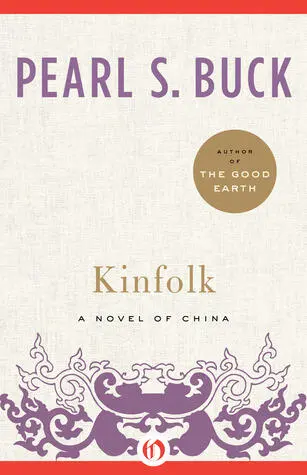
- Название:Kinfolk
- Автор:
- Издательство:Open Road Media
- Жанр:
- Год:2012
- ISBN:нет данных
- Рейтинг книги:4 / 5. Голосов: 1
-
Избранное:Добавить в избранное
- Отзывы:
-
Ваша оценка:
Kinfolk: краткое содержание, описание и аннотация
Предлагаем к чтению аннотацию, описание, краткое содержание или предисловие (зависит от того, что написал сам автор книги «Kinfolk»). Если вы не нашли необходимую информацию о книге — напишите в комментариях, мы постараемся отыскать её.
, a sharp dissection of the expatriate experience, Pearl S. Buck unfurls the story of a Chinese family living in New York. Dr. Liang is a comfortably well-off professor of Confucian philosophy, who spreads the notion of a pure and unchanging homeland. Under his influence, his four grown children decide to move to China, despite having spent their whole lives in America. As the siblings try in various ways to adjust to a new place and culture, they learn that the definition of home is far different from what they expected.
Kinfolk — читать онлайн бесплатно полную книгу (весь текст) целиком
Ниже представлен текст книги, разбитый по страницам. Система сохранения места последней прочитанной страницы, позволяет с удобством читать онлайн бесплатно книгу «Kinfolk», без необходимости каждый раз заново искать на чём Вы остановились. Поставьте закладку, и сможете в любой момент перейти на страницу, на которой закончили чтение.
Интервал:
Закладка:
21
MRS. LIANG CLIMBED INTO the great plane that was to carry her back to America. She walked to her seat, arranged her belongings, leaned her head back and closed her eyes. Only the fact that she had overstayed her six weeks by more than a month had compelled her again to fly across the sea. She had stayed until the very last moment with her three children. She now thought of Chen as entirely her own. Since Chen’s parents were immured in Communist territory she thought of him as an orphan. She knew nothing about Communists or communism, but she had heard so much from Dr. Liang that she considered it only a matter of time until everybody in Communist territory would be dead. Since no letters came to Chen, nor did he write any letters, there was nothing to contradict this theory. Unless they were dead people wrote to their relatives. Since Chen had no letters, his parents must be dead. It was just as well, she thought privately, since the children could continue in the ancestral village under Uncle Tao’s protection.
She reflected upon Uncle Tao. He was as intolerable as ever but circumstances had changed. That is, he was now old and he had a knot in his belly. Moreover, she also was older than she had been when she had rebelled against him as a girl. Aunt Tao had been alive then, and she had thought Aunt Tao weak and yielding too much to the quarrelsome and domineering man that Uncle Tao had been in those days. Now she realized that it was a rubbery yielding, and that actually Aunt Tao had been tough. But she only understood this from the years of her own marriage.
The most important thing about Uncle Tao nowadays, however, was none of these things. It was the simple fact that Uncle Tao had power. What this power was she did not know. But he had some sort of power over the magistrate, over the country police, even over tax gatherers. His hold over the tenants was of course absolute. She had warned James against defending these tenants too much.
“The men of earth are not what they were when I was young,” she told James. “In those days what could they do? Sometimes they rose up, it is true, and killed the ones they hated. But when that man was dead another came down from the Emperor and when they saw it was no use to kill a man if another came at once to take his place, they endured again for a few generations. Now everything is different. They have heard too much. They even know that in America people can stop work and farmers can refuse to sell their food. It gives them ideas of what they can do also. And now too there are the accursed Communists to whom they can always go. We are pinched between these people and the Communists.”
She had not at all liked the way that James had listened to this. He had not answered but he had smiled. Smiling silence is not a good sign in any man when he has been listening to a woman.
“Now, James,” she had then said with real heat, “I don’t oppose Uncle Tao so much. Everybody is still afraid of him. You better stay in his shadow. These are bad times.”
To this James again had not answered and so she had talked to Mary and Chen. “You two,” she had said to them privately and therefore in English only last night when they came in for a last talk. “Now you are married you have some common sense. I tell you, do not make Uncle Tao angry.”
“I am not afraid of Uncle Tao,” Mary said boldly.
Mrs. Liang looked at her with cold eyes.
“Everybody else is afraid. You better have some sense.”
Chen had pacified her immediately. “Mother, I will not let Mary behave foolishly,” he had promised. “Uncle Tao is a very big man here and certainly we need him, at least until we have established ourselves and the people see what we are doing for them.”
“I hope he does not die first from that knot in his belly,” Mrs. Liang had murmured. Then she had made a confession. “At first when I saw Uncle Tao is growing thinner and more yellow, I thought I better tell him let James cut him up. Then I tell myself, very good idea, but maybe James kills him, then who will protect my children here? Better I let him die slowly by himself.”
Chen roared out great laughter but Mary was shocked. “Ma, how can you be so wicked?” she had demanded. “Poor old Uncle Tao! I swear I like him more now than I did before you said such a thing. I shall try myself to persuade him to let James help him.”
Mrs. Liang sighed now, remembering this scene. Since she was married Mary had grown even more stubborn. If there was fault to be found with Chen it was that he did not deal firmly enough with his young wife. He laughed at her too much instead of scolding her. Mary had none of the softness which was so pleasant in Louise since she had married Alec. Mrs. Liang pondered on the strange contradictions in young people. One would have thought that Mary married to a Chinese husband would have become a docile Chinese wife. Instead, although she lived in the ancestral village, she behaved like an American, and without doubt she was planting rebellion in the hearts of many Chinese wives. But Louise, living in an American house, where women could be as willful as they liked, had grown sweet and obedient, as though she were in China. The world was very mixed nowadays!
The propellers had been whirling for some time, and now the engines were hammering and Mrs. Liang clutched her quivering stomach. She stopped thinking about her family in the ancestral village and her family in America and prepared to think only of herself.
Alone in his big apartment, except for Nellie rattling faintly in the distant kitchen, Dr. Liang was grateful for the added weeks before Mrs. Liang came back. Had she arrived on the appointed day she would have found him in the midst of his pain and distraction. He was still confused, still sore at heart, but pride and vanity were quelled, and he was able to be grateful that Violet Sung had made the decision. It was the wise decision for them both, although he had rebelled against it with his whole being. Indeed, after these weeks of utter solitude and quiet, he was somewhat astonished to look back on himself as he had been. He was still more astonished that he could have gone to London after Violet, as he had done. He leaned back in his deep red leather chair. Well, he had his memories—
After Mrs. Liang had gone, he had really lost his head. It was the only way he could describe it now. He had felt so free, so gay. The New York season had come on, and since he had no one to think of except himself he went everywhere. The most extraordinary thing was that he learned to dance. This would have been impossible had his wife been at home. Her astounded eyes would have accused him of unseemly behavior in his old age. But Violet had taught him and had praised him for his lightness. His one fault, which it seemed was a grave one, was that he had no sense of rhythm. When he was dancing with Violet, she supplied this for him, so that he had a feeling of dancing rather well. Since he was tall and he knew his own good looks, it was a pleasure to feel that people admired them together.
He supposed that they were together somewhat too much and therefore the Englishman was not to be blamed. Still, there had been nothing physical about it. There was no use denying, even now when everything was over, that there might have been. He had entered into a new phase, he told himself. He had been married so long and suddenly he had felt as though he were young and starting all over again. He refused Louise’s invitations to come to dinner, and he had not invited her and Alec to dinner, simply because he did not want even to remember that he had children.
Yet he had felt no evil. On the contrary, never had he felt so exalted, so noble, so good as he had during those days when he and Violet saw one another every day. Yes, it was every day! He had not tried to write anything, although he had begun a new book, an anthology of Chinese love poetry. He taught his classes, of course, and he felt his teaching was inspired. Marriage, he then realized, had never inspired him.
Читать дальшеИнтервал:
Закладка:
Похожие книги на «Kinfolk»
Представляем Вашему вниманию похожие книги на «Kinfolk» списком для выбора. Мы отобрали схожую по названию и смыслу литературу в надежде предоставить читателям больше вариантов отыскать новые, интересные, ещё непрочитанные произведения.
Обсуждение, отзывы о книге «Kinfolk» и просто собственные мнения читателей. Оставьте ваши комментарии, напишите, что Вы думаете о произведении, его смысле или главных героях. Укажите что конкретно понравилось, а что нет, и почему Вы так считаете.