Pearl Buck - Kinfolk
Здесь есть возможность читать онлайн «Pearl Buck - Kinfolk» весь текст электронной книги совершенно бесплатно (целиком полную версию без сокращений). В некоторых случаях можно слушать аудио, скачать через торрент в формате fb2 и присутствует краткое содержание. Год выпуска: 2012, Издательство: Open Road Media, Жанр: Классическая проза, на английском языке. Описание произведения, (предисловие) а так же отзывы посетителей доступны на портале библиотеки ЛибКат.
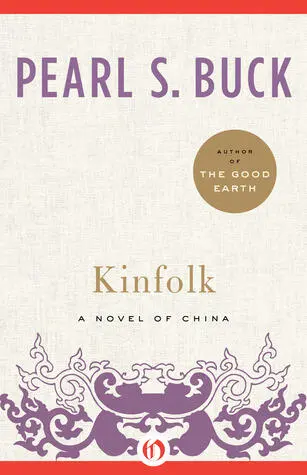
- Название:Kinfolk
- Автор:
- Издательство:Open Road Media
- Жанр:
- Год:2012
- ISBN:нет данных
- Рейтинг книги:4 / 5. Голосов: 1
-
Избранное:Добавить в избранное
- Отзывы:
-
Ваша оценка:
Kinfolk: краткое содержание, описание и аннотация
Предлагаем к чтению аннотацию, описание, краткое содержание или предисловие (зависит от того, что написал сам автор книги «Kinfolk»). Если вы не нашли необходимую информацию о книге — напишите в комментариях, мы постараемся отыскать её.
, a sharp dissection of the expatriate experience, Pearl S. Buck unfurls the story of a Chinese family living in New York. Dr. Liang is a comfortably well-off professor of Confucian philosophy, who spreads the notion of a pure and unchanging homeland. Under his influence, his four grown children decide to move to China, despite having spent their whole lives in America. As the siblings try in various ways to adjust to a new place and culture, they learn that the definition of home is far different from what they expected.
Kinfolk — читать онлайн бесплатно полную книгу (весь текст) целиком
Ниже представлен текст книги, разбитый по страницам. Система сохранения места последней прочитанной страницы, позволяет с удобством читать онлайн бесплатно книгу «Kinfolk», без необходимости каждый раз заново искать на чём Вы остановились. Поставьте закладку, и сможете в любой момент перейти на страницу, на которой закончили чтение.
Интервал:
Закладка:
“Your mothers!” she said to them severely. “Where have you been taught morals? Have you no reason in your skulls? Can you behave like common robbers? Are we rich folk? No! We are not rich. I have no money on me at all that can be useful to you. Look at me — have I any jewels?”
She turned one ear and the other, and held out her hands. “That ring is my wedding ring and I have not taken it off in twenty years. Yes, you can cut off my finger but if you do, your head will be cut off.”
The carter stood half turned away, pretending himself helpless. “You!” she shouted at him, “do not pretend anything!”
James broke across this torrent. “Ma, why didn’t you wake me? You men! Who are you?”
“They are robbers and bandits, that is what they are!” Mrs. Liang bawled. “They do not know we are Liangs! Wait until I tell Uncle Tao about them!”
At the name of Uncle Tao alarm spread over the face of the tallest and darkest young man. He turned to the carter and said in reproach, “How is it you did not tell us they are the Liang family?”
“How did I know?” the carter replied.
“You rice bucket!” the other retorted. “Now the old man will not want to pay us his yearly guarantee because we have attacked his relatives.”
“You had better tell us that you have offended and for once we will let the matter pass,” Mrs. Liang said in a hard voice. “If you get out of our way at once, I will not tell Uncle Tao, but if there is any delay—”
There was no delay. The tall rough young man spread out his arms as a barrier between his men and the travelers and with much dignity Mrs. Liang commanded Mary to take her seat in the cart and she herself climbed into it with James’s help. Then James stepped in and the carter took up his whip sulkily.
“Wait,” the young robber cried. “I have something to say.”
Mrs. Liang looked at him with cold eyes. “Say it then, quickly,” she commanded. “Can I waste all this time?”
The robber smiled, showing white teeth. “Lady, please know that we are not evil men. The times are very bad for poor folk like us. We belong to the earth and did we have good rulers and a kind Heaven we could work the land and find food for ourselves and our families. But the rulers are evil and Heaven looks the other way. Even so we rob only the rich.”
Now this was the usual speech which robbers made when they had done their work, and so it had been from ancient times until now and Mrs. Liang was not deceived by it. “Did all do as you do,” she said severely, “there would be nothing but robbers and then whom would you rob?”
The robber had no answer to this and he scratched his jaw and grinned and Mrs. Liang sat very straight and bade the carter go on. While they traveled the rest of that day she talked very much to the carter, until he became thoroughly frightened, and wanted to give them up as his passengers.
He stopped the mule and threw down his whip and turned to James as a man.
“Your honorable ancestor here has said so much good talk that I dare not take you to your village. Please hire another carter.” Only then did James intervene.
“Ma, let him alone,” he said. “To change carts now would be to invite a fresh band of robbers.”
So she subsided into muttering and then into silence and toward the end of the day they drove into the ancestral village.
Uncle Tao had not gone to bed. He had bade his sons help him put on his best clothes and his appetite for his night meal had been poor. Feeling that none of his children, who had lived all their lives in the village, could be of use to him in meeting a lady who had lived years in a foreign country, he had sent for Chen, who came with pleasure.
Chen knew far better than James the mass of iniquity, humor, and kindness that was Uncle Tao, for there was this difference between the two young men. James expected the best of all human beings and Chen expected nothing at all. Therefore he neither pitied Uncle Tao nor grew angry with him. He enjoyed the old man, good and evil alike, and laughed a great deal over what Uncle Tao said.
“I do not know how our honest Liang family got into all these foreign ways,” Uncle Tao grumbled. “Until my generation we did not think of leaving our ancestral home and wandering around the four seas. My brother, the father of this bookworm Liang fellow, who now does not come home at all — well, my brother went to the northern capital but no further. In the city his children heard of foreign countries and nothing would do but this bookworm Liang must run over there, taking his wife and two small children, who have grown up as bad as foreigners, and then his wife gives birth to two more who are foreigners because they were born on foreign earth. All this has happened to us Liangs! Now they come back, these foreigners. The woman who is the mother of them — I remember her. She was a big mouth.”
“On the other hand,” Chen said, “I am grateful for everything, since it will give me a good wife.”
“Old-fashioned wives are best,” Uncle Tao grumbled. “When I frowned my wife trembled. When I shouted she wept. When I urged her she smiled. I did not praise her more than two or three times a year, for women and children cannot be praised. It makes them impudent. But this granddaughter of my brother whom you want to wed! Eh, I tell you, your life will not be too good. Begin strong, that is my advice to any man. Do not ask women anything. Do not tell them anything that is in your mind. I had a good wife, but I made her good.”
Chen listened to all this, keeping back laughter. Uncle Tao looked magnificent, as he sat in the most honorable seat in the main room. He wore an ancient yellow brocaded satin gown which was frayed about the edges with age. It hung to his heels and though it was cut full, the sleeves covering his hands, yet it was tight across shoulders and belly. He wore new white cotton stockings which his elder daughter-in-law had made for him and a pair of large black shoes of quilted satin on thick padded soles.
Thus they were conversing of many things in the universe when a hubbub at the gate where the other members of the family waited in their best clothes told them that the expected ones had arrived. Chen got up quickly and left the room. He should not be the first to greet the newcomer, and he stepped into a side court.
Uncle Tao did not stand up when they came in. He sat like an old emperor in his big carved chair by the table, his long pipe in one hand. He stared hard at Mrs. Liang and nodded his head.
“Eh — eh,” he mumbled, “so you have come back!”
Mrs. Liang stared back at him. “Uncle Tao, are you well?” she asked in a loud clear voice.
“At least I am not deaf,” he said tartly. “Where is your outside person — where is Liang Wen Hua, my nephew?”
“He could not come, Uncle Tao. He teaches school, you know, and they would not let him come.”
“What do they pay him?” Uncle Tao inquired.
She evaded this question. “He sent his obedience to you, Uncle Tao, and he bade me say that if there is anything you would like from the foreign country he will send it within his humble means.”
“I have no foreign wishes,” Uncle Tao replied with majesty. “Have you eaten?”
“Not yet, Uncle Tao,” Mrs. Liang replied.
All the daughters-in-law clustered about. “Come and eat, come and eat,” they clamored and she went with them.
Mary had not followed her mother. Instead she had gone to her room, pausing for a moment beside Chen who waited for her at the inner gate of the side court. They felt safe for this instant since everyone was with Mrs. Liang.
“Are you tired?” he asked in a low fond voice.
“Not too tired,” she replied, looking at him from under her lashes. “You must go and see Ma.”
Читать дальшеИнтервал:
Закладка:
Похожие книги на «Kinfolk»
Представляем Вашему вниманию похожие книги на «Kinfolk» списком для выбора. Мы отобрали схожую по названию и смыслу литературу в надежде предоставить читателям больше вариантов отыскать новые, интересные, ещё непрочитанные произведения.
Обсуждение, отзывы о книге «Kinfolk» и просто собственные мнения читателей. Оставьте ваши комментарии, напишите, что Вы думаете о произведении, его смысле или главных героях. Укажите что конкретно понравилось, а что нет, и почему Вы так считаете.