Pearl Buck - Kinfolk
Здесь есть возможность читать онлайн «Pearl Buck - Kinfolk» весь текст электронной книги совершенно бесплатно (целиком полную версию без сокращений). В некоторых случаях можно слушать аудио, скачать через торрент в формате fb2 и присутствует краткое содержание. Год выпуска: 2012, Издательство: Open Road Media, Жанр: Классическая проза, на английском языке. Описание произведения, (предисловие) а так же отзывы посетителей доступны на портале библиотеки ЛибКат.
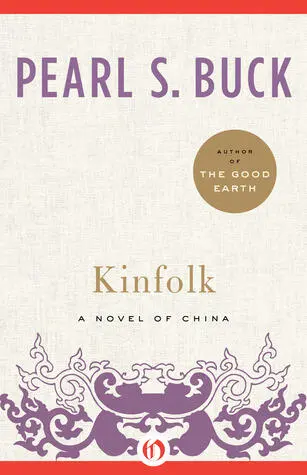
- Название:Kinfolk
- Автор:
- Издательство:Open Road Media
- Жанр:
- Год:2012
- ISBN:нет данных
- Рейтинг книги:4 / 5. Голосов: 1
-
Избранное:Добавить в избранное
- Отзывы:
-
Ваша оценка:
Kinfolk: краткое содержание, описание и аннотация
Предлагаем к чтению аннотацию, описание, краткое содержание или предисловие (зависит от того, что написал сам автор книги «Kinfolk»). Если вы не нашли необходимую информацию о книге — напишите в комментариях, мы постараемся отыскать её.
, a sharp dissection of the expatriate experience, Pearl S. Buck unfurls the story of a Chinese family living in New York. Dr. Liang is a comfortably well-off professor of Confucian philosophy, who spreads the notion of a pure and unchanging homeland. Under his influence, his four grown children decide to move to China, despite having spent their whole lives in America. As the siblings try in various ways to adjust to a new place and culture, they learn that the definition of home is far different from what they expected.
Kinfolk — читать онлайн бесплатно полную книгу (весь текст) целиком
Ниже представлен текст книги, разбитый по страницам. Система сохранения места последней прочитанной страницы, позволяет с удобством читать онлайн бесплатно книгу «Kinfolk», без необходимости каждый раз заново искать на чём Вы остановились. Поставьте закладку, и сможете в любой момент перейти на страницу, на которой закончили чтение.
Интервал:
Закладка:
James stood up and bending over the huge pallid mound of Uncle Tao’s belly he delicately probed its depths. “Is it bigger?” Uncle Tao asked anxiously. “Much bigger,” James said gravely. “Am I thinner?” Uncle Tao asked next. “You are thinner,” James agreed.
Uncle Tao pulled down his jacket and covered himself with the thick cotton quilt. “The question now is this — am I to die or to be killed?”
“If you mean that you will be killed if you are cut, then you are wrong.” He made his voice mild but excitement stirred in him. Uncle Tao was so afraid of death that he had refused the knife. Now even more afraid, was he about to ask for it? There was something piteous here. James went on still more gently. He said, “If you allow me to take this knot out soon instead of late, it is likely that you will live. Indeed, I will not do it at all unless I can do it within the next six months. It is only just to give me a reasonable chance to save your life.”
Uncle Tao listened to this with unblinking black eyes. “Let us talk of something else,” he said.
“I came to talk of something else,” James replied. Excitement died. Uncle Tao was still more afraid of dying by the knife than of anything else. James hardened again toward the stupid old man. He sat down and seeing no reason for delay or bushbeating, he said, “You will remember that you told me my sister should be married. I am come to tell you that the betrothal is arranged.”
As soon as he had said this he saw that he had made a mistake. Uncle Tao frowned. “How can this be so when I have known nothing of it?” he asked.
James knew that he must at once take a firm stand or Uncle Tao out of jealousy for his position might say that he did not want Chen even as a remote relative for the Liangs. “You know that my sister and I have been reared in America. It is not likely that we could grow up there exactly the same persons that we would have been had we stayed here in the ancestral village. In America the young choose their own mates. Then it would have been impossible for you or for me or even for my father to have compelled Mary to marry someone she did not like. She has chosen for her husband my friend Liu Chen. Nothing can be done about this.”
Uncle Tao breathed hard and rolled his head. “Yet it is I who decide what persons are to live in our village! This Liu Chen — he is not a Liang and I can say easily enough that he must not stay.”
Now James saw that for Mary’s sake he must coax Uncle Tao. So he leaned toward him and he said warmly, “Any man who has power over others can work evil or good and so can you. We trust your goodness.”
This set Uncle Tao back. His mouth hung open and he did not know how to reply. What could he say now that would not shame him? He wished that he might forget how he ought to act and act only as he felt, and in this dilemma he could not speak.
In the silence James went on. “I myself think that Mary has chosen well. Liu Chen likes you and he likes our village. Moreover, he is very useful to me in the clinic. Some day, with your permission, I shall make a hospital out of our clinic, and ours will be the first village in this whole region to have a hospital. This will bring honor to you and to the whole Liang family. People will come here from a long distance away and our inn will prosper and our few shops will grow into many and there will be markets for our men on the land,” All this James said in his smooth gentle voice and Uncle Tao could not speak against it. In some way of his own James had made Mary’s marriage a part of good that might come about and so Uncle Tao still kept silent. James went on. “I have more news. My mother is coming very soon.”
Here was something that Uncle Tao could oppose and he sat up. “Your mother should not come without your father,” he exclaimed. “I suppose that man full of ink has forgotten his ancestors! He has breathed in foreign winds and drunk Western waters. What do I care? But they all depend on me still. What would they do without old Uncle Tao to keep the tenants in their places and to collect a little money for them and hold the house together?” He sank back again and closed his eyes.
“What indeed!” James agreed. “My mother has often said that.”
Uncle Tao refused to be placated. “She had a loud voice as a girl. What has there been in these years in a foreign country that could improve her?”
James smiled and rose to his feet. “You will see,” he said, and thanking Uncle Tao he went away. To Chen and Mary he only said that Uncle Tao did not oppose anything, and Mary and Chen were both cheered.
“You need not laugh,” James told them. “Uncle Tao could if he liked put us all out of the village.”
But they did not believe him. In these days nothing could make them afraid or sorrowful, and they laughed at everything.
“There are many other villages,” Chen said.
Mrs. Liang looked about her in some anxiety. She had combed her hair but she had not tried to change her wrinkled garments. She was glad therefore when she saw James and Mary and not her new son-in-law. They saw her at the same moment and at once they were a knot of three, their arms about each other.
“Oh Ma, thank you for coming,” Mary cried.
James took her bags and bundles and led the way to the cart which he had hired in the city. It was clean and he had folded a new quilt over the bottom. He helped his mother to get in.
“Ma, it has no springs,” he reminded her.
“Eh, you need not tell me anything from now on,” she said in a lively voice. She was feeling much better already. This was the air of home and she breathed it in deeply. “Such good smell!” she cried. “I am smelling hot sweet potatoes—”
So it was. A vendor had come near with his small stove and he was taking out roasted sweet potatoes and laying them on the tray he carried on the other end of his pole. Mrs. Liang fumbled for her purse.
“Let me, Ma,” James said hastily and putting paper bills on the tray he counted four potatoes. Mrs. Liang shrieked. “James, you have made a mistake — so much money!”
“No, he hasn’t, Ma,” Mary said. “Money is worth nothing now, unless it is from America.”
At this Mrs. Liang looked mysteriously cheerful. She fumbled inside her garments somewhere, gave a wrench or two at her waist, and brought out a small oilcloth package. Then she looked up and met the interested eyes of the mule carter and the vendor and she pursed her lips.
“We better get going,” she said in a loud voice and in English. “I keep something to show you.” She put the thin package into her bosom, made clicking noises to the carter and James jumped in after Mary and they were off. Mrs. Liang sat between them and she put her hand on the arm of each. The country road was cobbled and the cart bounced up and down, but she did not mind this. She continued in English. “What I have in this pack is something your pa also doesn’t know. Why? Because I don’t tell him. Your pa is good but too liking to keep his money for himself. So I take small squeeze for myself!” She laughed gaily and Mary and James smiled, looking at one another over her head.
“It’s delicious to have Ma,” Mary said.
“How will we ever let you go again, Ma?” James asked. Now that his mother was here he felt warmed and more confident. Nothing was strange to her. She would be able to help him in the ancestral village, with Uncle Tao, with the hospital, with everybody. He would tell her everything.
Mrs. Liang looked from one face to the other and continued in triumph. “When I come to you, children, I bring my money with me. Your pa thinking nothing and giving me only a little for myself and for you!”
The bumping cart was shaking laughter out of her in gasps.
Читать дальшеИнтервал:
Закладка:
Похожие книги на «Kinfolk»
Представляем Вашему вниманию похожие книги на «Kinfolk» списком для выбора. Мы отобрали схожую по названию и смыслу литературу в надежде предоставить читателям больше вариантов отыскать новые, интересные, ещё непрочитанные произведения.
Обсуждение, отзывы о книге «Kinfolk» и просто собственные мнения читателей. Оставьте ваши комментарии, напишите, что Вы думаете о произведении, его смысле или главных героях. Укажите что конкретно понравилось, а что нет, и почему Вы так считаете.