Pearl Buck - Kinfolk
Здесь есть возможность читать онлайн «Pearl Buck - Kinfolk» весь текст электронной книги совершенно бесплатно (целиком полную версию без сокращений). В некоторых случаях можно слушать аудио, скачать через торрент в формате fb2 и присутствует краткое содержание. Год выпуска: 2012, Издательство: Open Road Media, Жанр: Классическая проза, на английском языке. Описание произведения, (предисловие) а так же отзывы посетителей доступны на портале библиотеки ЛибКат.
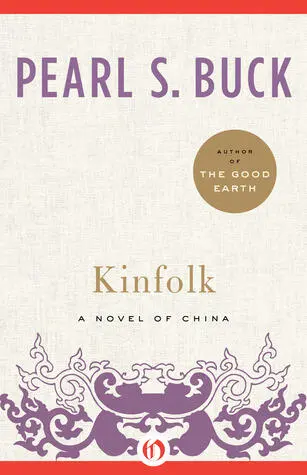
- Название:Kinfolk
- Автор:
- Издательство:Open Road Media
- Жанр:
- Год:2012
- ISBN:нет данных
- Рейтинг книги:4 / 5. Голосов: 1
-
Избранное:Добавить в избранное
- Отзывы:
-
Ваша оценка:
Kinfolk: краткое содержание, описание и аннотация
Предлагаем к чтению аннотацию, описание, краткое содержание или предисловие (зависит от того, что написал сам автор книги «Kinfolk»). Если вы не нашли необходимую информацию о книге — напишите в комментариях, мы постараемся отыскать её.
, a sharp dissection of the expatriate experience, Pearl S. Buck unfurls the story of a Chinese family living in New York. Dr. Liang is a comfortably well-off professor of Confucian philosophy, who spreads the notion of a pure and unchanging homeland. Under his influence, his four grown children decide to move to China, despite having spent their whole lives in America. As the siblings try in various ways to adjust to a new place and culture, they learn that the definition of home is far different from what they expected.
Kinfolk — читать онлайн бесплатно полную книгу (весь текст) целиком
Ниже представлен текст книги, разбитый по страницам. Система сохранения места последней прочитанной страницы, позволяет с удобством читать онлайн бесплатно книгу «Kinfolk», без необходимости каждый раз заново искать на чём Вы остановились. Поставьте закладку, и сможете в любой момент перейти на страницу, на которой закончили чтение.
Интервал:
Закладка:
“Why not?” he had retorted. “I have myself all prepared and now you don’t go!”
“I have been thinking — who will look after you?”
“Nellie will feed me, and I will work hard and expect your return,” he had said too graciously.
She had stared at him, but he had returned her gaze un-blinkingly. He looked placid and well and she was further alarmed.
“Then I must fly only,” she said. “I fly there and fly back. Supposing I stay one month, I am satisfied.”
“You will be seasick on the plane,” he remonstrated. “Remember how in China you were sick even on the train — and for that matter, as a bride, I believe, in your sedan.”
She refused the disagreeable memory of herself when, long ago, she had come out of the bridal chair, pale and shaken with seasickness. Chair bearers always tossed a bride cruelly, laughing when she was sick, for it was a sign of good luck and early pregnancy.
“Now I am older,” she said. “If I am sick I will be sick and not mind too much.”
So it was decided, and she made all preparations. She bought gifts for Mary of American stockings and underwear and a warm sweater and a sweater too for James and her new son-in-law. Had she been on a ship she would have taken boxes, and Dr. Liang was secretly thankful that on a plane she could take very little.
Yet it was not only in the matter of clothes that she made preparation. She went to see Louise and had loud exclamatory talk with Mrs. Wetherston in which she made known her joy at having another son-in-law. “So nice!” she had said briskly. “One American, one Chinese son-in-law! I am sure American is better, but anyway I take what my girls like. Alec is so nice. Thank you, Mrs. Wellyston, to be such a good mother with a good son. He is too good for Louise. She is such selfish girl, I know.”
“Louise is a darling,” Mrs. Wetherston said.
“Thank you too much, but I know,” Mrs. Liang said. “She puts down things anywhere. ‘Louise!’ I say, ‘now you have baby. You cannot to put down everywhere. It is too bad. Pick it up,’ I say. But she is so spoiled. Please excuse me.”
“I won’t hear a word against our little girl,” Mrs. Wetherston said warmly. She loved Mrs. Liang by now and she spent happy hours describing to her friends how interesting it all was since Alec had married a Chinese girl. “Of course, my dears, the family is exceptional,” she always told them.
Dr. Liang she respected but disliked. After the one dinner the two families had taken together, Mr. Wetherston had refused to spend any more time with Dr. Liang. “We don’t speak the same language,” he had told Mrs. Wetherston.
“We ought to try to understand Chinese psychology, I think, dear,” she had said gently.
This also Mr. Wetherston had refused to do. “I get enough psychology in my clients,” he said firmly. “I don’t want it in my relatives.” He would have preferred that Alec had married a nice American girl and he made no bones about that. “Now, Dorothy,” he had told Mrs. Wetherston, “I’m not going to say anything. For a Chinese Louise is a nice girl. But I’d rather Alec had married a nice American girl instead of bringing home a foreigner. Of course it can’t be helped, and there was already little Alec. We didn’t know about him. I guess I understand the circumstances — well, all I can say is, let’s make Louise American as fast as possible, and forget the rest of them.” Since he left home before nine in the morning and did not come back from his downtown office until after six in the evening, he was able to do this easily.
Mrs. Wetherston did not have the courage to tell him that she was beginning to enjoy her unique position as the mother-in-law of a pretty Chinese girl, especially one who was a daughter of the Liang family. Nobody had paid any attention to her before and now they did. Her bridge club, where she had always been inconspicuous except for a bad play, now made much of her and asked her many questions. Once even a reporter came for an interview, and the next day she was half proud, half embarrassed to see a picture of herself in an afternoon paper, set in the middle of a column of how it felt to be the mother of a son with a Chinese wife. She felt a hypocrite when Alec thanked her for being so good to Louise.
“Mom, you could have been so different,” he said gratefully.
“But I enjoy her, dear,” she protested. “And the baby is so good — and so pretty, Alec. And it was so sweet of Louise to name her Dorothy.”
The marriage was turning out well. If Louise was growing more rather than less lazy, she was sweet tempered and content, for she had fallen easily in love with her husband. She had taken up her friendship with Estelle again and had laughed at her childish infatuation for Philip. Philip was married, too, but he had gone to California because his brilliant blond wife wanted to act in pictures, much to his father’s disgust. Louise never went to the Morgan house, but Estelle, who was still single and working in radio, had at first come often to see Louise.
“Philip was only a boy,” Louise had mused, smiling, and her long Chinese eyes were full of rich secrets which Estelle could not divine.
Then somehow the friendship began to dwindle. Louise, married to a handsome young American, nursing their pretty child, taking care of her lively little stepson, had become unendurable to Estelle. Since the war, girls married young. To be twenty-four and then twenty-five and still not married! It wasn’t as if there weren’t plenty of Chinese that Louise could have married. American men ought to marry American women. When Estelle stopped coming Louise did not miss her. She did not miss anybody.
“Louise,” Mrs. Liang said when the door had closed behind her. “Now I want your listening.”
Since Louise belonged to the Wetherston family, Mrs. Liang felt it her duty sometimes to speak in English to her.
Louise, changing the diapers of her adorable baby, did not look up. Little Alec was emptying the pin tray and she kept an eye on him. “Yes, Ma,” she murmured.
“Now I am leaving your pa for nearly two months. Anyway six weeks,” Mrs. Liang went on. “You must not just stay here and not see him. Every day or two days you must go to apartment and see what is Neh-lee cooking.”
“All right, Ma,” Louise said. She had no intention of such faithfulness, but she did not want to disturb her mother by truth. She lifted her baby tenderly in her arms, unbuttoned the front of her dress, and presented her full young breast to the child’s obedient mouth. Sitting in a low chair thus she made a pleasant picture which moved Mrs. Liang’s heart.
“Like I was with you,” she murmured, her eyes swimming.
Louise smiled, unbelieving. Her mother could never have been pretty, even as a young mother. “Go on, Ma,” she said.
Mrs. Liang hitched her chair nearer and began to speak in a low rapid voice in Chinese. “Eh, Louise, I tell you, your pa is a man, naturally. All men are the same. They like women too much.”
Louise looked away. “Oh, Ma, when Pa is so old!”
Mrs. Liang looked indignant. “He is not too old. To you, yes, but to any woman over thirty, no! And I tell you—” She broke off and considered. Should she or should she not mention the name of Violet Sung? She could not control herself and she went on in English again. “You know Violet Sung? She is always — well, I don’t say! But when I am away, your pa will be very weak.”
“Oh, Ma,” Louise murmured again.
“You don’t need to keep saying so,” Mrs. Liang said with irritation. “I will tell you later when you are not so young, and you will understand better. Now all I say is, sometimes see your pa, and listen to some friends, and hear if there is any talk. It is for Pa’s sake. He is too famous and well known for talk.”
Читать дальшеИнтервал:
Закладка:
Похожие книги на «Kinfolk»
Представляем Вашему вниманию похожие книги на «Kinfolk» списком для выбора. Мы отобрали схожую по названию и смыслу литературу в надежде предоставить читателям больше вариантов отыскать новые, интересные, ещё непрочитанные произведения.








Обсуждение, отзывы о книге «Kinfolk» и просто собственные мнения читателей. Оставьте ваши комментарии, напишите, что Вы думаете о произведении, его смысле или главных героях. Укажите что конкретно понравилось, а что нет, и почему Вы так считаете.