Pearl Buck - Kinfolk
Здесь есть возможность читать онлайн «Pearl Buck - Kinfolk» весь текст электронной книги совершенно бесплатно (целиком полную версию без сокращений). В некоторых случаях можно слушать аудио, скачать через торрент в формате fb2 и присутствует краткое содержание. Год выпуска: 2012, Издательство: Open Road Media, Жанр: Классическая проза, на английском языке. Описание произведения, (предисловие) а так же отзывы посетителей доступны на портале библиотеки ЛибКат.
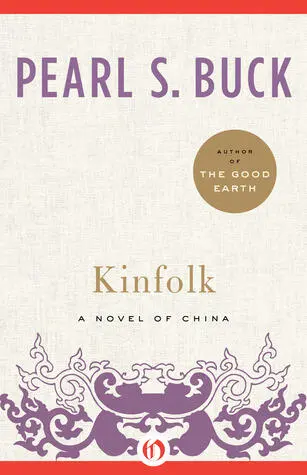
- Название:Kinfolk
- Автор:
- Издательство:Open Road Media
- Жанр:
- Год:2012
- ISBN:нет данных
- Рейтинг книги:4 / 5. Голосов: 1
-
Избранное:Добавить в избранное
- Отзывы:
-
Ваша оценка:
Kinfolk: краткое содержание, описание и аннотация
Предлагаем к чтению аннотацию, описание, краткое содержание или предисловие (зависит от того, что написал сам автор книги «Kinfolk»). Если вы не нашли необходимую информацию о книге — напишите в комментариях, мы постараемся отыскать её.
, a sharp dissection of the expatriate experience, Pearl S. Buck unfurls the story of a Chinese family living in New York. Dr. Liang is a comfortably well-off professor of Confucian philosophy, who spreads the notion of a pure and unchanging homeland. Under his influence, his four grown children decide to move to China, despite having spent their whole lives in America. As the siblings try in various ways to adjust to a new place and culture, they learn that the definition of home is far different from what they expected.
Kinfolk — читать онлайн бесплатно полную книгу (весь текст) целиком
Ниже представлен текст книги, разбитый по страницам. Система сохранения места последней прочитанной страницы, позволяет с удобством читать онлайн бесплатно книгу «Kinfolk», без необходимости каждый раз заново искать на чём Вы остановились. Поставьте закладку, и сможете в любой момент перейти на страницу, на которой закончили чтение.
Интервал:
Закладка:
When therefore Dr. Liang received a letter from James, another from Mary, and a third from his new son-in-law, he was openly glad that Mary had chosen so well. He examined the handwriting of Chen’s letter. It was not too good. He held the letter up before his eyes and he said to Mrs. Liang, “This fellow is not a scholar. Nevertheless, there is a certain rude strength in his style. He does not merely copy delicate handwriting. He knows the roots of the letters and he writes correctly and with vigor. He has temper and power. I hope Mary will not quarrel with him immediately.”
Mrs. Liang did not reply. She was absorbed in reading Mary’s letter, which was written simply and plainly so that she might read it easily. “Dear beloved Ma,” Mary had written. “Please forgive me for engaging myself without your or Pa’s knowledge. James will tell you how it all happened. Chen is his best friend. I tell you he is a good man. He is ugly in the face but tall and broad and his mouth is square, which you know is a sign of brains and his ear lobes are long which Uncle Tao says is lucky. Chen laughs a great deal. He is kind to everybody. He is a doctor, but not so good as James, I think. His family lives in a village as ours does. Ma, I wish you could come here for our wedding but I suppose Pa will not let you. Dear Ma, there are many things I would like to ask you before I am a married woman.”
At these words Mrs. Liang began to weep.
“What is the matter now?” Dr. Liang asked.
“Mary needs me,” she said. She did not sob aloud but she allowed tears to stream down her cheeks.
“What for?” Dr. Liang asked.
“You would not understand if I told you.”
Dr. Liang looked dignified at this. “I am not stupid,” he remarked. “I have what is considered a good mentality.”
She continued to weep. He looked at her from time to time with mounting impatience. “Well, well,” he said at last and with severity, “I suppose you will be crying steadily now for these next few weeks. I had better get used to it.”
She wiped her cheeks. “Liang,” she said bravely, “let us go back to the ancestral village just for our daughter’s wedding.”
He looked horrified. “After all these years?” he exclaimed. “In these evil times?”
“I would like to go back,” she said pleadingly. “There are things I should tell Mary before the wedding.”
Dr. Liang looked displeased. “You mothers always think you know so much,” he said. “The fact is that all that sort of thing comes naturally. Whatever you tell Mary, she will do what she knows already by instinct. Besides, what can you tell her?” He was moved with a faint curiosity.
“There are so many things,” Mrs. Liang said vaguely, not looking at him.
“Whatever you tell her can only be out of your experience with me,” he said with dignity. “This will not help her at all with such a young man as has written this letter.” He touched Chen’s letter lying on the table with his delicate forefinger. “I want to go home,” she said stubbornly. The upshot of all this was that a week or two of steady dejection on the part of Mrs. Liang wore him down to such a low point of resistance that he agreed to let her have her way. He declared that he himself could not possibly leave his students at the college, but that if she felt no like sense of duty toward him and their home, she could go, to be back in a period of three months at the latest. He was deeply wounded at the signs of joy which she showed upon this permission, and he was only comforted when he had talked over the whole matter with Violet Sung.
They met now quite regularly two or three times a week, varying their meeting places, so that no gossip would rise about them. Each place was a small quiet restaurant in some part of the city. The routine was the same. They ordered a meal, or perhaps only tea, and they sat long, talking about their thoughts and never about their lives.
On the day when he had finally given his permission to his wife, however, Violet, with her delicate feeling instinct, perceived that he was unhappy. She herself was unhappy most of the time and this mood, so constant in herself, gave her a sensitivity almost abnormal toward all other human beings except Ranald Grahame. Toward him she had no sensitivity whatever. This puzzled her very much, for in hours she was with him more than she was with anyone else. But he remained strange to her. She met him each day, each night, almost as a stranger. She knew every line of his body, every look of his face as she knew her own physical being, but what was in his mind, what were his feelings and his emotions, she did not know. They were content together in a literal physical fashion, and sometimes, indeed, after hours of talk with Wen Hua, as she now called Dr. Liang, she went back to Ranald with a sort of relief that she need not talk or think or feel. What, she often pondered, would have happened if these two men had been one? “I should have been utterly consumed,” she told herself thoughtfully. As it was, between the two, she lived a life which though in some ways unnatural was nevertheless satisfying in its balance.
“Wen Hua, why are you sad?” she asked him gently today.
She was looking more beautiful even than usual. She wore a new frock of dull black silk and a black coat lined with scarlet, and a small scarlet hat. He saw this fresh beauty across the small table between them.
“It is nothing,” he replied, trying to smile.
“Of course it is something. You cannot deceive me however you deceive others.”
“Do I deceive others?”
“Nobody knows you except me.”
He began therefore to talk. “I suppose I dread loneliness,” he said very gently. “The mother of my children wishes to leave me for a while to return to our ancestral village. My elder daughter is to be married to a young Chinese doctor who is my son’s friend. This is all good. I have no objection. I only wish I could go. But my work keeps me here. Yet I do not like to think of three months in my lonely house.” He sighed. “Ah, I know I am a friendless man. I put my roots deep into only a few people. My children have left me. Now my wife, their mother, wants to leave me.”
“She will come back,” Violet reminded him.
“Of course — but still—”
He broke off. “It is a strange thing that one can live a lifetime with a woman without loving her, and yet—” he broke off again.
“In a way you do love her,” Violet said generously. “Wen Hua, you are so complex. I understand you better than you understand yourself.”
“Then explain me to myself,” he murmured. It was delightful to lean toward this lovely woman and hear himself explained.
Her great eyes met his. “You are like the lotus. You need to plant your roots deep into the earth beneath the waters before you can flower and fruit. Your — the mother of your children has been your earth. She has given you a place for your roots.” Her exquisite face turned the palest of pearl pink. “I ought to be grateful to her and I am. I honor her for what she is to you. For it is I who have enjoyed the flower and the fruit.”
He was much touched by this sweetness and generosity. “You always teach me something good,” he said. “I will be generous too. I will let her go. But be kind to me. While she is gone let us see each other often, very often — Violet!”
“Yes,” she murmured, “yes.”
Mrs. Liang closed her eyes and sat back in her seat. At the last minute she had decided to take the plane instead of the steamer. Just why this was so she did not know. She only felt it best. Liang had come back one evening quite himself and had said very kindly that she might go. She was surprised and disturbed.
“Liang, I think I better not go,” she had exclaimed in English.
Читать дальшеИнтервал:
Закладка:
Похожие книги на «Kinfolk»
Представляем Вашему вниманию похожие книги на «Kinfolk» списком для выбора. Мы отобрали схожую по названию и смыслу литературу в надежде предоставить читателям больше вариантов отыскать новые, интересные, ещё непрочитанные произведения.
Обсуждение, отзывы о книге «Kinfolk» и просто собственные мнения читателей. Оставьте ваши комментарии, напишите, что Вы думаете о произведении, его смысле или главных героях. Укажите что конкретно понравилось, а что нет, и почему Вы так считаете.