Pearl Buck - Kinfolk
Здесь есть возможность читать онлайн «Pearl Buck - Kinfolk» весь текст электронной книги совершенно бесплатно (целиком полную версию без сокращений). В некоторых случаях можно слушать аудио, скачать через торрент в формате fb2 и присутствует краткое содержание. Год выпуска: 2012, Издательство: Open Road Media, Жанр: Классическая проза, на английском языке. Описание произведения, (предисловие) а так же отзывы посетителей доступны на портале библиотеки ЛибКат.
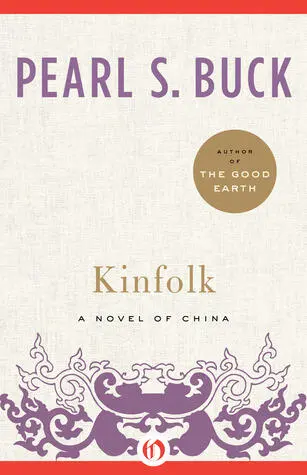
- Название:Kinfolk
- Автор:
- Издательство:Open Road Media
- Жанр:
- Год:2012
- ISBN:нет данных
- Рейтинг книги:4 / 5. Голосов: 1
-
Избранное:Добавить в избранное
- Отзывы:
-
Ваша оценка:
Kinfolk: краткое содержание, описание и аннотация
Предлагаем к чтению аннотацию, описание, краткое содержание или предисловие (зависит от того, что написал сам автор книги «Kinfolk»). Если вы не нашли необходимую информацию о книге — напишите в комментариях, мы постараемся отыскать её.
, a sharp dissection of the expatriate experience, Pearl S. Buck unfurls the story of a Chinese family living in New York. Dr. Liang is a comfortably well-off professor of Confucian philosophy, who spreads the notion of a pure and unchanging homeland. Under his influence, his four grown children decide to move to China, despite having spent their whole lives in America. As the siblings try in various ways to adjust to a new place and culture, they learn that the definition of home is far different from what they expected.
Kinfolk — читать онлайн бесплатно полную книгу (весь текст) целиком
Ниже представлен текст книги, разбитый по страницам. Система сохранения места последней прочитанной страницы, позволяет с удобством читать онлайн бесплатно книгу «Kinfolk», без необходимости каждый раз заново искать на чём Вы остановились. Поставьте закладку, и сможете в любой момент перейти на страницу, на которой закончили чтение.
Интервал:
Закладка:
Louise laughed. “All right, Ma. But you’re funny.”
Mrs. Liang laughed, too. She felt better. She had little time and she rose, remembered she had brought a pair of new rubber pants for the baby and fumbled for them in her bag. “Of course don’t tell Alec. Your pa is not his family. Maybe I am suspicious but I know your pa too much. Now such pants like I got you haven’t for the child. They button, like so, and when you wash, buttons out, and so—” Mrs. Liang demonstrated. “Good, isn’t it not?” She laughed again heartily. “Well, now I go back to ancestral village, and I must get used to small watercloths holding to babies’ bottoms and open pants to make some water on the ground. Never mind — in China it is not bad. Here, of course, it cannot. Carpets on the floor and so on. I think Americans are troubling themselves sometimes too much.”
Louise laughed again. “Oh, Ma, you’re really a scream, if you only knew it.”
“Screaming? I am not screaming, Louise,” Mrs. Liang protested.
“Oh, Ma,” Louise repeated laughing helplessly.
From Louise Mrs. Liang had gone to Mrs. Pan. The two women had discussed thoroughly Mary’s engagement until there remained nothing to tell. But Mrs. Liang after rending of the heart, had decided to ask Mrs. Pan also to let her know of any gossip. Whatever gossip there was would surely penetrate at once to Chinatown, where everything was known about everybody.
Mrs. Pan had been down on her knees scrubbing her floors when Mrs. Liang came and she was glad to see her. She had got up, wrung her cloth dry, and slapped her youngest child gently on its bare legs.
“You little thing — don’t dirty floor,” she said with mock severity. Then she had laughed. “Come in, Mrs. Liang. My children are terrible. Sit down, I have some tea already made. These little cakes mildew if we don’t eat. My, my, so you really go on the plane! I couldn’t dare. My stomach is too foolish.”
The conversation ran on rapidly, most of the time in duet, until the tea was drunk, the cakes eaten, and Mrs. Liang came to the point for which Mrs. Pan had been waiting.
“Mrs. Pan,” Mrs. Liang began, wiping her mouth on the edge of her sleeve.
Mrs. Pan looked solemn. “Yes, Mrs. Liang, please go on. Don’t be afraid of me. I am very good friend to everybody and specially to you now.”
Mrs. Liang cleared her throat. “You are old married woman too, Mrs. Pan,” she said feelingly. “I don’t have to say to you how are men anywhere. Liang is no worse than all. But I am going away six weeks now. I am only afraid—” She paused.
Mrs. Pan smiled at her tenderly. “I know. You are afraid of Violet Sung.”
“How you know it?” Mrs. Liang exclaimed.
“Every woman is afraid of her. I am so glad my Billy Pan is just common old businessman from Canton. She cannot look at him, yet he looks at her when he sees her pictures in papers. I say to him, ‘Billy, she don’t know your name.’ He say, ‘Can’t I just look?’ I say, ‘Sure you can look — for one minute. More I will scratch your face!’”
Mrs. Liang was frightened. “Have you heard some gossip?”
Mrs. Pan made haste to comfort her. “No — no — who can? But your Dr. Liang is handsome and famous and not common businessman from Canton. He is Peking man, very exceptional scholar, talks to American ladies and so on. I know!”
Mrs. Liang turned pale and Mrs. Pan went on quickly. “Now, don’t you think, Mrs. Liang! And please be comfortable. I will listen all four corners and hear something. Anybody can tell me since they know I am your friend. Suppose I hear it, I will write you quick letter.”
Mrs. Liang drew a deep breath. “Good! Then I am trusting your letter.”
She rose, drew out a small stuffed doll from her bag for Mrs. Pan’s youngest and then two cakes of fine soap for Mrs. Pan. “Thank you,” she said.
“Thanking you,” Mrs. Pan said gratefully.
Thus they had parted. But what Mrs. Pan had said was so disturbing that against her better judgment she had spoken even to Nellie on the last day.
“Eh, Neh-lee,” she had said in a half whisper in the kitchen.
“What is it now?” Nellie asked, her hands in the dishpan.
“You take care good,” Mrs. Liang said.
“I will that,” Nellie promised.
“Neh-lee,” Mrs. Liang began again, fumbling in her purse.
“Well?”
“I give you this, Neh-lee — please!”
“Thank you, I’m sure,” Nellie said, taking quickly the ten-dollar bill held out to her. She was surprised and even frightened for Mrs. Liang had never before given her more than a quarter. Was she about to be fired?
“I tell you something,” Mrs. Liang said urgently. “You don’t please open door here to any ladies.”
Nellie’s gray eyes opened wide. “Well, I’m sure, madam—”
Mrs. Liang cut her off. “No, please, and specially to some lady called Violet Sung. She cannot come here while I am gone.”
“I’ll never let her in,” Nellie agreed.
Mrs. Liang patted Nellie’s arm. “So I trust you!”
“But if the mister lets her in or if I’m not here?” Nellie asked.
“You look see every day,” Mrs. Liang bade her. “Look see some lady’s handkerchief, flower, or smelling—” Mrs. Liang went sniff-sniff, her nose in the air to illustrate.
“I get you,” Nellie said succinctly. “I had trouble with my own old man — until he was hit by a truck.”
So finally Mrs. Liang had been ready to go. Dr. Liang had taken her to the plane and had presented her with a gardenia. They held hands for a moment.
“Liang, please don’t eat crabs while I am gone,” she had begged. She felt no one else knew a really fresh crab as she did.
“No, no,” he promised.
The next minute she was hurried into the plane and the door was shut. She had waved at the window and the parting was over. Now she felt the plane rise high into the air as it took off over New York City. A few minutes later it was humming above the Atlantic Ocean, its wings wide and its nose set toward the East. Her stomach soared, too, and she leaned back and closed her eyes.
20
IN THE VILLAGE JAMES now began to wrestle with such loneliness as he had never imagined in his life. When he tried to find the cause for his melancholy, he found it hidden deep in himself. He examined himself secretly, his temperature, his blood pressure, and even took a sample of his own blood, searching for some new germ. The season had not yet arrived for mosquitoes and malaria, he had no fleas, and other insects, so far as he knew, had not crossed the border between the old-fashioned Liangs and the new. He was determined not to speak to Mary or Chen lest he spoil their happiness, and they were too constantly gay to notice that he was not.
He was introspective and yet able to be detached, even from himself. Thus he saw that he was not actually like Chen, who, he came to perceive more and more clearly, was really like Mary. These two were simple in their separate natures. They were both good; that is, they could not be satisfied with living entirely selfishly. They needed to feel that what they did, their daily work, was of some use to their people. Beyond this, both of them enjoyed simple food, plain clothes, and a house where they need not consider whether the furniture was damaged. Books were for amusement rather than instruction, unless these books taught them some better way of doing what they would do anyway. Mary read faithfully over and over again her few schoolbooks on teaching children, and she wrote letters to her former teachers in New York, asking for pictures and new teaching materials. Chen wrote no letters to America and he ridiculed Mary’s pictures amiably, and he was not too careful as a doctor and everybody liked him. James would not allow himself to feel hurt when he saw that the people who came in even larger numbers to the clinic turned first to Chen. Chen’s foolery and good spirits made them trust him first, even though James knew himself the better doctor.
Читать дальшеИнтервал:
Закладка:
Похожие книги на «Kinfolk»
Представляем Вашему вниманию похожие книги на «Kinfolk» списком для выбора. Мы отобрали схожую по названию и смыслу литературу в надежде предоставить читателям больше вариантов отыскать новые, интересные, ещё непрочитанные произведения.




Обсуждение, отзывы о книге «Kinfolk» и просто собственные мнения читателей. Оставьте ваши комментарии, напишите, что Вы думаете о произведении, его смысле или главных героях. Укажите что конкретно понравилось, а что нет, и почему Вы так считаете.