Pearl Buck - Kinfolk
Здесь есть возможность читать онлайн «Pearl Buck - Kinfolk» весь текст электронной книги совершенно бесплатно (целиком полную версию без сокращений). В некоторых случаях можно слушать аудио, скачать через торрент в формате fb2 и присутствует краткое содержание. Год выпуска: 2012, Издательство: Open Road Media, Жанр: Классическая проза, на английском языке. Описание произведения, (предисловие) а так же отзывы посетителей доступны на портале библиотеки ЛибКат.
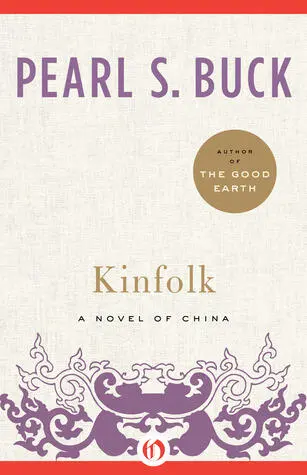
- Название:Kinfolk
- Автор:
- Издательство:Open Road Media
- Жанр:
- Год:2012
- ISBN:нет данных
- Рейтинг книги:4 / 5. Голосов: 1
-
Избранное:Добавить в избранное
- Отзывы:
-
Ваша оценка:
Kinfolk: краткое содержание, описание и аннотация
Предлагаем к чтению аннотацию, описание, краткое содержание или предисловие (зависит от того, что написал сам автор книги «Kinfolk»). Если вы не нашли необходимую информацию о книге — напишите в комментариях, мы постараемся отыскать её.
, a sharp dissection of the expatriate experience, Pearl S. Buck unfurls the story of a Chinese family living in New York. Dr. Liang is a comfortably well-off professor of Confucian philosophy, who spreads the notion of a pure and unchanging homeland. Under his influence, his four grown children decide to move to China, despite having spent their whole lives in America. As the siblings try in various ways to adjust to a new place and culture, they learn that the definition of home is far different from what they expected.
Kinfolk — читать онлайн бесплатно полную книгу (весь текст) целиком
Ниже представлен текст книги, разбитый по страницам. Система сохранения места последней прочитанной страницы, позволяет с удобством читать онлайн бесплатно книгу «Kinfolk», без необходимости каждый раз заново искать на чём Вы остановились. Поставьте закладку, и сможете в любой момент перейти на страницу, на которой закончили чтение.
Интервал:
Закладка:
“Oh Ma!” Mary said fondly. “I am so glad Chen is going to see you.” She gave her mother’s hand a squeeze, and then chanced to look at it. “Why, Ma, how dirty you are,” she exclaimed.
Mrs. Liang was not embarrassed. “Never mind — it is not here like America,” she said comfortably. “Now tell me, Mary, how is this Chen looking and all that?”
They were still talking in English because the carter sat on the edge of the vehicle, within a few inches of them. The mule took its own gait while the carter stared at them with bright and curious eyes. He was young and ragged and bold.
“James, you tell,” Mary said with sudden shyness.
“Well, Mother,” James said, “he is a little taller than I am, much bigger in the bones, a square head, a big nose—”
“Not too big!” Mary put in.
“Always making jokes, doesn’t like the city, doesn’t like to dress up, doesn’t like scholars—”
“Sounds so nice,” Mrs. Liang said. “Who is go-between?”
“I was, Ma,” James said.
“And Uncle Tao?” Mrs. Liang asked shrewdly.
“Uncle Tao is willing.”
“When is wedding?”
Mary looked shy again. “It depends on you, Ma, and when you have to go back to Pa.”
“Six weeks only,” Mrs. Liang said.
“Oh Ma!” Their voices rose in chorus. “We thought it would be six months at least,” Mary cried.
Mrs. Liang looked grave. She glanced at the carter and lowered her voice and still speaking English she explained her anxieties. “Your pa is too valuable,” she ended. “I cannot just to leave him loose. Violet Sung is like some hungry tiger outside door of apartment.”
“Oh Ma,” Mary murmured while James kept silence.
“Just like Louise,” Mrs. Liang retorted. “Oh Ma — she says, oh Ma, you are screaming — such talking all the time! But I tell you I am older. Just now, Mary, you are engaging and you think men are too perfect.”
“Only Chen,” James said, smiling.
“Maybe just now Chen is too perfect,” Mrs. Liang conceded. “But here is China and men have no such good chance as in America where ladies are waiting everywhere with open bust and leg. I tell you, men cannot continue perfect in such case. You mustn’t think I am blaming your pa too much. No! I blame elsewhere — Violet Sung and whole America!”
“Tell us about Louise,” James said, seeing his mother was growing agitated.
To tell all about Louise occupied many miles, and by the time they understood the happy state of their younger sister, it was time to stop for the afternoon meal. Mrs. Liang let her appetite have its way and she consumed several bowls of noodles, steamed vegetable dumplings, steamed meat roll, bean curd with chopped raw onion, and salt fish. Clearly she was happy. Both James and Mary were alarmed for her digestion but she was triumphant. “Many years my stomach is homesick also,” she said. “Now I feel too good.”
She slept for a while when they got in the cart again and it was twilight when they drew near to the inn where they were to spend the night. There when they were in their rooms, the door closed and barred after they had washed and had eaten a snack of bread in a thin sheet some twenty inches in diameter but rolled about garlic, they made ready for bed. Then Mrs. Liang delayed James as he was going into the next room. Alone with them she spoke Chinese.
“I had told myself I would not ask about your younger brother,” she said sighing, “but I find him always in my thoughts. Tell me all you know, and then I will think of him in the night and be ready to put my sorrow aside tomorrow.”
“Ma, you should sleep,” Mary said. But Mrs. Liang shook her head. “I know my old heart.” So James sat down on the edge of the hard board bed and he told his mother everything he knew. It was all too little, and because it was so little she wept bitterly. “At least we know where he is buried,” she said at last. “When the times are good again, we will move him into the place where our ancestors have their graves and where he belongs because living or dead he is still a Liang.”
She bade James leave her then, and when he was gone she said to Mary, “If you hear me weeping in the night, let me weep.”
Mary promised, but she told herself that she would lie awake and listen for her mother’s weeping. With all will to do so, nevertheless with health and youth and happiness and the long day’s riding across the country in the cold clear air, she fell quickly asleep. When they woke in the morning her mother was her usual cheerful self, and when they had washed and eaten they climbed into the cart and set forth again.
Who could have known that the carter was an evil fellow? James had chosen him for his fresh face and his ready smile and for the agile way in which he leaped upon the cart. But like most men in evil times, he was made up of many parts. He earned a fair living by his mule cart but money was almost worthless, and he took goods too as tender. Thus he managed to feed himself and his young family and his old parents. Had the Liangs been ordinary traveling folk he would have dealt fairly with them, and had they been official folk he would have been fearful. But to him as he listened to the clack of some language he had never heard upon, their tongues they were only foreigners.
Toward afternoon, having heard this clack for many hours, he leaned toward James and said, “What is this talk that you make?”
James smiled. “It is English,” he said.
The carter stared at him. “Yet you have all the same color of hair and eyes that I have and your skin is like mine except that you are not under the sun and wind every day, and I can see you are always washing yourselves. What is your country?”
James was surprised. “We are Chinese, also, and the only reason we know a foreign language is because we have spent some years on the other side of the sea.”
“What did you there?” the carter asked.
When James told him, he went on to ask many more questions, wanting to know how rich Americans were and what they ate and how they looked.
In the goodness of his heart James told him much, and the carter listened. Now Mrs. Liang did not like the way the carter began to look and so she broke in upon this talk in English.
“James, don’t talk too much,” she exclaimed. “I think this fellow is maybe bad.”
“Why, Ma, how suspicious of you!” Mary cried.
“Maybe,” Mrs. Liang conceded, “but he has something I don’t like.”
James smiled and ended the talk by saying he was sleepy, as indeed he was. Through the night before he had been wakeful after talking about Peter. But it was not only Peter. His mother had brought other memories with her, too, memories of his childhood and his boyhood in the comfortable American city. He thought of the great bridge by the river, and how he used to dream of what lay beyond it. Now he knew. There was no magic homeland. Here were poverty and oppression, and indifference to both. He began to sink again into the morass of despondence about himself and his life. Was he not throwing himself away, after all? Well, perhaps his mother would help him to answer that question. With some sort of return to childhood, which he fully recognized, he wondered if he should let her tell him, before she went back to his America, what he ought to do with his life.
Now the steady swing of the cart soothed him. They were traveling over dusty country roads now, and there were no stones. He fell asleep.
Out of deep sleep he was wakened by the sudden swerve of the cart off the road and by the shouts of men. Then he heard his mother’s loud firm voice. He opened his eyes. The cart came to a standstill and he sat up. At the open end he saw a crowd of heads, rough and dark. An arm reached in and pulled him. He did not see his mother or Mary. He scrambled out of the cart, kicking aside the arm. Mary and his mother stood by the cart. Mary’s face was fixed into angry calm but Mrs. Liang was talking loudly across her arms, folded on her bosom. Half a dozen young men in ragged garments stood pretending not to listen, yet hesitating as they stood. They looked half impudent, half sheepish. Clearly they had not counted on Mrs. Liang.
Читать дальшеИнтервал:
Закладка:
Похожие книги на «Kinfolk»
Представляем Вашему вниманию похожие книги на «Kinfolk» списком для выбора. Мы отобрали схожую по названию и смыслу литературу в надежде предоставить читателям больше вариантов отыскать новые, интересные, ещё непрочитанные произведения.






Обсуждение, отзывы о книге «Kinfolk» и просто собственные мнения читателей. Оставьте ваши комментарии, напишите, что Вы думаете о произведении, его смысле или главных героях. Укажите что конкретно понравилось, а что нет, и почему Вы так считаете.