Pearl Buck - Kinfolk
Здесь есть возможность читать онлайн «Pearl Buck - Kinfolk» весь текст электронной книги совершенно бесплатно (целиком полную версию без сокращений). В некоторых случаях можно слушать аудио, скачать через торрент в формате fb2 и присутствует краткое содержание. Год выпуска: 2012, Издательство: Open Road Media, Жанр: Классическая проза, на английском языке. Описание произведения, (предисловие) а так же отзывы посетителей доступны на портале библиотеки ЛибКат.
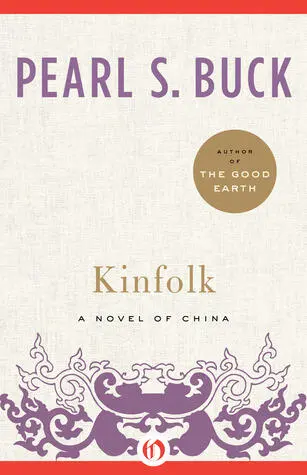
- Название:Kinfolk
- Автор:
- Издательство:Open Road Media
- Жанр:
- Год:2012
- ISBN:нет данных
- Рейтинг книги:4 / 5. Голосов: 1
-
Избранное:Добавить в избранное
- Отзывы:
-
Ваша оценка:
Kinfolk: краткое содержание, описание и аннотация
Предлагаем к чтению аннотацию, описание, краткое содержание или предисловие (зависит от того, что написал сам автор книги «Kinfolk»). Если вы не нашли необходимую информацию о книге — напишите в комментариях, мы постараемся отыскать её.
, a sharp dissection of the expatriate experience, Pearl S. Buck unfurls the story of a Chinese family living in New York. Dr. Liang is a comfortably well-off professor of Confucian philosophy, who spreads the notion of a pure and unchanging homeland. Under his influence, his four grown children decide to move to China, despite having spent their whole lives in America. As the siblings try in various ways to adjust to a new place and culture, they learn that the definition of home is far different from what they expected.
Kinfolk — читать онлайн бесплатно полную книгу (весь текст) целиком
Ниже представлен текст книги, разбитый по страницам. Система сохранения места последней прочитанной страницы, позволяет с удобством читать онлайн бесплатно книгу «Kinfolk», без необходимости каждый раз заново искать на чём Вы остановились. Поставьте закладку, и сможете в любой момент перейти на страницу, на которой закончили чтение.
Интервал:
Закладка:
When after the Empress died the family returned to Peking, old Mr. Liang as the eldest son and the guardian of the family estates had left Uncle Tao in charge. Uncle Tao was the younger brother, younger only by one half hour, for the two were twins, and all that remained alive of the once large Liang family of the previous generation. There were numerous cousins and remote relatives, who when they were without jobs and were hungry returned to the village to live, but of the Liang family direct there were only these two. They were very different. Dr. Liang’s father was dignified and a scholar. Uncle Tao had no dignity at all. As a boy he had driven his parents to despair with his mischief and his waywardness, and one day when his kind mother swallowed opium because she feared that her younger son would die under a headsman’s ax, her husband had firmly sent the boy away to a distant city, where a third cousin kept a medicine shop. The mother did not die, and the boy came home ten years later to his parents’ funeral. By then he was a handsome red-cheeked man with a loud laugh.
Mr. Liang rather liked his younger twin brother then. He himself had been the dutiful elder, the soul of rectitude and good behavior, and the tenants on the land cheated him continually. It was too easy to cheat Mr. Liang, who believed any who told him that the rains and the excessive sunshine, the heat and the surprising cold of the season had ruined the crops.
Uncle Tao soon saw what was going on. One day after the parents were safely under the earth he said to Mr. Liang, “Elder brother, I can see that if you continue to care for our family estates we shall all be out in the fields one day with the oxen and the tenants will be sitting here in our places. You had better put me in charge. I understand all about cheating.” Mr. Liang was only too happy to agree to this. He began the series of bribes which could make it safe for him to return permanently to Peking, and fourteen months after his son’s wedding, some years after the funeral of the Empress, and after the revolution, the family went to Peking, leaving Uncle Tao in charge. During these fourteen months Mrs. Liang had got to know Uncle Tao so well that she laughed every time she thought of him, while Dr. Liang grew more and more ashamed of him.
Behind the spirit wall Uncle Tao now rolled his head round and round and shut his eyes tight, preparing to shout yet another time that he wanted to eat. Before he could get up his wind, however, a tenant sauntered in from the street. He had been at the wineshop when two strangers and a servant stopped to ask the way to the Liang house. He had purposely misdirected them in order to leave himself time to come and warn Uncle Tao that he was to have visitors.
Uncle Tao opened his eyes. “Who are they?” he asked in his rumbling husky voice.
“They look like foreigners,” the tenant replied. “A man and a woman. The woman has her hair cut short. Perhaps they are only students of some sort. They have no red hair, purple eyes or chalk skin, but they look like city people.”
Uncle Tao hated city people. “Tell them I am dead,” he said, shutting his eyes. In a family of country gentry known for its courtesy and breeding Uncle Tao showed these qualities only when he was in good mood.
It was too late to obey him. At this very moment Young Wang appeared around the spirit wall. Uncle Tao opened his eyes and stared at the dapper young fellow in a strange uniform. Young Wang smiled and for a moment only stood, looking pleasant. Then he coughed to show that he was ready to introduce himself.
“What man are you?” Uncle Tao demanded.
“I am my master’s head servant,” Young Wang began glibly. “He sends me to say that he and his sister wish to pay their respects. They are son and daughter of the Liang family, children of the Honorable One’s elder brother’s son.”
Uncle Tao heard this with stupefaction. So long had it been since he had even thought of these relatives whom he had long considered as dead in some foreign land, that now his fat underjaw hung down. “Where are they?” he demanded.
“At the gate, Honored One,” Young Wang said. He could scarcely keep back laughter. This old gentleman, for it could be seen that Uncle Tao was still a gentleman, was of a sort he knew very well. Every village had someone more or less like him. True, he had never seen any country gentry so huge, so fat, so dirty as Uncle Tao, so like the Buddha in a forgotten temple, except that now he frowned instead of smiled. His great belly creased his soiled gray silk robe and his bare feet were thrust into old black velvet shoes. Upon the vast yellow face were a few sparse white whiskers, and the head, while almost entirely bald, had a handful of hairs at the back which were actually braided into a tiny queue secured with a dingy black cord. This queue should have been cut off more than thirty years ago when the revolution came, and that Uncle Tao had kept it was a sign of obstinacy, for he hated all governments alike. Indeed long after the revolution had come and the Empress was dust he still persisted in declaring that she was alive and in ignoring the new rulers.
“At the gate!” Uncle Tao exclaimed. “How inconvenient!”
“May they come in, Honored One?” Young Wang asked.
“I have not yet eaten,” Uncle Tao replied.
Young Wang began to grow angry and turning his back abruptly he went back to the gate.
“Old One,” the tenant said apologetically, “it is none of my business and I ought to die, but after all they are the children of your elder brother’s son who after all is the first in the next generation after you.”
Uncle Tao lifted himself up by his hands on the arms of the bamboo chair and made as if he were about to heave himself at the tenant who fled at once around the spirit wall and out of the gate. There the miserable man saw the guests who stared at him in surprise. He smiled in a sickly fashion, and jerked his thumb over his shoulder. “The old man is getting his anger up,” he said, hurrying away.
“I thought that old relative looked as though he had temper,” Young Wang said.
A hearty red flew into Mary’s sunburned cheeks. “Why should anybody be angry with us?” she demanded of James. “I’m going straight in. We belong here, too.”
“Wait,” James said. “Perhaps we had better go to the inn.”
“I won’t,” Mary replied. “The inn is sure to be dirty.” So saying she walked briskly up the two cracked marble steps of the gate, went under the portal and around the spirit wall where she came full upon Uncle Tao. She knew at once that it was he. No one else could have looked at the same time so absurd and so formidable. Their eyes met. Uncle Tao frowned and drew down his full lips.
“Uncle Tao!” Mary said.
Uncle Tao did not reply. He continued to stare at her.
“My elder brother and I have returned to our ancestral home,” Mary said. “We are Liangs, and our father is Liang Wen Hua.”
“Little Bookfool, I always called him,” Uncle Tao said suddenly.
Mary laughed, and small wrinkles crossed the severe expanse of Uncle Tao’s flat face. “Go away,” he said. “I never talk to women.”
As he so spoke James appeared at Mary’s side. He bowed slightly. “Uncle Tao, you must forgive us,” he said in his best Mandarin. “We have rudely come here. Yet we think of ourselves as your children also, and of this as our home. If it is not convenient for us to stay here for a few days, please tell us.”
Uncle Tao wagged his head. “Where have you come from?” he asked.
“From Peking today, but some months ago we came from outside the seas, from America.”
“I heard some twenty years ago that the Bookfool had gone there,” Uncle Tao said with some show of interest. His thick lids lifted slightly and he began to breathe through his mouth. “How does he earn his rice?”
Читать дальшеИнтервал:
Закладка:
Похожие книги на «Kinfolk»
Представляем Вашему вниманию похожие книги на «Kinfolk» списком для выбора. Мы отобрали схожую по названию и смыслу литературу в надежде предоставить читателям больше вариантов отыскать новые, интересные, ещё непрочитанные произведения.
Обсуждение, отзывы о книге «Kinfolk» и просто собственные мнения читателей. Оставьте ваши комментарии, напишите, что Вы думаете о произведении, его смысле или главных героях. Укажите что конкретно понравилось, а что нет, и почему Вы так считаете.