Pearl Buck - Kinfolk
Здесь есть возможность читать онлайн «Pearl Buck - Kinfolk» весь текст электронной книги совершенно бесплатно (целиком полную версию без сокращений). В некоторых случаях можно слушать аудио, скачать через торрент в формате fb2 и присутствует краткое содержание. Год выпуска: 2012, Издательство: Open Road Media, Жанр: Классическая проза, на английском языке. Описание произведения, (предисловие) а так же отзывы посетителей доступны на портале библиотеки ЛибКат.
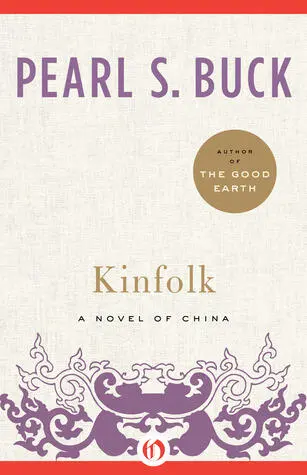
- Название:Kinfolk
- Автор:
- Издательство:Open Road Media
- Жанр:
- Год:2012
- ISBN:нет данных
- Рейтинг книги:4 / 5. Голосов: 1
-
Избранное:Добавить в избранное
- Отзывы:
-
Ваша оценка:
Kinfolk: краткое содержание, описание и аннотация
Предлагаем к чтению аннотацию, описание, краткое содержание или предисловие (зависит от того, что написал сам автор книги «Kinfolk»). Если вы не нашли необходимую информацию о книге — напишите в комментариях, мы постараемся отыскать её.
, a sharp dissection of the expatriate experience, Pearl S. Buck unfurls the story of a Chinese family living in New York. Dr. Liang is a comfortably well-off professor of Confucian philosophy, who spreads the notion of a pure and unchanging homeland. Under his influence, his four grown children decide to move to China, despite having spent their whole lives in America. As the siblings try in various ways to adjust to a new place and culture, they learn that the definition of home is far different from what they expected.
Kinfolk — читать онлайн бесплатно полную книгу (весь текст) целиком
Ниже представлен текст книги, разбитый по страницам. Система сохранения места последней прочитанной страницы, позволяет с удобством читать онлайн бесплатно книгу «Kinfolk», без необходимости каждый раз заново искать на чём Вы остановились. Поставьте закладку, и сможете в любой момент перейти на страницу, на которой закончили чтение.
Интервал:
Закладка:
“Please do not trouble yourselves about us, good aunt,” James said.
“It is no trouble,” she replied. “What will you eat? Our food is poor.”
“Anything,” Mary said, “I’m hungry.” Then she said impulsively, “Don’t treat us as guests. Let us come to the kitchen with you and fetch our own food.”
The kinswoman laughed and did not refuse and so they followed her through the courtyard to the kitchen. The morning was clear and bright, and alas, the sunshine showed all too plainly that the kinswomen were not careful housewives. Mary looked at James with meaning, and James said in a low voice and in English, “Never mind, most germs die with heat.”
There was plenty of heat. The kinswoman opened the wooden lid of the great cauldrons, and steam poured from fragrant millet. The iron ladle was so hot it could not be touched without a cloth, and Mary, when she saw the dark rag offered to her, used her handkerchief instead. Cold salted duck eggs still in the shell were clean enough and salted fish was safe, and so they heaped their bowls and went outdoors in the sun to eat. The house was quiet, for the other kinswomen and the older children had gone to the fields and to the ponds to wash clothes, and only the smallest children played about in the dust.
“Let us go to the fields, too,” Mary said to James.
When they had eaten and washed their bowls they found their kinswoman again, who now was weaving cloth in a back room. They heard the clack-clack of the loom and going there they saw her seated high in the loom, hands and feet both at work in the midst of a mighty dust.
“We are going out on the land,” Mary called to her, and she nodded and took up her work again.
Now it was that the quarrel began. So near were brother and sister that their minds came together often as one, and Mary did not doubt that James felt as she did this morning. She turned her glowing face to him as they walked along the village street. “Jim, let’s come here to live!”
Along the street children stopped to stare at them and women ran to the doorways. It was not a small village and there were crossing narrow alleyways running back to the four-square walls. In all there were perhaps a hundred houses. The center of the main street was cobbled with blocks of marble smoothed by generations of Liang feet and the houses were made of home-dried brick and the roofs were of black unglazed tiles. Here and there was a poorer house of earthen walls under wheat thatch. The children were cheerful and dirty.
James looked at them and saw adenoids and tonsils, reddened eyes and bad diet. “What would we live on, Mary?” he inquired. She came to his own conclusions too quickly and though in the night he had made this same decision, it was an irritation to have her announce it first. He would not agree with her at once, without heed to the necessary difficulties.
“We belong to the Liang family, don’t we?” she retorted. “I suppose we can have our food and our rooms as well as Uncle Tao and the others can.”
“We could not do only with food and shelter,” he said prudently. “I would want to set up a hospital and you I suppose would want to do something about these children. That takes money.”
“It wouldn’t take much,” she said, reluctant to grant that he was right. “I could run the school in an empty room and the people could pay for books and things. It wouldn’t cost anything to get these children clean, at least.”
James did not answer for a moment. They had reached the south gate in the village wall, and passing through it they were in the country. All but the biggest of the children had now gone back and with a trail of not more than a dozen or so, they struck off into the paths that led between the fields. As far as the eye could reach the level land stretched brown and shorn under the brilliant blue sky. The harvests had been cut and only cabbages and onions showed green. The blue of farmers’ garb showed pure and clear, and a flock of white geese, strolling across a newly cut field to pick up lost grain, lent an accent of snow.
“Oh, but it’s beautiful,” Mary sighed. They were speaking in English as they always did now when they were alone. In New York instinctively they had spoken Chinese when they were alone.
“Why don’t you say something, Jim?” she demanded.
She looked at him and saw as she never had before how handsome a man he was. He had put on old clothes this morning, an old pair of brown trousers and a faded red sweater. He looked foreign and young, and yet his profile, strong and smooth, belonged to the landscape.
“I am thinking,” he replied. “I know very well that we have to do something about this, Mary. I felt it coming over me in the night, as you did too, I suppose. It’s a strange thing. We exiles coming home seem to take two directions. Some of us, like Su and Peng and Kang and those fellows and their wives and girls and all that, want to ignore and escape. Then there are those like us. We are stunned, because nothing is like what we thought it was, yet we can’t separate ourselves.”
“Do you suppose Pa knew it was really like this?” she asked.
“Like what?”
“Well — to put the worst of it — dirty,” she said frankly. “Dirty and the children filthy and the people ignorant.”
“I imagine Pa has forgotten all that except in his secret heart,” James replied. “There are dirty people everywhere — plenty of them in New York.”
“Jim, you know what I mean! You know as well as I do that you didn’t expect so many poor, so many dirty, so many ignorant people as we’ve found. We’ve lived well enough, but we haven’t lived among them.”
“I don’t think Pa thought any of this was his business. What makes you think it is ours?”
“Because it is ours,” Mary insisted.
“I am not so sure,” James replied.
Here the quarrel began. While Mary argued, James resisted, until at last in a passion she stood her ground and refused to let him walk another step.
“But why are you so angry with me?” he protested.
“Because you know, and I know that you know, that you are not saying what you really think,” Mary said loudly. A flock of crows that had settled in the field by the road looked up startled and with a great flutter they whirled away.
“You’ve even scared the crows,” James said, laughing.
“Jim!” she cried, stamping her foot in the dust. “Answer me!” But James did not answer, and throwing him a flashing look Mary walked ahead.
Now they reached a wall temple to an earth god, a tiny dwelling scarcely taller than Mary was herself. Within, looking through the opening, they saw the little god and his wife. Upon the low surrounding wall Mary sat down and James sat beside her. Behind this temple were grave mounds.
“Our ancestors, I suppose,” James said. “They put them anywhere in the fields, apparently.”
Mary looked at them only for a second and returned to her quarrel. “Jim, if you don’t come to live in the village, I shall come alone.”
He looked grave at this. “My dear, I am sure you would,” he said. “But I am not saying I won’t come. I am only asking how — and perhaps when — and with what. Merely to come here to live among ignorant people might make us ignorant, too. We have to think how we can make our lives here. We don’t want just to bury ourselves — with our ancestors.”
His gravity, his gentleness, subdued her. She sat still for a long moment, curbing her eager thoughts. He was right. There was a world of difference between themselves and these kinfolk, centuries of difference, space and time crowded together into a single generation.
James went on. “I want to talk with Uncle Tao, first of all. We would have to get his help, you know. If he were against us, we could do nothing. He’d have to understand.”
Читать дальшеИнтервал:
Закладка:
Похожие книги на «Kinfolk»
Представляем Вашему вниманию похожие книги на «Kinfolk» списком для выбора. Мы отобрали схожую по названию и смыслу литературу в надежде предоставить читателям больше вариантов отыскать новые, интересные, ещё непрочитанные произведения.


Обсуждение, отзывы о книге «Kinfolk» и просто собственные мнения читателей. Оставьте ваши комментарии, напишите, что Вы думаете о произведении, его смысле или главных героях. Укажите что конкретно понравилось, а что нет, и почему Вы так считаете.