Pearl Buck - Kinfolk
Здесь есть возможность читать онлайн «Pearl Buck - Kinfolk» весь текст электронной книги совершенно бесплатно (целиком полную версию без сокращений). В некоторых случаях можно слушать аудио, скачать через торрент в формате fb2 и присутствует краткое содержание. Год выпуска: 2012, Издательство: Open Road Media, Жанр: Классическая проза, на английском языке. Описание произведения, (предисловие) а так же отзывы посетителей доступны на портале библиотеки ЛибКат.
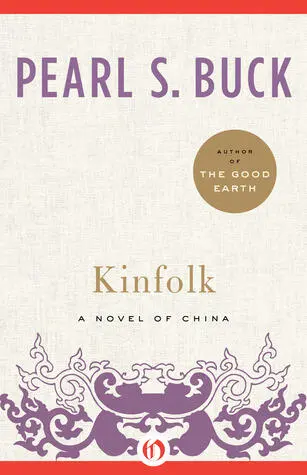
- Название:Kinfolk
- Автор:
- Издательство:Open Road Media
- Жанр:
- Год:2012
- ISBN:нет данных
- Рейтинг книги:4 / 5. Голосов: 1
-
Избранное:Добавить в избранное
- Отзывы:
-
Ваша оценка:
Kinfolk: краткое содержание, описание и аннотация
Предлагаем к чтению аннотацию, описание, краткое содержание или предисловие (зависит от того, что написал сам автор книги «Kinfolk»). Если вы не нашли необходимую информацию о книге — напишите в комментариях, мы постараемся отыскать её.
, a sharp dissection of the expatriate experience, Pearl S. Buck unfurls the story of a Chinese family living in New York. Dr. Liang is a comfortably well-off professor of Confucian philosophy, who spreads the notion of a pure and unchanging homeland. Under his influence, his four grown children decide to move to China, despite having spent their whole lives in America. As the siblings try in various ways to adjust to a new place and culture, they learn that the definition of home is far different from what they expected.
Kinfolk — читать онлайн бесплатно полную книгу (весь текст) целиком
Ниже представлен текст книги, разбитый по страницам. Система сохранения места последней прочитанной страницы, позволяет с удобством читать онлайн бесплатно книгу «Kinfolk», без необходимости каждый раз заново искать на чём Вы остановились. Поставьте закладку, и сможете в любой момент перейти на страницу, на которой закончили чтение.
Интервал:
Закладка:
“What do you plan to do?” James asked, smiling at his downright sister. She made a picture anything but formidable. Her short hair was blowing in the sharp autumn wind and her cheeks were red and her eyes bright and dark. Her profile, against the horizon of earth and sky, was young and exquisite and she held her small body lightly straight upon the shambling bony mule.
“Whatever you do, Jim,” she said briskly, “I am going back to the village to live.”
“On what?”
“On Pa’s rents,” she said calmly.
James was mightily amused at this but he kept his face grave. “How do you think you will get the rents out of Uncle Tao?” he asked.
“I shall tell Pa to write to him that I am to have them. If Uncle Tao doesn’t listen to Pa, I will make him miserable until he listens to me. After all, I belong to the family and I have a right under that roof.”
“Until you are married,” James reminded her.
“I shan’t marry.”
“You are declaring eternal war against Uncle Tao,” James said.
“Yes!”
They pulled their mules aside for a few moments, for they now met a long line of farmers carrying their grain to the city. It was heaped into baskets made of bamboo, and carried at either end of a limber wooden pole. Although the air was cold, the men were already sweating and they had thrown open their cotton jackets, showing brown bodies rippling with muscles.
“We are a handsome race,” James said as he watched the men.
“We are wonderful,” Mary agreed. They exchanged a long look of pleasure in themselves and then they went on again.
“You know,” James said thoughtfully, “Uncle Tao is also wonderful in his way.”
“He likes you because you are a man,” Mary retorted.
“Well, he is a man, too, and perhaps in the bottom of their hearts men do like men best,” James said. A glint of mischief showed itself in his eyes. “So do women like men best, Mary, and here is the root of the quarrel between men and women.”
She rejected this lapse into theory. “Uncle Tao is more of a mountain than a man,” she said heartlessly. “What you found in that lump of meat I cannot imagine. I never heard him say anything worth hearing.”
“He did not talk when you were around,” James replied.
She refused to be moved. “Jim, please don’t pretend you really like Uncle Tao. You know that he will be your chief obstacle and enemy when you go there to live.”
“Who said I was going there to live?” James demanded.
“I know you are. You may say even to yourself that you haven’t decided. But you have. I can feel it in you.”
James yielded gracefully. “You are right, Mary, though I don’t know how you know. I am going back there to live out my life. I don’t know how or when. I scarcely know why. But I am.”
All Mary’s good humor returned. “And how do you think you will make your living?” she asked with loving sisterly malice.
“I don’t know. I haven’t gotten that far yet. But I have an idea that somehow Uncle Tao will help me.”
Mary shouted with laughter. “Oh Jim, oh Jim!” she cried. “Jim the Silent Dreamer!”
It was night when they drew near to the house in the city. The hutung was quiet, for rain had begun to fall, the cold rain of autumn, and children were inside their homes. At the gate they had got off their mules stiffly, first shouting for Little Dog to come and fetch the baggage, and Young Wang led the beasts away to the owner. Little Dog came running and then Peter and Louise and lastly Chen came out to meet them. Chen had been somewhat distressed when he was left in the house with Louise, having only Peter to be a third, but they had laughed at him for being old-fashioned. Nevertheless he had been very scrupulous and so busy at the hospital that he had not been alone with Louise while James and Mary were away. A strange thing had shown itself at the hospital and he was disturbed by it and he was glad to see James home again. But he said nothing of it now.
“Eh, you two,” he said amiably, his spiky hair standing on end about his big honest face, “you’ve come back safely from your ancestors, have you?”
“You both smell of garlic,” Louise declared.
Peter stood grinning, his hands in his pockets. “I thought maybe you wouldn’t come back,” he suggested.
“We’d have to come back for a bath if nothing else,” James said gaily.
They walked together into the house. A rich smell of cooking hung about the rooms. Little Dog’s mother ran out, her face black with soot. “Oh, Heaven, let it be that you have not eaten yet!” she cried. “I have the meal ready.”
“We have not eaten,” Mary replied. “But wait, good mother, until we have washed ourselves.”
“Little Dog shall run to the hot water shop quickly and buy hot water,” the woman promised.
So it was that in a very few minutes the hot water was brought in great steaming buckets and poured into the glazed pottery tub in the washroom. This was for James, and Little Dog’s mother fetched a wooden tub and put it in Mary’s room for her, so that the meal need not be held back too long.
How good was the hot water, and what a blessing the soap! “When I get to the village,” Mary mused in the midst of this comfort, “I shall make a bath house first of all for the women.”
In his pottery tub James sat cross-legged like a smooth young Buddha. “A bath house for the men,” he thought. “That will be the first thing for the village.”
They came to the table with monstrous appetites, eager to tell everything, and to hear all. “First to hear,” James said, “and then to tell.”
But it seemed there was not much to hear. Louise was very silent. Questioned, she said that she had read some books Chen had brought her from the hospital library, and she had gone to a party the new Mrs. Su had given, where there was dancing — the first time she had danced since she left home, as she persisted in calling New York. Neither James nor Mary corrected her. Home for them was now becoming the brown walls of the village rising out of the brown plain. They could not imagine Louise there.
“I want to talk to you alone about the college,” Peter said abruptly to Jim. “There’s stuff going on there that I don’t like.”
Chen made a brief report of the hospital. “The healthy season is coming in, and we have had no more cholera. We’ve had the usual number of childbirths already half ruined by stupid old midwives, and Peng is threatening to resign because foreign auditors want to examine the books he kept during the war.” He hesitated and then went on, “Later, Jim, when you have time, I want to tell you something.”
“Why have each of you secrets?” Mary demanded.
“I have no secret,” Louise said quickly. She glanced at Chen who did not look at her or speak, and Peter paid no attention. His appetite was always excellent. He had his bowl to his mouth, and he was ladling in a combination of rice, gravy, cabbage, and duck livers which he had arranged in the exact proportions he considered perfection.
And James, sensitive to some entanglement here which could not now be unraveled, began to speak of the village.
“I don’t know how to explain to you Uncle Tao—” He began to laugh and everybody laughed with him as he went on.
Sitting around the table lit by candles they all listened to him and Mary did not interrupt. When this tall brother of hers set himself to a task, he did it supremely well. Chen was deeply moved. He opened his hands upward upon the table. “All that you say is as known to me as the palms of these two hands,” he said when James had finished. “Yet I never understood before that it had anything to do with me.”
“We can do all that I have said,” James went on, “but we must move in ways that seem slow at first. The people must be with us.”
Читать дальшеИнтервал:
Закладка:
Похожие книги на «Kinfolk»
Представляем Вашему вниманию похожие книги на «Kinfolk» списком для выбора. Мы отобрали схожую по названию и смыслу литературу в надежде предоставить читателям больше вариантов отыскать новые, интересные, ещё непрочитанные произведения.




Обсуждение, отзывы о книге «Kinfolk» и просто собственные мнения читателей. Оставьте ваши комментарии, напишите, что Вы думаете о произведении, его смысле или главных героях. Укажите что конкретно понравилось, а что нет, и почему Вы так считаете.