Pearl Buck - Kinfolk
Здесь есть возможность читать онлайн «Pearl Buck - Kinfolk» весь текст электронной книги совершенно бесплатно (целиком полную версию без сокращений). В некоторых случаях можно слушать аудио, скачать через торрент в формате fb2 и присутствует краткое содержание. Год выпуска: 2012, Издательство: Open Road Media, Жанр: Классическая проза, на английском языке. Описание произведения, (предисловие) а так же отзывы посетителей доступны на портале библиотеки ЛибКат.
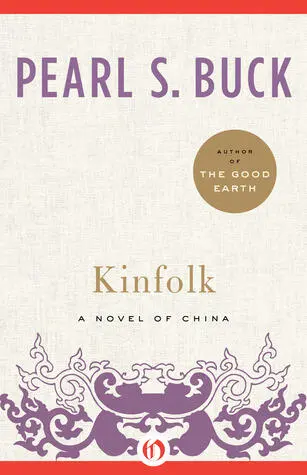
- Название:Kinfolk
- Автор:
- Издательство:Open Road Media
- Жанр:
- Год:2012
- ISBN:нет данных
- Рейтинг книги:4 / 5. Голосов: 1
-
Избранное:Добавить в избранное
- Отзывы:
-
Ваша оценка:
Kinfolk: краткое содержание, описание и аннотация
Предлагаем к чтению аннотацию, описание, краткое содержание или предисловие (зависит от того, что написал сам автор книги «Kinfolk»). Если вы не нашли необходимую информацию о книге — напишите в комментариях, мы постараемся отыскать её.
, a sharp dissection of the expatriate experience, Pearl S. Buck unfurls the story of a Chinese family living in New York. Dr. Liang is a comfortably well-off professor of Confucian philosophy, who spreads the notion of a pure and unchanging homeland. Under his influence, his four grown children decide to move to China, despite having spent their whole lives in America. As the siblings try in various ways to adjust to a new place and culture, they learn that the definition of home is far different from what they expected.
Kinfolk — читать онлайн бесплатно полную книгу (весь текст) целиком
Ниже представлен текст книги, разбитый по страницам. Система сохранения места последней прочитанной страницы, позволяет с удобством читать онлайн бесплатно книгу «Kinfolk», без необходимости каждый раз заново искать на чём Вы остановились. Поставьте закладку, и сможете в любой момент перейти на страницу, на которой закончили чтение.
Интервал:
Закладка:
“It is too little to think about,” he declared.
“So you kept it for some use of your own,” she said with evil suggestion. She knew to a penny what he earned and while he signed all the checks she studied the checkbook and could foresee the balance at the end of every month. She had never seen any notice of the deposit of rent funds from China.
“I buy a few books,” he said gently.
“If that is all, then certainly you can give our children so little a sum,” she retorted. “I will write and tell them that you will do so and they can show the letter to Uncle Tao.”
“Uncle Tao will scarcely accept your letter,” Dr. Liang reminded her.
She immediately went into tears, and this destroyed his peace. “You know I cannot do the work which supports you, let me say, as well as myself, if you cry and make the house miserable,” he told her.
“Let me go home!” she sobbed.
The scene proceeded according to old pattern, and the end of it was that Dr. Liang sat down and wrote a letter to James, which he was to show to Uncle Tao, asking that the rent funds be given to his son. “I have been stirred by my daughter’s letter,” Dr. Liang wrote. “She tells me that the village needs repairs and so on. I make my contribution thus to our ancestral family. Let the land keep its own.”
Mrs. Liang did not wholly approve this way of putting it. “I hope Uncle Tao does not think that you mean for him to keep the money,” she said, taking the letter.
But Dr. Liang would not change what he had written. It sounded too well.
Nevertheless the whole transaction made him melancholy. He went into his study and shut the door and sat down in a deep leather chair and held his head in his hands. He felt harried and confused. His privacy was invaded. He was vaguely ashamed that his children had seen the village as he was sure it must be now. All these years since his childhood had passed doubtless without any repairs being made. Centuries had passed over the village and each had left its mark. No one had made improvements. As young men in the Liang family grew up they had simply gone away if they did not like the village and its ways, even as he himself had gone away. The ones who had stayed were the ones like Uncle Tao, who, although they belonged to the gentry, were very little above the coarse peasants. Those peasants! How he despised them in his heart! Stubborn, strong, fearing no one, there was none to control them. His own parents had been afraid of them. He remembered his mother pleading with his father to allow the peasants lower rents and larger sharing of the harvest, lest in their anger they come against the Liang house and destroy it. Such things did happen in other ancestral villages. Were the landlords firm in maintaining their just dues, the peasants could and did willfully come against them with hoes and mallets and clubs and axes and while they seldom killed anyone, they would break valuable furniture and slash silken bedding and rip satin curtains and hack and hew walls and beams. Once this had happened even in the Liang family and he could still remember that when he was a little boy his own paternal grandmother had paused on the way home from the funeral of an old cousin, and she had pointed with two delicate fingers to a deep ditch beside the Liang burying ground.
“There I hid once, when your father was a child,” she had told him.
“Why did you hide, Grandmother?” he had asked. “The men of the earth rose against us,” she had said. “Why?” he had asked, and even as she spoke a dart of fear ran through his bosom.
She replied coldly, “Your grandfather wanted to raise the rents. We had many sons and their weddings came close together and we could scarcely pay for everything that had to be done. Of course men of earth understand nothing of such needs.”
He had asked no more questions. Even as a child he knew what had happened. He had heard whispers of it in the courts. He had seen anxious looks on women’s faces. The peasants were the ogres of his childhood. They were necessary because they tended the fields and reaped the harvests. Without them there was no food. They had to be ruled and yet they had to be placated and cajoled because they were men without reason. He grew up afraid of them and hating them.
Yet even now he remembered certain moments. In the spring, when the young wheat was green, the figures in blue that moved across the landscape were beautiful in the distance. When he came near he saw good brown faces. In the spring the peasants were always happy and they laughed and were kind. They were kind even to him, the landlord’s son, and he remembered a big brown fellow kneeling on the earth so that his eyes could be on a level with the child’s and he had smiled and brought out of his pocket a piece of steamed bread and offered it to him. His nurse had drawn him back crying that he had already eaten. But the child that had been he was willful and shouted that he wanted the bread. So the big brown man had given it to him and had continued to kneel there smiling at him as he ate.
“Is it good to eat?” the man had asked the little boy in the satin robe.
“It is good,” the boy had replied.
“It is my bread that I eat when the sun is yonder,” the man said pointing to the zenith.
Then the man had pointed to the earth. “Sun above and earth beneath, both together make man’s bread.”
He had said this gravely, as though he meant something special, but the child did not know that.
Dr. Liang pondered that saying now, as he sat in his quiet study, his head in his hands. He still did not know what the peasant meant. People, he reflected, must live at these different levels. Some must work with the hands, some with the mind. The peasants should not be lifted from their places as workers with the hands, or the higher ones would starve. He himself would, if he lived in China, be quite helpless without the peasants. Even here, he supposed, there were the workers with hands, men on American farms who had to do the crude work of producing food. Such persons must not be taught falsely that they could or should do other work.
At this moment he began to distrust his daughter Mary. James was safe enough in his profession. It was all very well to see that peasants had sound health and strong bodies for their work. But Mary spoke of schools. Surely there was no reason for a peasant to know how to read and write. This would give him the means of rising out of his class. What would happen if the whole world were scholars? Who then would provide the food? Besides, the peasant mind was a crude one. It had not passed through the centuries of refinement which he, Liang Wen Hua, for example, had in his own ancestry. He frowned and determined to write a letter to Mary. He began to regret his generosity in the matter of the rents and he got up impetuously and went to find his wife.
She was gone. The house was silent except for the maid Nellie, banging something in the kitchen. He never spoke to Nellie if he could help it. Doubtless the letter was mailed. He stood for a moment, irresolute, wondering whether it would be worth writing a second letter which he would post privately. But of course Mrs. Liang would hear of it, and now that there were only the two of them in the house, his peace was peculiarly dependent upon her.
The telephone rang, and soon the maid Nellie came into the room. “It’s the Woman’s Art Club,” she said. “They want to know if you can come to a luncheon tomorrow. The speaker is sick and they need you bad.”
“I am quite busy,” he murmured in the distant tone he reserved for her. “Stay — I will speak to them myself.”
He went to the telephone and listened to an arrogant woman’s voice explaining the crisis. American women all had arrogant voices.
Читать дальшеИнтервал:
Закладка:
Похожие книги на «Kinfolk»
Представляем Вашему вниманию похожие книги на «Kinfolk» списком для выбора. Мы отобрали схожую по названию и смыслу литературу в надежде предоставить читателям больше вариантов отыскать новые, интересные, ещё непрочитанные произведения.


Обсуждение, отзывы о книге «Kinfolk» и просто собственные мнения читателей. Оставьте ваши комментарии, напишите, что Вы думаете о произведении, его смысле или главных героях. Укажите что конкретно понравилось, а что нет, и почему Вы так считаете.