Pearl Buck - Kinfolk
Здесь есть возможность читать онлайн «Pearl Buck - Kinfolk» весь текст электронной книги совершенно бесплатно (целиком полную версию без сокращений). В некоторых случаях можно слушать аудио, скачать через торрент в формате fb2 и присутствует краткое содержание. Год выпуска: 2012, Издательство: Open Road Media, Жанр: Классическая проза, на английском языке. Описание произведения, (предисловие) а так же отзывы посетителей доступны на портале библиотеки ЛибКат.
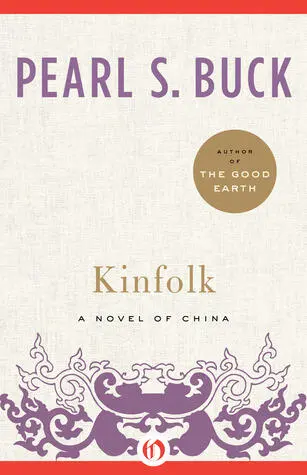
- Название:Kinfolk
- Автор:
- Издательство:Open Road Media
- Жанр:
- Год:2012
- ISBN:нет данных
- Рейтинг книги:4 / 5. Голосов: 1
-
Избранное:Добавить в избранное
- Отзывы:
-
Ваша оценка:
Kinfolk: краткое содержание, описание и аннотация
Предлагаем к чтению аннотацию, описание, краткое содержание или предисловие (зависит от того, что написал сам автор книги «Kinfolk»). Если вы не нашли необходимую информацию о книге — напишите в комментариях, мы постараемся отыскать её.
, a sharp dissection of the expatriate experience, Pearl S. Buck unfurls the story of a Chinese family living in New York. Dr. Liang is a comfortably well-off professor of Confucian philosophy, who spreads the notion of a pure and unchanging homeland. Under his influence, his four grown children decide to move to China, despite having spent their whole lives in America. As the siblings try in various ways to adjust to a new place and culture, they learn that the definition of home is far different from what they expected.
Kinfolk — читать онлайн бесплатно полную книгу (весь текст) целиком
Ниже представлен текст книги, разбитый по страницам. Система сохранения места последней прочитанной страницы, позволяет с удобством читать онлайн бесплатно книгу «Kinfolk», без необходимости каждый раз заново искать на чём Вы остановились. Поставьте закладку, и сможете в любой момент перейти на страницу, на которой закончили чтение.
Интервал:
Закладка:
Mrs. Liang, remembering that Sonia had once been in her mind as a possible wife for James, asked with melancholy curiosity, “How is Sonia?”
“Oh, Sonia is such a smart girl,” Mrs. Pan answered in a lively voice. “Her boss is selling electric stove and refrigerator and Sonia gets me one special price as consequence.”
Mrs. Pan with seeming carelessness flung open a door to reveal a tiny kitchen and an enormous cabinet, glistening like a mountain of snow.
“How good!” Mrs. Liang exclaimed, her voice sharp with regret for the daughter-in-law now impossible to attain.
The ladies were well launched on their morning.
Just before noon Mrs. Pan said, “Please eat with us today, Mrs. Liang. It is a long way to your house, and now it is nearly twelve o’clock.”
Mrs. Liang gave a start of surprise. “Can this be? But my husband is getting hungry.”
Mrs. Pan laughed robustly. “You are too good to him, Mrs. Liang. Learn like American ladies not to be so troublesome! Ring the telephone to him and say you will stay here to eat with us. My Mr. Pan never comes home noontime. I say, ‘Billy, go somewhere. I can’t cook three times every day.’ For Sonia I say, ‘You eat drugstore, please!’ So, Mrs. Liang, just a little common food for you and me together. Tell Dr. Liang I want you to help in hospital drive here for Chinatown and this is true.”
Mrs. Liang could not resist. Encouraged by the rosy-cheeked Mrs. Pan she called Dr. Liang and said somewhat timidly, “Liang, I am here with Mrs. Pan. We are busy. We are planning hospital drive.”
Dr. Liang did not answer for a moment. Then he said rather coldly, “In that case Nellie can get me something. But please do not promise any money from me.”
“Oh, no,” she agreed. But he had already hung up the receiver.
“Is he mad?” Mrs. Pan inquired.
“Not at all,” Mrs. Liang said proudly.
“Good,” Mrs. Pan exclaimed, “you see he is rather nice.”
She bustled into the kitchen and scrambled eggs foo-young and chopped green cabbage to braise in peanut oil, and boiled water for noodles. In less than half an hour the two ladies settled themselves to a simple but substantial meal. When they had eaten heartily and had drunk several bowls of tea, Mrs. Pan was telling Mrs. Liang what she did when an American Chinese young woman tempted Mr. Pan from the path of virtue, and Mrs. Liang yielded to the temptation to confide in Mrs. Pan and told her that only her own firmness had kept Dr. Liang from taking Violet Sung as a concubine. Furthermore a young American had fallen in love with Louise and that was why Mary had taken her to China, and Peter had gone along to care for them both.
Mrs. Pan listened avidly and then she said, “But why did James go to China?”
Mrs. Liang leaned closer. “Lili Li,” she whispered. “It was Lili Li who — well, we told him she was not good for him. Rich girls are too lazy. James is very hard worker. So he went to China now.”
“How I wish you live in Chinatown,” Mrs. Pan said warmly.
“I wish, also,” Mrs. Liang said with equal warmth. She confided still further. “In that case I wished your Sonia for my daughter-in-law.”
Mrs. Pan was overwhelmed. “Oh, Mrs. Liang,” she exclaimed. “So much happiness for us! But Sonia would not go to China, perhaps.”
“If she had married my son James, maybe he would also be here.”
Both ladies forgot China and mourned silently for a moment over what was now never to be.
Mrs. Pan recovered first. “Anyhow,” she said with renewed cheer, “maybe sometime you live here as neighbor.”
“How nice!” Mrs. Liang replied. “But I think not. Liang likes to be lonely.”
It was midafternoon before Mrs. Liang went home. She entered the quiet apartment. It was quite empty. “Neh-lee!” she called, but there was no answer. The maid had finished her work and gone. Dr. Liang was nowhere to be seen. She could do nothing except try to settle herself. But the day had been exciting for her and she went into the kitchen and feeling restless she decided to clean out the icebox.
In a remote corner of a small French restaurant Dr. Liang was talking with Violet Sung. Some vague feeling of revenge had prompted him to call her when his wife telephoned. Violet Sung was at home, feeling, she said, at loose ends.
“So am I,” Dr. Liang had said. “Will you lunch with me?”
She hesitated a moment. Then she said delicately, “Are you sure you want me?”
“Quite sure,” he said.
So they had met in the restaurant she suggested, a place where she often went when she was alone, because Ranald did not like French food. They were quite reconciled, the mutual bond between them stronger than ever. But she knew now that there were arid stretches in Ranald’s mind. He was profoundly intelligent and spiritually undeveloped. Physically he was far more passionate than she, and he often wearied her. Yet after the first few acknowledgements of weariness she had learned to pretend, for he grew angry with her did she seem less desirous than he. English women were like that, he declared, but he had not expected frigidity in a combination of France and China. At this she had smiled and said nothing and after that pretense was easy. Her mind at all times was free of her body, and within the privacy of her skull her thoughts roamed the universe. Ranald, acute rather than intuitive, did not perceive her absence from her body.
With Dr. Liang she felt an intimacy that had nothing to do with the flesh. She was deeply attracted to the handsome tall Chinese gentleman, whose black hair was silvery at the temples. Physically he pleased her without rousing desire. His pale skin, clear-cut lips, and long intelligent eyes, his beautiful hands and slender graceful figure, were pleasantly symbolic of his cultivated mind. The coarse red and white skin of Western men, their hairiness and thickness, their high noses and protruding bones, were privately disgusting to her. Yet she had always been shy of Chinese men. Her father’s strictness and rectitude had moved her and yet had made her afraid of him. She could not imagine a Chinese lover. The approach was different to any she knew. Chinese men, when they noticed women at all, gave them a grave courtesy which implied the conviction of equality.
When Dr. Liang had telephoned her today it had been almost telepathy. She had been sitting alone in her room in one of her long fits of musing which were trancelike, and she had been thinking of him, not romantically, but with a divining imagination, as she thought of many persons, men and women, who interested her. Had she been more active physically, she might have put down some of these musings on paper and made stories out of them, but she never moved if she could help it, except to dance. She could sit motionless for hours when she was alone, merely thinking about one person and another, remembering, probing, hearing again the sound of a voice, seeing the trick of a gesture. Thus was her inner solitude peopled. Upon such a reverie the telephone had broken and when she lifted the receiver she had heard Dr. Liang’s voice.
Now seated opposite him in the restaurant which at this late hour was almost empty she felt a deep sense of peace. She had little wish to talk at any time and she floated upon the restfulness of the moment.
Dr. Liang looked at her with appreciation. She had slipped her brown mink cape from her shoulders and the deep violet wool of her simply fashioned gown and small hat melted into the richness of her dark hair and eyes and her creamy skin. He had never seen so beautiful a creature.
“When I am with you I always feel like speaking only truth,” he said. “So I will tell you that you are entirely beautiful today.”
“Only today?” she asked half smiling.
Читать дальшеИнтервал:
Закладка:
Похожие книги на «Kinfolk»
Представляем Вашему вниманию похожие книги на «Kinfolk» списком для выбора. Мы отобрали схожую по названию и смыслу литературу в надежде предоставить читателям больше вариантов отыскать новые, интересные, ещё непрочитанные произведения.










Обсуждение, отзывы о книге «Kinfolk» и просто собственные мнения читателей. Оставьте ваши комментарии, напишите, что Вы думаете о произведении, его смысле или главных героях. Укажите что конкретно понравилось, а что нет, и почему Вы так считаете.