Pearl Buck - Kinfolk
Здесь есть возможность читать онлайн «Pearl Buck - Kinfolk» весь текст электронной книги совершенно бесплатно (целиком полную версию без сокращений). В некоторых случаях можно слушать аудио, скачать через торрент в формате fb2 и присутствует краткое содержание. Год выпуска: 2012, Издательство: Open Road Media, Жанр: Классическая проза, на английском языке. Описание произведения, (предисловие) а так же отзывы посетителей доступны на портале библиотеки ЛибКат.
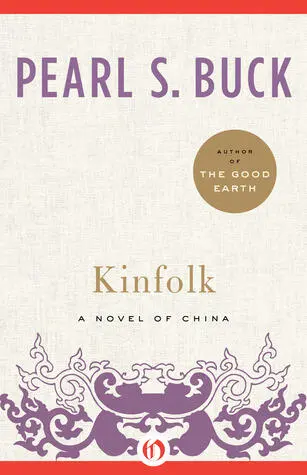
- Название:Kinfolk
- Автор:
- Издательство:Open Road Media
- Жанр:
- Год:2012
- ISBN:нет данных
- Рейтинг книги:4 / 5. Голосов: 1
-
Избранное:Добавить в избранное
- Отзывы:
-
Ваша оценка:
Kinfolk: краткое содержание, описание и аннотация
Предлагаем к чтению аннотацию, описание, краткое содержание или предисловие (зависит от того, что написал сам автор книги «Kinfolk»). Если вы не нашли необходимую информацию о книге — напишите в комментариях, мы постараемся отыскать её.
, a sharp dissection of the expatriate experience, Pearl S. Buck unfurls the story of a Chinese family living in New York. Dr. Liang is a comfortably well-off professor of Confucian philosophy, who spreads the notion of a pure and unchanging homeland. Under his influence, his four grown children decide to move to China, despite having spent their whole lives in America. As the siblings try in various ways to adjust to a new place and culture, they learn that the definition of home is far different from what they expected.
Kinfolk — читать онлайн бесплатно полную книгу (весь текст) целиком
Ниже представлен текст книги, разбитый по страницам. Система сохранения места последней прочитанной страницы, позволяет с удобством читать онлайн бесплатно книгу «Kinfolk», без необходимости каждый раз заново искать на чём Вы остановились. Поставьте закладку, и сможете в любой момент перейти на страницу, на которой закончили чтение.
Интервал:
Закладка:
“I wouldn’t think of giving up my own work to fill in for another speaker, Mrs. Page,” he said gently.
Her arrogance changed hastily to persuasiveness.
“Well,” he conceded, “only because I am profoundly interested in art and the American public has so little knowledge—”
He paused for her gratitude, and then said with mild firmness, “My fee is one hundred dollars.”
He heard a gasp at the other end of the telephone and then a quick recovery. “But of course, Dr. Liang!”
He regretted that he had not said two hundred. They were in a pinch. He subdued the thought as unworthy of him.
Mrs. Liang had posted the letter at once, and then she had taken a taxicab to Chinatown. The expense was severe, but she had never been successful in finding her way underground and she was ashamed to be seen riding a bus as though she were not the wife of Dr. Liang. In the subway she would not meet anybody she knew, but she had never been able to understand what train to get on, or once on where she should get off. Several times she had tried to get to Chinatown by subway, lured by the cheapness of such travel, but after an hour or so underground she had been compelled to come up and take a taxicab. The last time she had come up near a suburb called Queens, and the cab fare had run into dollars. Besides, who was the Queen? She supposed it must be Mrs. Roosevelt.
“Does Mrs. Franklin Delano Roosevelt live this side?” she had asked the cab driver from sheer curiosity.
“Lady, you’re nuts,” he had replied pleasantly. This also she did not understand. There were many things said by Americans which could not be understood and she had learned by experience that questions did not make them any plainer. So she merely accepted this reply.
Today she wanted to go to Chinatown to shop for various groceries which could not be bought elsewhere. Since she had plenty of time, this being one of Neh-lee’s days, she would also inquire into the state of her savings account and perhaps visit a little while with Billy Pan’s wife whom she had learned to know. True they did not understand one another entirely, since Mrs. Pan was Cantonese. Still, it would be pleasant just to sit a while with a Chinese woman of whom she need not be afraid. With Liang’s friends she was easily ashamed. They were, she feared, secretly surprised that the great Dr. Liang’s wife was not young and beautiful. But with Mrs. Pan she was the superior one — the wife of the great Dr. Liang.
The taxicab, she thought as she sat squarely in the middle of the seat, was after all the American ricksha. In Peking she had her own private ricksha, and how pleasant that had been! She had paid Old Yin, the puller, seven dollars a month and he had eaten the kitchen scraps and had slept in the gatehouse. Yet whenever she had wanted to go anywhere in the city he had been ready to take her there, thinking himself lucky to have his food and bed sure every day. While she spent long hours talking over everything with her many friends and playing mah-jongg, Old Yin had slept in the footrest of the ricksha, his head against the seat. Thinking of him she smiled. Where was he now? So genial, so faithful, so polite, so much better than the taxi driver!
She looked out of the window anxiously, convinced as always that the driver was taking her many extra miles. However often she came to Chinatown she was never quite sure of the way. She leaned back and closed her eyes. In any car she easily felt seasick. When they had crossed the ocean she had been sick every day. There was another anxiety. When they went back to China, if Liang was ever willing to go, who would hold her head? On shipboard one of the children had always stayed with her. Liang could not bear to see anyone sick and he always left the room. She smiled, remembering something. One day the sea had been evil and even Liang had got sick. How nice that was! He had lain in the lower bunk groaning and insisting that some lobster he had eaten was not fresh. But of course he was only seasick.
Ah well, Liang was her husband and she would never have another. Even had she been young and beautiful she would not have run from man to man as women did nowadays. But she was neither young nor beautiful and she was grateful for Liang. It was honorable to be his wife, and if he had a peevish temper at home, he might have been worse. He had never beaten her, and she had learned, after all these years, how to torture him.
The driver woke her. “Where are you going in Chinatown?” he asked gruffly.
“Corner Mott and Pell,” she said instantly.
He growled and whirled about a few streets and then stopped with a jar. She tried to get out and could not. “Up, up, up!” the driver said angrily.
“Up?” she said blankly, looking at the glass in the ceiling. “I came in the door.”
“Handle!” the driver shouted. “Push it up!”
Mrs. Liang suddenly hated him. “You do it,” she said and waited. She counted out the change carefully, cutting his tip in half for his being rude. She held the money in her hand while he moaned and opened the door. Safely on the sidewalk she gave him the money and turned instantly into the grocery store, catching a glimpse of his glowering face before he drove off. She sighed.
“What you want?” an American voice demanded. She saw a Chinese boy behind the counter, a new clerk.
“Eh, you,” she said. “You don’t talk like Chinese.”
“I’m American,” he retorted. “What you want, lady? Got some nice green cabbages today — also fresh ginger roots.”
“Two pound cabbage, one-quarter pound ginger,” she ordered.
So it was, she reflected. This Chinese boy an American! Why, Louise was an American at that rate. She was the mother of an American! That was the way these foreign nations did. They took even your children. It was a good thing Louise was in China. When she had finished shopping, and had stopped in to see Mrs. Pan, she would go home and write a private letter to Mary. “Let your sister be friend with some nice Chinese boy,” so she would coax Mary. She ordered shredded chicken and small dried shrimps and a brown jar of soy sauce. She bought pickled mustard leaves and salted turnips and fresh bean curd and salted fish. Then she waited while it was all tied together.
“What your name?” she asked the boy.
“Louie Pak,” he replied.
“You go to school?” she asked with her endless human curiosity.
“Yeah — just finished high school.”
“Now you go back to China?”
“Naw,” he replied with scorn. “Whadda I wanta go there for? I’m gonna go into drugstore work.”
She felt scarcely less alien to this boy than she would have were he blue-eyed and yellow-haired. There was something outrageous about him and she felt vaguely indignant. “All boys must go back to China,” she said firmly. “China needs educated boys.”
He tied the string in a double knot. “Yeah? Well, they hafta get along without me,” he retorted.
She took her bundle and walked away, feeling his bold eyes upon her, critical doubtless of her stout figure and Chinese dress. When she reached Mrs. Pan’s house she went in full of protest about such boys. Mrs. Pan was ironing children’s clothes in her small compact kitchen. She was the mother of many children and her ironing was never done. But when she saw Mrs. Liang she put the iron away and hurried into the clean little parlor.
“Eh, Mrs. Liang,” she called in a loud cordial voice. “Come in; I was just wishing to stop my ironing.”
Mrs. Liang sat down. “Mrs. Pan, I don’t know how you feel, but I think we must do something to make our boys want to go back to China.”
“Mrs. Liang, drink some tea, please, and have a small cake. You are so lucky your children are still patriotic. This is because you and Dr. Liang are so good. Our children are too bad. I tell Billy every day he is no good father. The children all want to be American. Of course they have no chance here. Look at Sonia, wants to be stenographer! We try to teach them better but what can we do?”
Читать дальшеИнтервал:
Закладка:
Похожие книги на «Kinfolk»
Представляем Вашему вниманию похожие книги на «Kinfolk» списком для выбора. Мы отобрали схожую по названию и смыслу литературу в надежде предоставить читателям больше вариантов отыскать новые, интересные, ещё непрочитанные произведения.





Обсуждение, отзывы о книге «Kinfolk» и просто собственные мнения читателей. Оставьте ваши комментарии, напишите, что Вы думаете о произведении, его смысле или главных героях. Укажите что конкретно понравилось, а что нет, и почему Вы так считаете.