Pearl Buck - Kinfolk
Здесь есть возможность читать онлайн «Pearl Buck - Kinfolk» весь текст электронной книги совершенно бесплатно (целиком полную версию без сокращений). В некоторых случаях можно слушать аудио, скачать через торрент в формате fb2 и присутствует краткое содержание. Год выпуска: 2012, Издательство: Open Road Media, Жанр: Классическая проза, на английском языке. Описание произведения, (предисловие) а так же отзывы посетителей доступны на портале библиотеки ЛибКат.
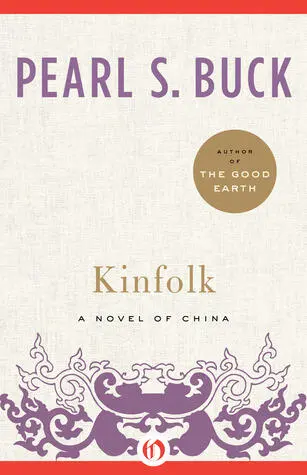
- Название:Kinfolk
- Автор:
- Издательство:Open Road Media
- Жанр:
- Год:2012
- ISBN:нет данных
- Рейтинг книги:4 / 5. Голосов: 1
-
Избранное:Добавить в избранное
- Отзывы:
-
Ваша оценка:
Kinfolk: краткое содержание, описание и аннотация
Предлагаем к чтению аннотацию, описание, краткое содержание или предисловие (зависит от того, что написал сам автор книги «Kinfolk»). Если вы не нашли необходимую информацию о книге — напишите в комментариях, мы постараемся отыскать её.
, a sharp dissection of the expatriate experience, Pearl S. Buck unfurls the story of a Chinese family living in New York. Dr. Liang is a comfortably well-off professor of Confucian philosophy, who spreads the notion of a pure and unchanging homeland. Under his influence, his four grown children decide to move to China, despite having spent their whole lives in America. As the siblings try in various ways to adjust to a new place and culture, they learn that the definition of home is far different from what they expected.
Kinfolk — читать онлайн бесплатно полную книгу (весь текст) целиком
Ниже представлен текст книги, разбитый по страницам. Система сохранения места последней прочитанной страницы, позволяет с удобством читать онлайн бесплатно книгу «Kinfolk», без необходимости каждый раз заново искать на чём Вы остановились. Поставьте закладку, и сможете в любой момент перейти на страницу, на которой закончили чтение.
Интервал:
Закладка:
“Always, but today with an aura.”
“Let’s speak Chinese, shall we?” she said. “I can’t very well, but I long to be able to — perfectly, I mean, with one word slipping into another, and yet each quite clear.”
“Then we will speak Chinese,” he replied. “I also prefer our own tongue. It has been spoken so long by human beings that it is shaped to human need. Had your father one of those hand pieces of jade or amber?”
“He held always a piece of onyx,” she said, smiling. Her Chinese was pure and good, but her vocabulary was not large and she longed to know all the words she needed.
“And it became shaped to his own hand,” Dr. Liang went on. “It was polished by his flesh until it shone in the light of a candle, did it not? It lay in his palm and he felt never empty handed.”
“He did find comfort in it,” she agreed. “When I was a child I never knew why. I said to him, ‘Baba, why not hold my kitten or some flowers? Why always the same thing?’ And he said, ‘I like it because it is always the same.’”
“Yes,” Dr. Liang replied. He murmured a few words to the waiter without asking Violet what she wished to eat, and she liked this. She avoided making up her own mind even about food. It was easier to eat what was chosen for her, and she had confidence in his choice. When a delicate broth appeared, a sift of crisp croutons upon the clear surface, she drank it well content, and in silence, and after it she enjoyed the small fresh fish, browned in butter. It was a change from the beefsteak and mashed potatoes which Ranald ate every day.
French pastries were almost Chinese, and Dr. Liang made a long and careful scrutiny of the tray before they chose. She liked his Chinese carefulness about food, that every mouthful might be savored.
They talked very little during the meal and this was Chinese, too. When tea came on, and he was very firm in his directions that the tea leaves should be brewed without the cloth bags, they looked at one another across the table and Dr. Liang felt the impulse, rare indeed, to speak from his heart.
“My wife is jealous of you,” he said with his hint of a smile. “That, for you, doubtless, is no new thing in wives.”
“I like your wife,” she replied. “She gives me a feeling that is good.”
“What is it?” he asked.
“It is like firm hard earth under the feet.”
“You see what she is,” he said. “That is why I am always faithful to her. I do not pretend to be better than I am. My thoughts like to play sometimes — I own it. Ours was an old-fashioned marriage, made by our parents. Yet I insisted that she learn to read and write, and we met once before the wedding day.”
“What a moment!” she murmured in French.
“Yes, was it not?” he replied in the same language. Then he went on in Chinese. “I looked at her — short, even then a little fat, rosy-cheeked, and frightened of me.”
“So she is now,” Violet said, in Chinese again.
“I did not love her,” Dr. Liang said, “but I knew that she would be a good wife.”
“A good wife,” Violet repeated. “It is what such a man as you must have.”
Their eyes met and she laughed with a soft delight in him. “How Chinese are you!” she exclaimed.
Something naughty gleamed in the demure lines of Dr. Liang’s smooth face. “At the same time,” he went on, “there are other sides to my nature. A man’s mind, if he be intelligent, seeks also female companionship. Yang and Yin are not made of flesh alone. Mind and spirit are in the circle too. That is why I telephoned you today.”
He had never been so daring before. He had made clear to her that he had no wish for a passionate relationship. Nevertheless he had said boldly that he wanted a female mind to complement his, a female spirit to fulfill his. Whatever she was to the Englishman, he had implied, had no more to do with him than Mrs. Liang had to do with her. They could ignore such persons.
She understood and was pleased. Now these long musings of hers need not be entirely silent or lonely.
Dr. Liang leaned toward her slightly. “I should like to penetrate your mind with my own,” he said. “I should like to pierce the mysteries of your soul.”
12
MARY KNEW THAT HER FATHER’S LETTER had been mailed by her mother, for she had written a postscript. “While your father agrees to let you have his share of the Liang rents do not think it came out of him easily,” she wrote. “I stood at his side and I took the letter at once and I hastened from this foreign pagoda house in which we still live to put it in the box. I will not give it to the man in the up-and-down because doubtless he will steal the stamp. For myself I am glad you and your brother will have this money.”
Mary’s pleasure in being thus one step nearer to the village was tempered, however, by two events which were not so much events as something still going on. Louise was excited and Mary recognized certain signs within a few days after the return from the village. Her sister’s eyes were bright, her cheeks pink, her voice high, and she was easily angry as she had been in the Vermont summer. This could mean only one thing. Louise was falling in love again. It was as plain as though she were about to succumb to an illness, and Mary went to James the first evening that he was free to be at home. She had learned that it was useless to approach him in the hospital. There his mind was too busy to give her heed unless she brought the message of some new illness among the children she taught in the hospital school. Meanwhile she watched Louise who, it seemed, went nowhere and received no visitors.
“What have you done all day, Louise?” she asked each evening when she came home.
The answer was always idle. Louise had made a new dress, or she had washed her hair, or she had read a book or she had slept half the day away. Several times Mary, perceiving her sister’s excitement, wondered if she had had a secret visitor. She was sorely tempted to inquire of Young Wang, but antipathy forbade it. Young Wang still disliked a mistress in the house he served and often he pretended not to hear what Mary told him. When she complained to James of this he only laughed. Of Little Dog no one could inquire for he would lie as the moment demanded. Little Dog’s mother also was too frightened of everybody and everything to be worth talking with. Therefore was Mary constrained to wait until such a day as James came home with the cheerful look on his face which meant that he expected no one in his care to die at least before morning.
On that evening after they had eaten and Louise had gone early to bed and Peter had gone to a meeting of students at the college, Mary found herself alone with James and Chen. She pondered whether she should speak in Chen’s presence, since she imagined him half in love with Louise secretly. When he left them for a moment, therefore, she took her chance and said quickly in English, “Jim, I am sure Louise is in love with somebody again.”
James lifted his eyebrows. “This time with whom?” he inquired. Yet strangely he did not seem surprised.
“Who knows? Unless it is with Chen?”
James shook his head. “Not with Chen.”
At this moment Chen came back, and James went on easily. “Chen, Mary thinks that Louise is in love with someone.”
Chen looked thoughtful at once, as though he knew more than he wished to tell. “I can see that Chen agrees with you,” James said, turning to Mary.
It was an evening too cold to sit in the court, and they were gathered in the main living room of the house. Young Wang had bid Little Dog light a brazier of charcoal, and this was heat enough for the early season although in the corners of the room the air lurked chill enough to make them talk of going to the thieves’ market to find a big American stove.
Читать дальшеИнтервал:
Закладка:
Похожие книги на «Kinfolk»
Представляем Вашему вниманию похожие книги на «Kinfolk» списком для выбора. Мы отобрали схожую по названию и смыслу литературу в надежде предоставить читателям больше вариантов отыскать новые, интересные, ещё непрочитанные произведения.





Обсуждение, отзывы о книге «Kinfolk» и просто собственные мнения читателей. Оставьте ваши комментарии, напишите, что Вы думаете о произведении, его смысле или главных героях. Укажите что конкретно понравилось, а что нет, и почему Вы так считаете.