Pearl Buck - Kinfolk
Здесь есть возможность читать онлайн «Pearl Buck - Kinfolk» весь текст электронной книги совершенно бесплатно (целиком полную версию без сокращений). В некоторых случаях можно слушать аудио, скачать через торрент в формате fb2 и присутствует краткое содержание. Год выпуска: 2012, Издательство: Open Road Media, Жанр: Классическая проза, на английском языке. Описание произведения, (предисловие) а так же отзывы посетителей доступны на портале библиотеки ЛибКат.
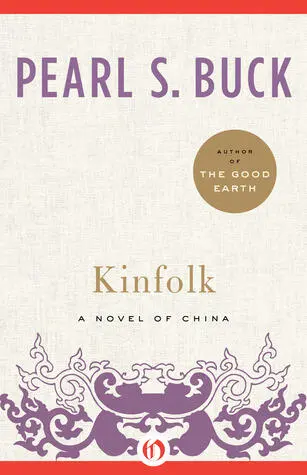
- Название:Kinfolk
- Автор:
- Издательство:Open Road Media
- Жанр:
- Год:2012
- ISBN:нет данных
- Рейтинг книги:4 / 5. Голосов: 1
-
Избранное:Добавить в избранное
- Отзывы:
-
Ваша оценка:
Kinfolk: краткое содержание, описание и аннотация
Предлагаем к чтению аннотацию, описание, краткое содержание или предисловие (зависит от того, что написал сам автор книги «Kinfolk»). Если вы не нашли необходимую информацию о книге — напишите в комментариях, мы постараемся отыскать её.
, a sharp dissection of the expatriate experience, Pearl S. Buck unfurls the story of a Chinese family living in New York. Dr. Liang is a comfortably well-off professor of Confucian philosophy, who spreads the notion of a pure and unchanging homeland. Under his influence, his four grown children decide to move to China, despite having spent their whole lives in America. As the siblings try in various ways to adjust to a new place and culture, they learn that the definition of home is far different from what they expected.
Kinfolk — читать онлайн бесплатно полную книгу (весь текст) целиком
Ниже представлен текст книги, разбитый по страницам. Система сохранения места последней прочитанной страницы, позволяет с удобством читать онлайн бесплатно книгу «Kinfolk», без необходимости каждый раз заново искать на чём Вы остановились. Поставьте закладку, и сможете в любой момент перейти на страницу, на которой закончили чтение.
Интервал:
Закладка:
“Do you think he understands anything except his food and his sleep?” Mary demanded.
“Underneath that mountain of flesh I think he understands a great deal,” James said.
The quarrel had faded away like a mist but she could not quite let it go. “As long as I know you are thinking about it,” she said, “as long as I know you really want to come back to our people and not just drift along with those Sus and Pengs and Kangs and people like that—”
“I don’t want to drift,” James said.
“As long as you are thoroughly discontented with everything, as I am,” Mary went on with a hint of laughter.
“I am quite discontented,” James replied.
Mary laughed. “Then let’s enjoy ourselves.” She got up and peered into the tiny temple. “Poor little gods,” she murmured. “They look terrified!”
When they got back at noon Uncle Tao was awake and walking slowly up and down the courtyard, digesting his late breakfast. The harvesting being over, the three meals of working days had been cut to the winter schedule of two, and there was as yet no preparation for the next meal. On the table in the main room were a plate of persimmons and a square sweetmeat dish divided into compartments which held watermelon seeds, pumpkin seeds, and some stale sweets.
“Eh, eh,” Uncle Tao said negligently when James and Mary came in.
“How are you, Uncle Tao?” James asked.
“Busy, busy,” Uncle Tao said, putting his fat hands to his stomach. “Where have you been?”
“Out in the fields,” James replied. “But we saw none of our kinsmen.”
“They went to a distant part of our land,” Uncle Tao said carelessly. “I sent them there to measure seed wheat. These old men of the earth will cheat the landlord every time if they can.”
“How do you decide the rent?” James asked.
“We take half,” Uncle Tao said. Now that he saw there was to be some real conversation, he sat down in his bamboo chair which no one else used. “Half the seed we furnish, half the harvest we get. The land is ours, the oxen are theirs. They have the easy work, we have the hard.”
“How is that, Uncle Tao? You look easy enough sitting here.”
“Ah, you don’t know the truth of our life here,” Uncle Tao said with vigor. Now that he was awake his huge body was responsive to his mood. His large head stood round and bald upon his wide shoulders, and his brown neck rose thick from his unbuttoned collar. He never bothered with buttons. His gray robe was held about him by a wide soft girdle of old silk and from the long sleeves his big hands moved in unison with his talk, gesturing with peculiar grace. These hands were smooth, though dirty, and the knuckles were dimpled.
“All you young people,” he said in a loud voice, as though addressing millions. “You do not understand. You think the old men of earth are all good and honest. Nothing is less true. I tell you these sons of hares who rent our Liang land, they are thieves. They sell the seed wheat and then complain of a poor harvest. They harvest early and sell our part of the harvest. I and my three sons, we trudge everywhere watching and weighing and measuring. Now when the seed is given we must see that it is sown. When it comes up we must judge the harvest month by month. At harvest we must be everywhere at once, lest the grain be cut before we can know how heavy it is. Pity the landlord, pity the landlord!”
Young Wang had come in during this talk, and not daring to break in, he had stood waiting. When Uncle Tao said this his face grew red and the veins on his smooth temples stood out. James saw this and understood it very well. Young Wang belonged to the men of earth. He turned aside to hear him. “What do you want?” he asked.
Young Wang began without noticing Uncle Tao. “Master, I see you are very well off here. How long do you stay?”
“Seven or eight days, if Uncle Tao will allow us,” James said.
“Stay, stay,” Uncle Tao said indulgently.
‘Then it is long enough for me to go and visit my old parents,’ Young Wang said. “I ought to have gone long ago, for I left them in the city after the floods. The water will be gone now and they will be back in their houses, if these have not melted into the water. If so, they will be making new ones. They have a very evil landlord who will not help them, and I must go back to see that he does not compel them to sell the very oxen who must plow the land if all are not to starve.”
James knew well enough that Young Wang said this for Uncle Tao, and he said at once, “Do go, and we will plan to leave here on the eighth morning from now.”
“I go then,” Young Wang said, and without more ado he went.
Uncle Tao had shut his eyes during this interruption and seemed to be asleep. Now he opened them and took up where he left off. “Had it not been for me,” he announced, “the Liang family would have no place on the earth today. Your grandfather, my older brother, was nothing but a scholar. He understood no more than a child about life. Full of good talk he was, and anybody could cheat him by agreeing with him. I suppose your father is the same way.”
“Perhaps,” James said.
“How does he make his real living over there?” Uncle Tao inquired with lively interest. “School teaching cannot fill the stomach. I send him so much of the rent each year, but I suppose it is also not enough.”
“You send him rent?” Mary exclaimed.
“His share,” Uncle Tao said, without looking at her. He never looked at any female creature in the daylight. “Before New Year each year I divide everything in exact proportion, to each his share according to his place in the family. Thus your father gets what my elder son gets in the same generation.”
“Pa never told us that!” Mary exclaimed.
“Eh,” Uncle Tao said. “Now why not?”
“I suppose he didn’t think of it,” James said reasonably. “What he earns at teaching is a good deal more.”
“Is it?” Uncle Tao exclaimed, his eyes lively. “Does he teach the foreigners how to read and write?”
“They know already,” Mary said.
“Not our language,” Uncle Tao replied.
Mary seized upon this change of subject. “Uncle Tao!” she said, firmly.
Uncle Tao looked at the ground. “What now?” he asked.
“Do you believe in reading and writing?”
“I can read and write,” he replied.
“But for other people,” Mary insisted.
“Not for women,” Uncle Tao said firmly. “When a woman gets her belly full of characters there is no room for a child.”
“For men, then,” Mary said, swallowing her pride for the moment.
“It depends upon what men,” Uncle Tao said. “For men like me and my sons, certainly we all read and write. Not too much, you understand, but enough.”
James looked at Mary with warning in his eyes. “Proceed slowly,” these eyes advised her. “Leave it to me,” they said. She rose. “I will go and see if I can help in the kitchen.”
Uncle Tao looked slightly in the direction of her voice. “Very good,” he said, “very right, entirely proper.”
He waited until she was gone and then he looked at James. “You must get this sister married quickly,” he said in a solemn voice. “To allow a female to run hither and thither is tempting the devils. Come, come, what have you done?”
“She wants to teach school,” James said boldly.
“Now you see,” Uncle Tao said triumphantly. “I told you — no reading and writing for women. None of my daughters-in-law can read. I insisted on that. Your father, I remember, would have your mother read. Well, I suppose she runs about everywhere. Never at home, eh? How many children?”
“Four of us.”
“Do you teach school, too?” Uncle Tao asked.
Читать дальшеИнтервал:
Закладка:
Похожие книги на «Kinfolk»
Представляем Вашему вниманию похожие книги на «Kinfolk» списком для выбора. Мы отобрали схожую по названию и смыслу литературу в надежде предоставить читателям больше вариантов отыскать новые, интересные, ещё непрочитанные произведения.
Обсуждение, отзывы о книге «Kinfolk» и просто собственные мнения читателей. Оставьте ваши комментарии, напишите, что Вы думаете о произведении, его смысле или главных героях. Укажите что конкретно понравилось, а что нет, и почему Вы так считаете.