Pearl Buck - Kinfolk
Здесь есть возможность читать онлайн «Pearl Buck - Kinfolk» весь текст электронной книги совершенно бесплатно (целиком полную версию без сокращений). В некоторых случаях можно слушать аудио, скачать через торрент в формате fb2 и присутствует краткое содержание. Год выпуска: 2012, Издательство: Open Road Media, Жанр: Классическая проза, на английском языке. Описание произведения, (предисловие) а так же отзывы посетителей доступны на портале библиотеки ЛибКат.
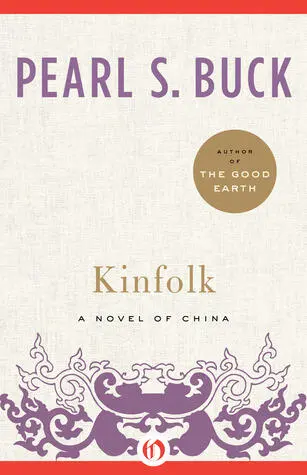
- Название:Kinfolk
- Автор:
- Издательство:Open Road Media
- Жанр:
- Год:2012
- ISBN:нет данных
- Рейтинг книги:4 / 5. Голосов: 1
-
Избранное:Добавить в избранное
- Отзывы:
-
Ваша оценка:
Kinfolk: краткое содержание, описание и аннотация
Предлагаем к чтению аннотацию, описание, краткое содержание или предисловие (зависит от того, что написал сам автор книги «Kinfolk»). Если вы не нашли необходимую информацию о книге — напишите в комментариях, мы постараемся отыскать её.
, a sharp dissection of the expatriate experience, Pearl S. Buck unfurls the story of a Chinese family living in New York. Dr. Liang is a comfortably well-off professor of Confucian philosophy, who spreads the notion of a pure and unchanging homeland. Under his influence, his four grown children decide to move to China, despite having spent their whole lives in America. As the siblings try in various ways to adjust to a new place and culture, they learn that the definition of home is far different from what they expected.
Kinfolk — читать онлайн бесплатно полную книгу (весь текст) целиком
Ниже представлен текст книги, разбитый по страницам. Система сохранения места последней прочитанной страницы, позволяет с удобством читать онлайн бесплатно книгу «Kinfolk», без необходимости каждый раз заново искать на чём Вы остановились. Поставьте закладку, и сможете в любой момент перейти на страницу, на которой закончили чтение.
Интервал:
Закладка:
How is a son betrothed to a daughter? The Liang family went to Peking often at the festival seasons, especially at New Year, when the theatricals are best, and there the girl’s father, who had come to the city to buy goods, met the boy’s father at a feast with mutual friends. The father, anxious to settle his daughter and hearing of a boy unbetrothed, approached the mutual friend, who approached the other father and thus the parents arranged the lives of their children.
For Mrs. Liang’s family the marriage was an advance, and so fine a one that when Dr. Liang, then a rebellious student, had refused marriage and demanded that his wife know how to read and write, Mrs. Liang went unwillingly and yet of her awn accord to a girls’ school.
“Ah, that was torture,” she told her own children in a solemn voice. “I who knew already how to do all that a wife should do was compelled to sit in a room with small children and learn letters! Only for your father I did it.”
To her children she could not, of course, tell the agonies of marrying a proud, discontented, even scornful young man. So she told them about the Liang village and the gentry into which she had married.
“The Liang village, your ancestral home,” she had often said, “does not lie on low ground where it can be flooded. True, there are no high mountains such as those to the north of Peking. But the ground swells and the village stands upon the swell. It is not a large village but neither is it a small one. A mud wall, strengthened with crushed brick, stands around he village. The gates are of wood, studded with brass nails. They are closed at night. Inside the gates the main street runs across, and there are many alleyways. Our house, your ancestral home, lies to the north, so that the rooms and the courts face south. There are sixteen rooms, four to each court. When I went there the old parents were still living. Ah, my mother-in-law, your grandmother, was very severe! I cried every night. Whenever your grandfather coughed or sneezed, I was blamed.”
Dr. Liang, hearing the tale often, always smiled at this point. “Yes, Liang,” his wife would insist with solemnity, “it is true. You do not know how much I suffered.” She turned again to the children. “When your pa’s feet were cold I had to rub them warm with my hands. When he did not eat I had to find special dishes. I tell you, to be the wife of a learned man is not easy. Your father’s father was, on the other hand, a large easygoing person who, while he never spoke to me, was kind to everybody. When he came into the room I must go out, but he always said to somebody else, ‘Tell her not to hurry herself.’ I wept when he died, I can tell you, because that left me alone with my mother-in-law. When she died, there was only Uncle Tao left. He is still there. Eh, that Uncle Tao!”
Mrs. Liang always began to laugh when she said this name.
“What about Uncle Tao?” the children had demanded.
At this point Dr. Liang always stopped her. “I forbid you to talk about Uncle Tao,” he said.
When she heard this she covered her face with her hand and laughed behind them until Dr. Liang began to grow angry. Then she took her hands away and tried not to laugh but her face was very red. “I cannot tell you about Uncle Tao,” she told them. “Your pa would be angry with me. But some day you must go to your ancestral home, and then you will see Uncle Tao.”
“But suppose he dies first?” they had clamored.
“Uncle Tao will not die,” Mrs. Liang had said. “He will live for one hundred years at least.” And she would say no more.
When James and Mary and Young Wang approached the ancestral village there it was before them, exactly as their mother had told them. It sat upon a swell of the land, and the mud wall surrounded it. The north gate was before them, and inside the gate would be their ancestral house. They were tired, for they had been riding muleback all day and the roads were rough. But in spite of weariness Mary began to laugh quietly.
“What is it?” James asked. They had spent a happy day together, talking of nothing much and enjoying the soaking sunshine. Mary, feeling free and comfortable with James, had sung songs and laughed often, and yawning had all but fallen asleep in her saddle in the afternoon warmth. To hear her now begin suddenly to laugh was only part of the pleasant day. She turned her laughing face to him, for she was riding ahead of him on the narrow earthen path that ran beside the stone road.
“Uncle Tao!” she cried. “Do you remember?”
“The one Pa would never let Ma tell us about,” he answered.
“Now we’ll see for ourselves!”
“Unless he’s dead—” Jim suggested.
“He won’t be dead,” she declared. “Ma said he’d live a hundred years.”
She struck her mule smartly with the braided rawhide whip and he quickened his pace for a few steps and then plodded again.
“Oh, go on!” she said impatiently to the mule. “I’ve wanted all my life to see Uncle Tao!”
Uncle Tao at this moment was sitting on the inner side of the spirit wall, impatient for his supper. The house was in a turmoil, for his third daughter-in-law who was in charge of the kitchen had mistaken his pronunciation of chicken noodles for lichen noodles. She was somewhat stupid at best and terrified of Uncle Tao, and while lichen is easily prepared, a chicken has first to be caught and then killed and plucked and properly stewed. The sun was over the wall before the mistake was discovered and then Uncle Tao declared that he would wait until midnight before eating lichen noodles. He sat down firmly in the large speckled bamboo chair which some ancestor had once brought from Hangchow, and there he waited, smoking his yard-long pipe with ferocity. Meanwhile the lichen noodles were hastily fed to the children and the three daughters-in-law devoted themselves to the chicken, which was hiding in the cabbages.
They were further frightened to discover when the fowl was dead that by some mischance they had killed their best laying hen. The one due to be eaten was a yellow hen who laid eggs only occasionally, storing up her energy in fat. But this good hen laid at least three eggs a week and had for several years hatched and cared for flocks of chicks, whereas the yellow hen could never be kept on the nest long enough to hatch anything.
“At least let us not tell Uncle Tao,” the first daughter-in-law said.
“He will find out,” the second daughter-in-law replied dolefully. “As soon as he sets his five teeth into this fowl’s flesh he will know what we have done.”
They united in turning upon the third daughter-in-law, who, with her face quite pale, was busily getting the cauldrons hot. “How you could be so stupid!” said the eldest.
“Why did you not look at the fowl before you wrung its neck?” said the second.
Thus they cried at the poor soul, who could only tremble. “I caught her under the cabbages,” she faltered, “and I wrung her neck before she could escape again.”
Uncle Tao’s loud voice bellowed from behind the spirit wall. “I want to eat!”
“Hurry,” the eldest daughter-in-law commanded. “We can lay the blame afterward.”
As one woman they proceeded to chop the favorite into small bits, that the flesh might be cooked the quicker. In one cauldron the bits were browned in oil with onion, ginger, soy sauce and a little water added, and all covered tightly under the heavy wooden lid. In the other cauldron the water simmered waiting for the noodles.
“I want to eat!” Uncle Tao bellowed again.
“Coming, Uncle Tao!” the eldest daughter-in-law cried.
Everybody called him Uncle Tao, although properly speaking his own family should not have done so, and in no other village was such a thing to be found. It had begun when he had returned to the village to live, the first of the family to do so in this generation. Dr. Liang’s father had left the ancestral home to study in Peking and he never went back except to pay a visit of duty to his parents and to bury them when they died. He had been given a good post in the Imperial Court in the days before the revolution, and was thought even to have had some influence upon the young Emperor, who lived so pitifully immured by the old Empress, his mother. When the young Emperor died, the Empress exiled Dr. Liang’s father because he was one of those who had urged the Emperor to reform the nation. He had been exiled to Mongolia, but he had gone only as far as his ancestral village. There, by an extravagant use of gifts to the chief eunuch, he was allowed to live and even to visit Peking occasionally and no one told the old Empress that he was not in Mongolia. Before the exile Dr. Liang himself had visited the ancestral village only at the time of his grandparents’ funeral when he had been a boy of fourteen or fifteen. It was during the exile that his father had betrothed him, and there the wedding had taken place some three years later after she had learned to read and write.
Читать дальшеИнтервал:
Закладка:
Похожие книги на «Kinfolk»
Представляем Вашему вниманию похожие книги на «Kinfolk» списком для выбора. Мы отобрали схожую по названию и смыслу литературу в надежде предоставить читателям больше вариантов отыскать новые, интересные, ещё непрочитанные произведения.


Обсуждение, отзывы о книге «Kinfolk» и просто собственные мнения читателей. Оставьте ваши комментарии, напишите, что Вы думаете о произведении, его смысле или главных героях. Укажите что конкретно понравилось, а что нет, и почему Вы так считаете.