Pearl Buck - Kinfolk
Здесь есть возможность читать онлайн «Pearl Buck - Kinfolk» весь текст электронной книги совершенно бесплатно (целиком полную версию без сокращений). В некоторых случаях можно слушать аудио, скачать через торрент в формате fb2 и присутствует краткое содержание. Год выпуска: 2012, Издательство: Open Road Media, Жанр: Классическая проза, на английском языке. Описание произведения, (предисловие) а так же отзывы посетителей доступны на портале библиотеки ЛибКат.
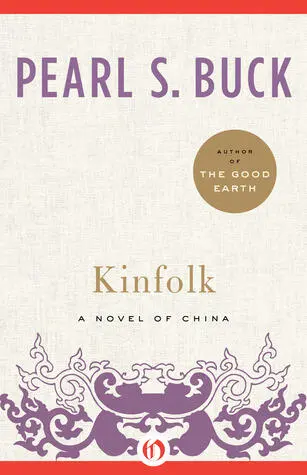
- Название:Kinfolk
- Автор:
- Издательство:Open Road Media
- Жанр:
- Год:2012
- ISBN:нет данных
- Рейтинг книги:4 / 5. Голосов: 1
-
Избранное:Добавить в избранное
- Отзывы:
-
Ваша оценка:
Kinfolk: краткое содержание, описание и аннотация
Предлагаем к чтению аннотацию, описание, краткое содержание или предисловие (зависит от того, что написал сам автор книги «Kinfolk»). Если вы не нашли необходимую информацию о книге — напишите в комментариях, мы постараемся отыскать её.
, a sharp dissection of the expatriate experience, Pearl S. Buck unfurls the story of a Chinese family living in New York. Dr. Liang is a comfortably well-off professor of Confucian philosophy, who spreads the notion of a pure and unchanging homeland. Under his influence, his four grown children decide to move to China, despite having spent their whole lives in America. As the siblings try in various ways to adjust to a new place and culture, they learn that the definition of home is far different from what they expected.
Kinfolk — читать онлайн бесплатно полную книгу (весь текст) целиком
Ниже представлен текст книги, разбитый по страницам. Система сохранения места последней прочитанной страницы, позволяет с удобством читать онлайн бесплатно книгу «Kinfolk», без необходимости каждый раз заново искать на чём Вы остановились. Поставьте закладку, и сможете в любой момент перейти на страницу, на которой закончили чтение.
Интервал:
Закладка:
When James led his brother and sisters and Chen to the great square which was the market place, the scene struck him with all the force of a magnificent stage. An old palace stood in the background, its heavy roof of blue porcelain tiles lifted against the clear sky. Maple trees had been planted on either side of it centuries ago, and these were gold and red with autumn. Since there was no wind the leaves did not scatter, but now and again in the ripeness of the season a leaf loosed its hold upon the parent branch and fell slowly to the ground. In the leaves little children played. They were drunk with happiness, although they were the children of the poor and they wore ragged clothes. Some of the boys had laid aside their shirts and their smooth brown bodies glistened with sweat.
The whole center of the immense court was filled with the chrysanthemums which vendors had brought to be sold. They stood in pots, hundreds together, and each owner with his wife or son watched over his own. Between the pots the people walked, exclaiming and praising until they saw one bloom irresistibly beautiful when reluctantly they felt themselves compelled to buy. Rich and poor were here together, for all alike revered these flowers, imperial in their size and hues. There were even a few foreigners and among them an occasional American soldier, on leave, perhaps, and out to see the sights. Yet here, as everywhere, the poor far outnumbered the rich. They were unable to buy any flowers, they could only stand and admire wistfully, and yet seemingly without envy, the purchases of the rich. Even when a flower by some ill chance was broken off, these poor did not dare to pick it up. They watched while the woman servant of some rich lady took up the flower and thrust it into her hair. It was the same quality in these poor that had made Peter so angry at the ricksha puller, and that James himself had seen in the wards of the hospital, where they received gratefully everything that was done for them, and if one of them died, there was no thought of revenge for his death.
Mary was at his side, and her seeing eyes perceived this difference between the people. “Look at the poor ones,” she said to James. “They think it is enough to gaze at the flowers.”
“I wish I were rich enough to buy a pot for everybody,” James said.
They had separated by chance. Chen and Peter were strolling along one side of the square and Louise was wandering at a little distance alone. Young Wang stood waiting and meanwhile watching a juggler who performed for those who might weary of the flowers.
Mary stopped beside a small group of common-looking men with their wives and children who were staring with wide eyes at the purchase being made by an old lady in satin robes and her two daughters-in-law. A steward called out the pots as the ladies pointed their delicate fingers toward the ones they wanted. The vendors sprang forward to set aside these choices. There was not so much longing in these watching eyes of the poor as a pure and dreamy pleasure that there should be in the world beings who were able to indulge themselves in the possession of beauty. A child touched a flower and his father reproved him in a low voice. “Eh, do not touch, little heart. One flower would take a seven days’ wage.”
“I can’t bear it,” Mary said suddenly. James looked down at her and saw tears flooding into her eyes and shining like crystals in the clear sunshine.
“You can’t change what has been going on so long, Mary,” he told her, and yet understanding all she felt. He too knew very often this catch of the heart, this sense of shame, before the poor here in his own land. Yet what could any of them do? It was all too old. One could not change eternity.
They walked away beyond the square, apart from the others. The square was set in the park belonging to the palace, and huge old trees stood in it here and there. “I am not satisfied, Jim,” Mary said. “I want to go farther into the country. We’re still on the surface here.”
He knew what she meant but he did not answer her quickly. She had their father’s fluency of words and he did not. In his own way he had been thinking and feeling deep under the surface of his daily life. Peking was now a pleasant backwater, a charming ancient pool. But it was not in the stream of life. One could live here and even do some good work and yet never reach the roots and the source.
“I’d like to go back to our ancestral village,” Mary said. “I want to know what kind of people we really are. Behind Pa and Ma who are we?”
She did not ask him the question. She put it to herself am he knew this and did not reply. She went on, “Let’s ask for a week away and let’s go to our village. Then I think I shall know what I want. Maybe it is what you will want, too. As we are now, we are almost as far from our people as we would have been had we stayed in New York.”
He was not prepared to agree altogether to this distance but he felt that with her usual directness Mary had chosen the next step. It would be good for them to go to the village of their origins and see it for themselves. Whether they liked it did not matter. His natural caution kept him from making up his mind too quickly. “I think it a good idea,” he told Mary “Let’s keep it in our heads for a few days and see if it holds. And now we must go to Louise. Do you see that she is talking to an American soldier?”
So indeed it was. Louise, wandering alone, had attracted the eyes of a fair-haired young man in foreign uniform. He had drawn gradually nearer to her, and though she had been aware of it, she had made no sign. Yet so subtle was the perception of their youth, and of sex, that he became confident that she would not repel him, and he had come to her side as she paused to admire a pale lavender flower, huge in its size, with petals curled loosely inward.
“Do you like this one best?” he had asked boldly.
She answered in English. “It’s nice.”
He moved to her side. “I’m in luck — you speak English. But somehow I knew you did.”
“How did you know?” she asked, looking at him from under her eyelashes.
“There is something American about you,” he declared, and knew that he had pleased her.
After that it was easy to talk. They exchanged names and ages, and she told him that her real home was in New York and found that he, too, had come from New York. Here in Peking this was a miracle for them both, and they had jus discovered it when James and Mary, Peter and Chen converged on them from different directions. Louise introduced the uniformed boy. “This is Alec Wetherston, and he come from New York, not terribly far from where Pa and Ma live.
“West of the park,” Alec said, smiling frankly and showing fine white teeth.
They bowed, Mary somewhat coldly, and then she said in Chinese, “Now we must buy what we want and go home, Louise. It is nearly sunset and the best flowers will be gone.”
Somehow or other their backs were all turned toward the American. But he was not to be discouraged. His face took on an indignant and set look and he said loudly to Louise, “Where do you live, Miss Liang? I’m coming to see you if I may.”
She gave him the name of the hutung and the number of the house, and he tipped his hat. “I’ll be there one of these days real soon,” he said, and giving a full stare at Mary and Chen and James, and a grin to Peter, he went away.
“Louise!” Mary cried, “how can you?”
Louise shrugged. “I didn’t do anything,” she declared. But all of them saw that the look in her eyes had changed in this short time. The despondency was gone and instead there was a look of life and even of triumph. Chen turned away.
“Come,” James said, “let us buy this white one, this yellow one, and this fine red one.”
Читать дальшеИнтервал:
Закладка:
Похожие книги на «Kinfolk»
Представляем Вашему вниманию похожие книги на «Kinfolk» списком для выбора. Мы отобрали схожую по названию и смыслу литературу в надежде предоставить читателям больше вариантов отыскать новые, интересные, ещё непрочитанные произведения.








Обсуждение, отзывы о книге «Kinfolk» и просто собственные мнения читателей. Оставьте ваши комментарии, напишите, что Вы думаете о произведении, его смысле или главных героях. Укажите что конкретно понравилось, а что нет, и почему Вы так считаете.