Pearl Buck - Kinfolk
Здесь есть возможность читать онлайн «Pearl Buck - Kinfolk» весь текст электронной книги совершенно бесплатно (целиком полную версию без сокращений). В некоторых случаях можно слушать аудио, скачать через торрент в формате fb2 и присутствует краткое содержание. Год выпуска: 2012, Издательство: Open Road Media, Жанр: Классическая проза, на английском языке. Описание произведения, (предисловие) а так же отзывы посетителей доступны на портале библиотеки ЛибКат.
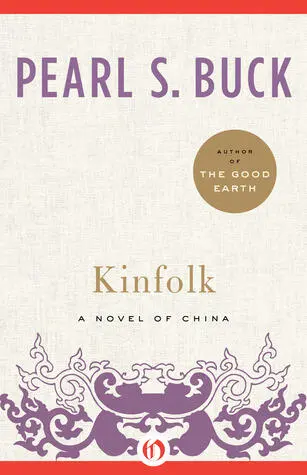
- Название:Kinfolk
- Автор:
- Издательство:Open Road Media
- Жанр:
- Год:2012
- ISBN:нет данных
- Рейтинг книги:4 / 5. Голосов: 1
-
Избранное:Добавить в избранное
- Отзывы:
-
Ваша оценка:
Kinfolk: краткое содержание, описание и аннотация
Предлагаем к чтению аннотацию, описание, краткое содержание или предисловие (зависит от того, что написал сам автор книги «Kinfolk»). Если вы не нашли необходимую информацию о книге — напишите в комментариях, мы постараемся отыскать её.
, a sharp dissection of the expatriate experience, Pearl S. Buck unfurls the story of a Chinese family living in New York. Dr. Liang is a comfortably well-off professor of Confucian philosophy, who spreads the notion of a pure and unchanging homeland. Under his influence, his four grown children decide to move to China, despite having spent their whole lives in America. As the siblings try in various ways to adjust to a new place and culture, they learn that the definition of home is far different from what they expected.
Kinfolk — читать онлайн бесплатно полную книгу (весь текст) целиком
Ниже представлен текст книги, разбитый по страницам. Система сохранения места последней прочитанной страницы, позволяет с удобством читать онлайн бесплатно книгу «Kinfolk», без необходимости каждый раз заново искать на чём Вы остановились. Поставьте закладку, и сможете в любой момент перейти на страницу, на которой закончили чтение.
Интервал:
Закладка:
Dr. Liang smiled gracefully. “I’m a mere man of letters,” he said softly. “I don’t occupy my mind with such things.”
“Ah, yes, well,” Ranald Grahame said, “somebody has to, you know.” His eyes wandered about the room and fell on Violet dancing with that chap Pierre du Bois. He watched them in silence so suddenly grave that Dr. Liang with his delicate intuition felt alarmed. He would not like that English look directed against him! Thus thinking, he said that he must be going home, and then he drifted across the room and found Mrs. Liang.
“I’m feeling a little tired,” he said. “Shall we go home?”
She rose at once, bade her two friends a warm good-by with many promises of early meetings and invitations to meals, and Dr. Liang bowed twice and they went home, stopping only to thank Mr. and Mrs. Li who were sitting side by side on a settee near the door. Lili was now dancing with the Englishman, and Mrs. Li, disapproving, could only nod her head to her guests.
“Does it not cast some reflection on Lili to dance with this Englishman who owns Violet Sung?” she asked Mr. Li after the Liangs had gone.
“Well, well,” Mr. Li said, “I see Charlie is about to take her away. He will take care of her now — we can rest.” Even as he spoke Charlie Ting cut in on his lovely fiancée and Ranald Grahame was left alone on the floor. He looked half angry for a moment and then he went to the bar. Violet was still dancing with the Frenchman.
Dr. and Mrs. Liang rode home in total silence and Mrs. Liang leaned her head in a corner of the taxi and dozed. When they got home they found two bills and a letter on the hall table and the letter was from James.
“It is from the children,” Mrs. Liang cried with pleasure. “Come, let us read it at once.”
“I would like a cup of hot tea,” Dr. Liang said. “While you make it I will just cast my eyes over the letter.”
She looked wistful, but being anxious to keep him in good humor, she went obediently to the kitchen, lit a match, and shut her eyes while she applied it to the gas range, jumped when there was a loud report, and then set the kettle on to boil. She longed to go back and hear at least part of the letter but she waited until the kettle had boiled and she had infused the tea. Then with teapot and two bowls she went to the study.
What she saw caused her to set the teapot down hastily on the table. “Liang, what is wrong?” she cried.
He was tearing the letter into small pieces. “So,” he said, between set teeth, “you think I am about to take a concubine!”
She turned pale and sat down. “I did think so,” she faltered, “and I told the children I could not stay here if you did.”
“And whom would I take as a concubine?” he demanded.
“I don’t know,” she said. She was terrified at the look on his face and the children were not here to protect her. She faltered on. “One day you came and asked me what I thought about concubines—”
“Fool!” he said bitterly. “I was only writing an essay about women.”
She looked at him confounded. “Was that all?”
“That was all.”
She turned and tried to pour a bowl of tea, but her hand shook and she gave it up. “You will have to pour your own tea,” she said, beginning to sob.
She made for the door blindly, her handkerchief at her eyes, but he stopped her. “Why did you think I would take a concubine?” he asked. “Have I ever been unfaithful to you?”
She shook her head, her eyes still hidden behind her handkerchief. “Not altogether,” she murmured.
“What do you mean not altogether?” he demanded. “Either I am or am not unfaithful!”
She was very tired. She disliked large parties and she still felt that the Li family had slighted James and through him the Liang family. She was tired of Dr. Liang’s rather windy fame, and she longed for the solid substance of money and American bank accounts. It seemed to her that the Li family had everything. She was so tired that she felt reckless and inclined to tell the truth, even though the children were not here to protect her. So she opened the gates of her being and the truth flowed out. She took away the handkerchief and faced Dr. Liang.
“What is this faithful and unfaithful? It is all in the eyes and the mind. Yes, I am your wife, and that is how I know when you are being unfaithful. Do you think I do not know the look in your eyes and on your mouth when you are being faithful with me? And when I see the same look, when you look at Violet Sung and — and any other such woman — do I not know what you are being? And perhaps when you are being faithful with me, you are in your heart thinking about Violet Sung, so that even when you are being faithful with me you are also being unfaithful with her. You are not a man with a single kind of mind in you. You are like this—” Mrs. Liang’s fingers described in the air contradictory and secret convolutions; unfathomable in their contortions—“winding this way and that way and this way. I know you!”
Upon this she burst into loud sobs, put her handkerchief to her eyes again, and rushed out the door. Tomorrow morning, she told herself, she would empty the wastebasket herself in the kitchen and collect the scraps and piece together the children’s letter.
Dr. Liang heard her stump upstairs and go into the bedroom and lock the door fast. He sat quite still for a moment. Then he got up and poured himself tea and drank it slowly. When this was done he took out his Confucian classics and began to read them. The book fell open of itself at the pages upon which Confucius, more than two thousand years ago, had recited his hatreds. Smug people Confucius hated, rumor mongers he hated, spies he hated, and wily persons who pretended to be honest gentlemen. He hated cockleburs that mix themselves with corn, and dishonest men who mingle with the honest, and he hated glib talkers. He hated also the music of Cheng, because like modern jazz it confused classical music. He hated the color purple because it put to confusion the good color of red, and he hated prigs because they confused themselves with virtuous people. Then Confucius ended the list of his hatreds with these words: “Women and uneducated people are the most difficult to deal with. When I am familiar with them they become impudent, and when I ignore them, they resent it.”
Dr. Liang read these words thoughtfully, smiled, drank a little more tea, and prepared himself to sleep all night upon the couch here in his study.
He took off his coat and shirt and trousers and wrapped himself in a warm old quilted robe which he kept in the closet. He took off his socks and shoes and drew on a pair of knitted bedsocks. A steamer rug lay folded on the couch and this he put over him. A velvet-covered cushion made a good pillow. But when he had laid himself down and had put out the light he found he could not sleep. He felt lonely. That was the worst of going to an evening party. One was deceived by the noise, the glitter, the appearance of friends. The home seemed cold and empty.
Perhaps he had been hasty about sending the children away. Or perhaps, indeed, he and their mother should now think about returning to China. A pleasant home in Peking with a garden, his children there, James a distinguished surgeon, the home a center for scholars and beautiful women, his grandchildren running about the rooms, he and the mother growing old, honored and respected as only in China are the old honored and respected. Perhaps he might even be the president of a university, since he did not want to go into politics. All this flitted through his wakeful mind. He was on the brink of going upstairs to find his wife to tell her impulsively that at last he was about to yield to her wishes and go to China. He hesitated, however. He did not like to seem afraid of her and it was his habit never to allow himself to appear reconciled in less than twenty-four hours. Before that time had passed she was sure to make some small sign of repentance and then he could forgive her generously. He put out his hand therefore to turn on the radio, since he could not sleep, and at the same moment the last news commentator was finishing his summary of the world’s news for the day.
Читать дальшеИнтервал:
Закладка:
Похожие книги на «Kinfolk»
Представляем Вашему вниманию похожие книги на «Kinfolk» списком для выбора. Мы отобрали схожую по названию и смыслу литературу в надежде предоставить читателям больше вариантов отыскать новые, интересные, ещё непрочитанные произведения.




Обсуждение, отзывы о книге «Kinfolk» и просто собственные мнения читателей. Оставьте ваши комментарии, напишите, что Вы думаете о произведении, его смысле или главных героях. Укажите что конкретно понравилось, а что нет, и почему Вы так считаете.