Pearl Buck - Kinfolk
Здесь есть возможность читать онлайн «Pearl Buck - Kinfolk» весь текст электронной книги совершенно бесплатно (целиком полную версию без сокращений). В некоторых случаях можно слушать аудио, скачать через торрент в формате fb2 и присутствует краткое содержание. Год выпуска: 2012, Издательство: Open Road Media, Жанр: Классическая проза, на английском языке. Описание произведения, (предисловие) а так же отзывы посетителей доступны на портале библиотеки ЛибКат.
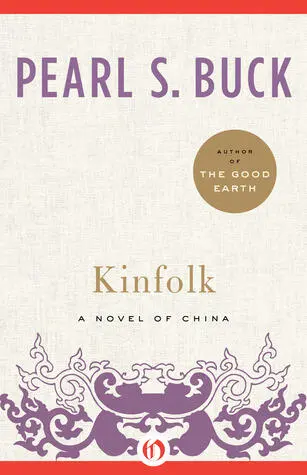
- Название:Kinfolk
- Автор:
- Издательство:Open Road Media
- Жанр:
- Год:2012
- ISBN:нет данных
- Рейтинг книги:4 / 5. Голосов: 1
-
Избранное:Добавить в избранное
- Отзывы:
-
Ваша оценка:
Kinfolk: краткое содержание, описание и аннотация
Предлагаем к чтению аннотацию, описание, краткое содержание или предисловие (зависит от того, что написал сам автор книги «Kinfolk»). Если вы не нашли необходимую информацию о книге — напишите в комментариях, мы постараемся отыскать её.
, a sharp dissection of the expatriate experience, Pearl S. Buck unfurls the story of a Chinese family living in New York. Dr. Liang is a comfortably well-off professor of Confucian philosophy, who spreads the notion of a pure and unchanging homeland. Under his influence, his four grown children decide to move to China, despite having spent their whole lives in America. As the siblings try in various ways to adjust to a new place and culture, they learn that the definition of home is far different from what they expected.
Kinfolk — читать онлайн бесплатно полную книгу (весь текст) целиком
Ниже представлен текст книги, разбитый по страницам. Система сохранения места последней прочитанной страницы, позволяет с удобством читать онлайн бесплатно книгу «Kinfolk», без необходимости каждый раз заново искать на чём Вы остановились. Поставьте закладку, и сможете в любой момент перейти на страницу, на которой закончили чтение.
Интервал:
Закладка:
They laughed and Mary, in fun, did what Peter had told her to do. Thus she rushed straight into the part of Mr. Liang’s letter where she told of the possibility of a concubine and her determination to leave the house in such case. There Mary stopped. They looked at one another aghast. Even Louise was startled and put down her chopsticks.
“I told you I should not be here,” Chen said.
“Why not?” demanded Mary. “If Pa has been so foolish—”
“I do not believe it,” James said severely, but in his head he was dismayed to find that he was not sure that his father could not be foolish.
Peter turned to Louise. “You know Pa better than any of us,” he said. “Can you think of anyone who seemed — special to him?”
Louise looked thoughtful. It was painful to remember the gaiety of those days in New York in comparison with the dullness of her present life, but she forced herself to do so. “It is hard to think of anyone,” she said at last. “You know how women are about Pa. They gather in a circle so close to him — to hear what he says.”
“Louise!” Mary cried. “That is not Pa’s fault.”
Peter grinned. “Pa never pushes them away,” he remarked.
“Pa never puts his hand out to touch anybody,” Mary retorted.
Louise continued to look thoughtful. “I do think that Pa used to talk more to Violet Sung than to any of the others,” she said.
Peter groaned loudly. “Oh — that female!”
“Hush!” James said. “Who is Violet Sung?”
Louise cast a sidelong look at her brother. “She is a friend of Lili’s,” she said.
James compelled his face not to change. He had only once spoken to Mary of Lili. There had been but a few words. “Is — Lili married yet?” So he had asked Mary.
“No, she is not,” Mary had replied. “And please do not ask me about her. I never saw her except that once after you left.”
Since Lili had not written him one letter, it seemed folly to speak more of her. Yet he had wanted to talk about her, perhaps to heal his own heart. “I know that she and I could never marry,” he had said. “We would make each other very unhappy.”
“I am glad you see that,” Mary had said. Her round pretty face had looked so severe that he had said no more.
Now that he heard her name on Louise’s lips, however, it occurred to him that Louise was the one to whom he should have spoken. But this was not the time or the place. He put on his most elderly brother look and he said quietly, “In any case I feel sure that Pa will do no such thing. Give me the letter, Mary. I will finish it in private, and then I will write to him for us all. Of course if we are wrong about Pa, it is quite true that Ma must come to live with us.”
“Then I will go and take care of Pa,” Louise said eagerly. “I am sure Violet will not be a good housekeeper. She is very beautiful, in that French sort of way — she has always lived in Paris. And you know how Pa is — he’s very intellectual, but at the same time he’s used to the way Ma looks after him, and Violet would never put a hot-water bottle in his bed or see that his ties are cleaned and his shoes brushed.” Her face was eager and her eyes shone and they all pitied her, for they knew that it was not to their father that she wished to return. “Louise,” James said, “I wish to speak with you alone.” He rose and went into the other room, and Louise, pouting, followed him.
The others left behind ate what they wished for the remainder of the meal. Mary’s appetite was gone, and Chen, feeling sorry for her, had not the heart to seem hungry. With his chopsticks he picked a bit of meat here and a strip of vegetable there. When she put down her chopsticks he put down his and taking the tea bowl he went out into the court and rinsed his mouth thoroughly and spat behind the pine tree. Only Peter ate another full bowl of rice, and to him Mary talked in subdued angry tones.
“If I thought Pa really were so wicked, I would declare myself not his daughter,” she said. Every day in the newspapers in Peking daughters and sons declared themselves free of their parents, because, they said, these parents were too old-fashioned and did not have the interest of the nation at heart.
“Pa is very deep,” Peter said. “He is full of Confucianism and all that rotten old stuff. You should hear the fellows here at college talk about Confucius. Why, Confucius was a reactionary, and he kept the old traditions alive that have made the nation weak and the people slaves.”
“Don’t be silly,” Mary said impatiently. “You know the people here are not slaves. Everyone does as he wishes. In the hospital we have signs everywhere that there is to be no spitting but everybody spits just the same wherever he likes.”
“That, too, is because of Confucianism,” Peter declared, with his mouth full of steamed duck. “Hygiene and science are equally unknown here, because Confucius has held back our people.”
“I don’t see what this has to do with Pa!” Mary cried.
“It has everything to do with him,” Peter said, filling his bowl with rice again. “Pa is a reactionary, too. That’s why he doesn’t dare come back to China. He is afraid someone will stab him in the back in a dark alley.”
He said this terrifying thing so solemnly that Mary held her tongue for a half minute. Seeing the impression he had made, Peter went on. “I have already learned a lot at the college. I never knew before how much the fellows here hate Pa. Everybody knows him and everybody hates him. They say he is an old-fashioned intellectual, that he wants to be considered a scholar of the old school, and those old scholars are in league with the warlords, the landlords, and the government to oppress the people.”
“Peter!” Mary cried. “Take care how you speak.”
“I’m only saying what I hear,” Peter said doggedly. “It is not pleasant to be Pa’s son, I can tell you. I have to say openly that I don’t agree with him.”
“You ought to be ashamed of yourself,” Mary said warmly. “Your own father!”
“Yours too,” Peter said. “It was only a minute ago that you were talking about being independent of him.”
Thus caught, Mary lost her temper. “Oh, shut up!” she said in English, and feeling the tears come to her eyes she rose and went into the court to be alone.
Chen, however, was still there. He had sat down on the bench under the great pine to pick his teeth and to consider how he could be useful. When he saw Mary he hid the toothpick in his hand and rose politely. With her he was always formal.
“Do not get up,” Mary said. “I am only passing through the court.”
“Please,” Chen said, “sit down for a moment. I have been thinking about the letter. My conclusion is that your mother has made some mistake. If your father were really considering such a step he could not take it in America, where a concubine is not a recognized person. Whatever he did must be secret there. Since he is so famous, it would be difficult to keep anything secret. Moreover, I have discovered that intellectuals seldom carry on a genuine love affair. They do not have the physical strength for it. Take the doctors in our hospital — they talk a great deal about love and women when we are alone together. Actually I do not know of one who does more than talk. For them love is entirely theoretical. Your father is no longer young. He is the less likely then to undertake a love affair in practical terms. Please write to your mother and tell her that she is probably mistaken.”
Mary had listened to this somewhat long speech without removing her eyes from Chen’s face. Never before had she looked at him so steadily. As he stood there under the pine tree with the sunlight falling through the branches she saw as if for the first time that he had a broad honest face, a square big mouth, a large strong nose, and fine eyes. The look in his eyes was good, friendly, and true. She spoke with involuntary thanks. “Chen, you are very kind to say this to me. I think you are right. I think it is Ma who is old-fashioned and suspects Pa. I shall tell her so.”
Читать дальшеИнтервал:
Закладка:
Похожие книги на «Kinfolk»
Представляем Вашему вниманию похожие книги на «Kinfolk» списком для выбора. Мы отобрали схожую по названию и смыслу литературу в надежде предоставить читателям больше вариантов отыскать новые, интересные, ещё непрочитанные произведения.

Обсуждение, отзывы о книге «Kinfolk» и просто собственные мнения читателей. Оставьте ваши комментарии, напишите, что Вы думаете о произведении, его смысле или главных героях. Укажите что конкретно понравилось, а что нет, и почему Вы так считаете.