Pearl Buck - Kinfolk
Здесь есть возможность читать онлайн «Pearl Buck - Kinfolk» весь текст электронной книги совершенно бесплатно (целиком полную версию без сокращений). В некоторых случаях можно слушать аудио, скачать через торрент в формате fb2 и присутствует краткое содержание. Год выпуска: 2012, Издательство: Open Road Media, Жанр: Классическая проза, на английском языке. Описание произведения, (предисловие) а так же отзывы посетителей доступны на портале библиотеки ЛибКат.
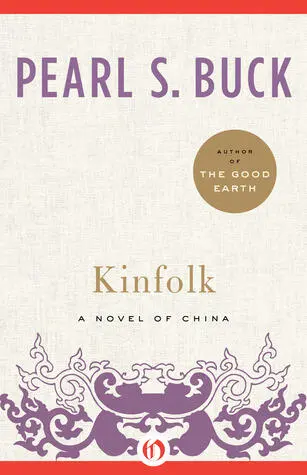
- Название:Kinfolk
- Автор:
- Издательство:Open Road Media
- Жанр:
- Год:2012
- ISBN:нет данных
- Рейтинг книги:4 / 5. Голосов: 1
-
Избранное:Добавить в избранное
- Отзывы:
-
Ваша оценка:
Kinfolk: краткое содержание, описание и аннотация
Предлагаем к чтению аннотацию, описание, краткое содержание или предисловие (зависит от того, что написал сам автор книги «Kinfolk»). Если вы не нашли необходимую информацию о книге — напишите в комментариях, мы постараемся отыскать её.
, a sharp dissection of the expatriate experience, Pearl S. Buck unfurls the story of a Chinese family living in New York. Dr. Liang is a comfortably well-off professor of Confucian philosophy, who spreads the notion of a pure and unchanging homeland. Under his influence, his four grown children decide to move to China, despite having spent their whole lives in America. As the siblings try in various ways to adjust to a new place and culture, they learn that the definition of home is far different from what they expected.
Kinfolk — читать онлайн бесплатно полную книгу (весь текст) целиком
Ниже представлен текст книги, разбитый по страницам. Система сохранения места последней прочитанной страницы, позволяет с удобством читать онлайн бесплатно книгу «Kinfolk», без необходимости каждый раз заново искать на чём Вы остановились. Поставьте закладку, и сможете в любой момент перейти на страницу, на которой закончили чтение.
Интервал:
Закладка:
Chen smiled somewhat timidly. “Do you think with all this trouble that we must give up our walk to the chrysanthemum market?” he asked.
She had forgotten it, but now when he spoke of chrysanthemums it seemed to her that this visit to the famous market where she could choose pots of her favorite flowers and bring them home would comfort her more than anything. “I don’t see why we should not go,” she exclaimed. “I will go and find James.”
“Wait,” Chen exclaimed. “Listen!”
They stood and listened. They could hear the murmur of James’s voice, and then Louise’s, in earnest conversation.
“They are still in the stream of talk,” Chen said. “Let us give them a little longer.”
“Where is Peter?” Mary asked.
Chen smiled and pointed his forefinger toward the open door. Peter, filled with rice and duck, had thrown himself down on the wicker couch that stood against the wall and was sound asleep lying on his back, his hands folded under his head.
“Come and rest under the pine tree,” Chen said to Mary. “The air is cool and fragrant. You need not talk. Let us just sit in quietness.”
In the other room, a small room which they had made into a study and library, James was listening to Louise, asking a question now and then, guiding her to talk, but saying little himself. This sister of his with whom he had lived in one house for nearly all the seventeen years of her life, he now realized had been a stranger to him. He knew how she looked, and he could even remember how she had looked as a baby and a little girl. In those years she had been for the family a toy and a plaything. Mary had been serious and impetuous, always a person, but Louise had seemed to have no life except as she drew it from others. She had always sat on somebody’s lap until only a year or two ago, when suddenly she had stopped of her own accord, and yet none of them had noticed it. Imperceptibly she had ceased to be a little girl and had become a young woman, and they had not noticed this, either. She had done well enough in school, but it had not mattered that she did no better. None of them expected or indeed wanted Louise to be bookish or brilliant. She had seemed always gracefully unselfish, because she was the one who brought Pa’s slippers, or filled his pipe; she was the one to fetch a book somebody wanted or to bring in the dishes from the kitchen and take them out again. No one noticed that she never did any real work, even to make her own bed. Behind the facade of prettiness and graceful unselfishness she had grown into someone quite different, a small hard separate woman, James now perceived as he let her reveal herself. How had they let her grow up without heeding what she was?
“I hate it here,” Louise was saying. “You may think these crumbling old palaces are wonderful, Jim, but they repel me. I don’t like living in a country where everything is falling to pieces and all that is worth talking about is the past.”
“But, Louise, you are wrong. Something wonderful and new is taking place here.”
“What is it?” she asked doubtfully.
“I don’t know,” he said honestly. “But I feel it. We have finished with one age and we are about to begin another. I stay here because of the future, not the past. I know Pa is always dwelling on the past, but I do not.”
“It happens that I don’t like anything here!” she said passionately. “I don’t like the young men. I don’t like the people on the street. The children are filthy. Jim, I wish I hadn’t been born a Chinese. I wish I could stop being a Chinese. Oh, Jim!”
Here she broke down into tears and he let her cry.
“All this,” he said after a moment, “is because you have let yourself fall in love with an American. At your age love shapes the universe.”
She continued to sob, and he went on gently. “I know, too, what it is to love someone. I think I loved Lili with all my heart. Even now, when I know we shall never marry, when I think of her, or someone speaks her name, the world trembles. But it does not crash about me. I know that there is a life that must be lived happily without Lili. Just now I feel as though for me it would always be lived alone. But I know this is only feeling. I shall marry and have children. I want to marry here and have my children here. And I shall never let them leave our country. They must stay here until there is no possible danger in their going away, because however far they go, they will always come back, and wherever they are they will dream of coming back and whatever they do it will be for our people. And they must marry here, too, and their children must be born here. So much I have decided.”
Louise stopped crying and looked at him half angrily. “You are very old-fashioned, Jim.”
“There is something here that I want,” he said. “I don’t know what it is, but I shall find it. And I shall find it not with this—” he tapped his brain cap—“I shall find it by my blind roots pushing down and down.”
She was not stupid and she listened to him. “You are a man,” she complained, “and you can do what you like.”
“Now it is you who are old-fashioned,” he said heartily. “A woman can do what she likes too, nowadays, even in China. You must change what you want most. Instead of grieving for Philip, who does not want you, you must keep saying that you do not want him. And after a while it will be true. Then you will be free to find what you really want.”
She did not answer and he could not tell how much she believed. He gazed somewhat wistfully and with great tenderness at her lovely and still childlike face, and it crossed his mind with a sort of wondering shyness, that of all of them, only this child knew what the mystery of the flesh was. And yet she did not really know, for she had not crossed the valley and slowly climbed the hill of life to the forts of happiness. Instead, like a child she had rushed up that hill and had beaten at the gates and clamored until they opened. She did not know anything about love and its true consummation. He felt a great pity for her, because what she had done could never be undone, and whenever the true consummation came, if ever it did, it would be spoiled.
“We really came here to talk about Pa,” Louise said suddenly.
“And now I do not feel that I want to talk about him,” James said.
“I don’t think Violet Sung would have him,” Louise said. “After all, Pa is old. He looks handsome enough, especially in the evening, and of course he has a wonderful speaking voice — so deep and gentle. Women like it. But any woman would soon know he has no passion in him. And Violet isn’t intellectual — not really. I mean—” she broke off.
A great revulsion fell upon James at the ease with which this young creature spoke these words. “I daresay you are right,” he said, getting to his feet.
“Ma is so simple,” Louise said ruthlessly.
“And very good,” James said gently.
9
DR. LIANG RECEIVED HIS SON’S LETTER on a cool night in autumn. He had just come home with Mrs. Liang from a very enjoyable occasion. Mr. and Mrs. Li had announced the formal engagement of their daughter Lili to Charles Ting, the son of Timothy Ting who, it was expected, would be China’s next ambassador to the Court of St. James. It was said that the most important ambassadorship was in Washington but the most pleasant was in London, for English life, next to Chinese, was the most civilized in the world. The wedding was to be soon, for the young couple were to go with Mr. and Mrs. Ting to England.
It had been a distinguished party. The great wealth of the Li family was joined to the high position of the Ting family, and the Waldorf-Astoria had done its best. The ballroom had been decorated with Chinese works of art belonging to both families, and two close friends of the families, both great art dealers, had lent their best pieces. Invitations were at a premium, and special guards had been hired and stationed at the doors to keep out gate crashers. The food was superb, the best of Chinese and American, and champagne and the finest teas were served. Mr. and Mrs. Li and Mr. and Mrs. Ting had stood in a row of four and with them the young couple. All the men wore formal Western garments and the Chinese women were in beautiful and sumptuous Chinese satins. The Western women were striking in décolleté but the Chinese women were equally so in their shortsleeved high-necked robes. Lili was the most beautiful girl in the room. She was ivory pale, and her black hair was cut to her shoulders and curled loosely under. Across her forehead it was cut in a straight bang, and she wore jade earrings and bracelets on her pale cream-colored arms. She was as slender as a willow, and the apricot shade of her robe melted into the warm pallor of her flesh. Her lips were flame red, and her long black eyes were dreaming. Charlie Ting stood only a little taller than she, and he kept looking at her until people began to notice it and tease him.
Читать дальшеИнтервал:
Закладка:
Похожие книги на «Kinfolk»
Представляем Вашему вниманию похожие книги на «Kinfolk» списком для выбора. Мы отобрали схожую по названию и смыслу литературу в надежде предоставить читателям больше вариантов отыскать новые, интересные, ещё непрочитанные произведения.




Обсуждение, отзывы о книге «Kinfolk» и просто собственные мнения читателей. Оставьте ваши комментарии, напишите, что Вы думаете о произведении, его смысле или главных героях. Укажите что конкретно понравилось, а что нет, и почему Вы так считаете.