Pearl Buck - Kinfolk
Здесь есть возможность читать онлайн «Pearl Buck - Kinfolk» весь текст электронной книги совершенно бесплатно (целиком полную версию без сокращений). В некоторых случаях можно слушать аудио, скачать через торрент в формате fb2 и присутствует краткое содержание. Год выпуска: 2012, Издательство: Open Road Media, Жанр: Классическая проза, на английском языке. Описание произведения, (предисловие) а так же отзывы посетителей доступны на портале библиотеки ЛибКат.
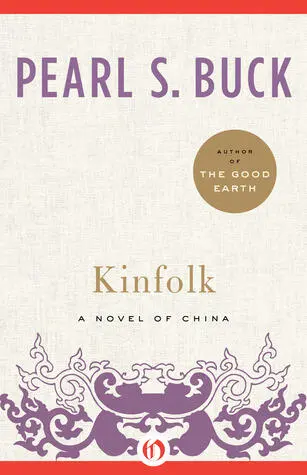
- Название:Kinfolk
- Автор:
- Издательство:Open Road Media
- Жанр:
- Год:2012
- ISBN:нет данных
- Рейтинг книги:4 / 5. Голосов: 1
-
Избранное:Добавить в избранное
- Отзывы:
-
Ваша оценка:
Kinfolk: краткое содержание, описание и аннотация
Предлагаем к чтению аннотацию, описание, краткое содержание или предисловие (зависит от того, что написал сам автор книги «Kinfolk»). Если вы не нашли необходимую информацию о книге — напишите в комментариях, мы постараемся отыскать её.
, a sharp dissection of the expatriate experience, Pearl S. Buck unfurls the story of a Chinese family living in New York. Dr. Liang is a comfortably well-off professor of Confucian philosophy, who spreads the notion of a pure and unchanging homeland. Under his influence, his four grown children decide to move to China, despite having spent their whole lives in America. As the siblings try in various ways to adjust to a new place and culture, they learn that the definition of home is far different from what they expected.
Kinfolk — читать онлайн бесплатно полную книгу (весь текст) целиком
Ниже представлен текст книги, разбитый по страницам. Система сохранения места последней прочитанной страницы, позволяет с удобством читать онлайн бесплатно книгу «Kinfolk», без необходимости каждый раз заново искать на чём Вы остановились. Поставьте закладку, и сможете в любой момент перейти на страницу, на которой закончили чтение.
Интервал:
Закладка:
“Young Wang is a good fellow,” Chen said, “but I trust my own intelligence rather than his. I prefer to eat my food hot, especially as there is still some cholera in the city.”
Chen and Mary argued over many things. Both were stubborn and neither yielded to the other. Louise always took Chen’s side, whatever the argument. It seemed sometimes that she did not love her elder sister, and Mary more than once went away with tears in her eyes, which she was too proud to show. After she had so left them one day, Louise said to Chen, “Mary has never let me feel free. It was really her fault, I believe, that Pa made us come here.”
Chen by now knew that she had been in love with an American and that her parents had sent her away. James had told him this, and Chen had listened, his heart beating rather fast and his blood feeling hot in his veins. He was angry that an American should look at a Chinese girl, but he felt sorry for Louise. She was very young, and too pretty for her own good. He discussed with James at some length the problem of beauty in a woman, and whether it was her fault that her strength was not equal to her temptations. “This strength,” Chen said, “might actually be greater than that of an ugly woman, but the ugly woman is praised for a self-control which may in fact be very slight indeed.”
“I hope you are not sorry that you have come to Peking?” Chen now said to Louise. He was surprised and somewhat alarmed at the tenderness he felt was in his voice, and hearing it he became bashful.
“I don’t like it here as well as I do in New York,” Louise said.
“But you have a very gay time, don’t you?” Chen urged. He knew how eagerly James hoped that this younger sister would want to stay here, and how much he hoped, indeed, that she would find a husband.
Louise pouted and shrugged her shoulders. “There is nothing very gay in Peking,” she said.
“There are the palaces,” Chen reminded her. They had spent several Sunday afternoons, all of them together, visiting the Forbidden City, and they had been invited on some picnics by Dr. Su and Dr. Kang to go outside the city walls and see the Summer Palace and the fine old monasteries in the hills.
“What I mean is that there is nothing here like Radio City,” Louise said with contempt in her large black eyes.
Chen was speaking in Chinese but she spoke English always.
“I was never in New York,” Chen said somewhat humbly.
“Then you never saw the best of America,” Louise retorted.
“Perhaps,” Chen said thoughtfully. He continued to look at Louise.
“Why are you staring at me?” she demanded.
“Because you are very pretty,” Chen said. This truth came out of him so suddenly that he was astonished and then ashamed and he turned red.
Louise laughed. “Have you only just found it out?” she asked.
“Yes,” Chen said abruptly. He felt much distressed that he had spoken so coarsely and without saying anything more he went away.
Ever since that day, now some two weeks ago, he had been troubled by his conscience. Should he not tell James that he was beginning to think often of Louise? But having said this, what else could he say? He did not want to take a wife. He had some vague ideas that he had not yet worked into reality even in his thinking. He was not at all sure that he wished to continue much longer here at the hospital. What it was he wanted to do he did not know and if he took a wife, he would be compelled to stay here, particularly if it were a young modern woman such as Louise. Yet he recognized the danger of staying near her, and of allowing his eyes to see her every day. Yet what was he to do? James would certainly demand the truth from him, and he would be ashamed to tell him that this younger sister stirred up his blood at the same time that he knew he did not want to marry her. This was coarse and he did not wish to reveal such coarseness in himself. He had always prided himself on being a better man than Su, for example, or Kang, or any of the exquisites in the hospital, and now he was feeling just as they did over a pretty girl.
When he left her thus abruptly, Louise had looked after him thoughtfully. She had waited daily for a letter from Philip, or even from Estelle. To Estelle she had poured out her hatred of everything in this medieval city and all her longing for New York. To Philip she had written six heartbroken pages. Neither had answered. When the days began to slip into weeks something hard appeared in her heart. She had refused to go to school and on the pretext of keeping house she had stayed at home, idling her days away. There was nothing to do. Little Dog and his mother under the supervision of Young Wang kept everything smoothly running. The house was comfortable in its fashion, while the weather was still warm. She slept a great deal, and she borrowed books from the English library at the hospital and read novels. There was a motion-picture theater and she went there sometimes, although always with Little Dog’s mother as chaperone. Chen had spoken to James about that.
Now, leaning back in the wicker chaise longue in which she spent so many hours, she toyed with the idea of making Chen love her. Then she frowned restlessly. What was the use of it? He would only want to marry her, and she did not want him. She was so cold to him for a few days that he felt relieved.
In the hospital as at home Mary was almost completely happy. That she was not altogether so was because of her sincere anger whenever one of the doctors failed to be as careful of the children under her care as she thought he should be. Dr. Kang especially she heartily hated and she quarreled with him often. He evaded her laughingly, secretly angered that she was not a nurse whom he could simply dismiss.
“Can I help it that I prefer adults to children?” he demanded one day.
“But a child!” she breathed at him hotly, her eyes filled with fury.
“I am a hardhearted wretch,” he agreed. “I am all that is hateful. But I do not like children.”
She retorted by never calling on him, and by insisting on James as the surgeon. It was her habit to dismiss from her thought and her life all whom she disliked.
One Saturday morning, as she was preparing to go home for the midday meal, she stopped at the hospital post office to fetch the mail, and there she found her mother’s letter. She took it out with warm pleasure. It was thick and it would be full of news, and they could read it aloud at the table together. She did not open it, therefore, thinking that to do so would be selfish. She tucked it into the bib of her apron, and later, it their noontime dinner, when their first hunger was over, he drew the letter out.
Saturday was always a pleasant day, for they did not hurry back to the hospital and Peter had a holiday from the college. This afternoon they had planned to walk to the chrysanthemum market. James had been a little late, and she waited for him to finish his first bowl of rice. Then she said, “Here is a letter from Ma.”
“Good!” James exclaimed. “I was secretly beginning to worry, for Pa has not written at all, although he promised he would.”
Chen rose. “I will go away,” he said politely.
James pressed him down, his hand upon Chen’s shoulder. “Sit down, sit down,” he said. “Now you are our brother.”
“There is no telling what is in Ma’s letters,” Peter said with mischief.
“I will go,” Chen said, starting to get up again.
“Stay,” James insisted, putting out his hand again.
Louise had taken no part in this. She continued to eat, her large discontented eyes downcast.
So Mary began to read. Every now and then she paused and turned the letter this way and that, for their mother’s writing was entirely individual and she went by sound rather than by the correct way of shaping a character. Upon this Peter gave some advice. “You make a mistake to examine Ma’s writing,” he said. “Take a deep breath as though you were about to run a race, and then go as fast as you can, by sense only, and not by sight.”
Читать дальшеИнтервал:
Закладка:
Похожие книги на «Kinfolk»
Представляем Вашему вниманию похожие книги на «Kinfolk» списком для выбора. Мы отобрали схожую по названию и смыслу литературу в надежде предоставить читателям больше вариантов отыскать новые, интересные, ещё непрочитанные произведения.



Обсуждение, отзывы о книге «Kinfolk» и просто собственные мнения читателей. Оставьте ваши комментарии, напишите, что Вы думаете о произведении, его смысле или главных героях. Укажите что конкретно понравилось, а что нет, и почему Вы так считаете.