Pearl Buck - Kinfolk
Здесь есть возможность читать онлайн «Pearl Buck - Kinfolk» весь текст электронной книги совершенно бесплатно (целиком полную версию без сокращений). В некоторых случаях можно слушать аудио, скачать через торрент в формате fb2 и присутствует краткое содержание. Год выпуска: 2012, Издательство: Open Road Media, Жанр: Классическая проза, на английском языке. Описание произведения, (предисловие) а так же отзывы посетителей доступны на портале библиотеки ЛибКат.
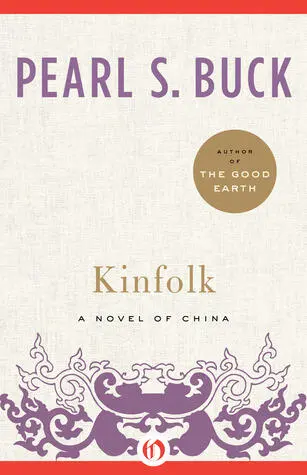
- Название:Kinfolk
- Автор:
- Издательство:Open Road Media
- Жанр:
- Год:2012
- ISBN:нет данных
- Рейтинг книги:4 / 5. Голосов: 1
-
Избранное:Добавить в избранное
- Отзывы:
-
Ваша оценка:
Kinfolk: краткое содержание, описание и аннотация
Предлагаем к чтению аннотацию, описание, краткое содержание или предисловие (зависит от того, что написал сам автор книги «Kinfolk»). Если вы не нашли необходимую информацию о книге — напишите в комментариях, мы постараемся отыскать её.
, a sharp dissection of the expatriate experience, Pearl S. Buck unfurls the story of a Chinese family living in New York. Dr. Liang is a comfortably well-off professor of Confucian philosophy, who spreads the notion of a pure and unchanging homeland. Under his influence, his four grown children decide to move to China, despite having spent their whole lives in America. As the siblings try in various ways to adjust to a new place and culture, they learn that the definition of home is far different from what they expected.
Kinfolk — читать онлайн бесплатно полную книгу (весь текст) целиком
Ниже представлен текст книги, разбитый по страницам. Система сохранения места последней прочитанной страницы, позволяет с удобством читать онлайн бесплатно книгу «Kinfolk», без необходимости каждый раз заново искать на чём Вы остановились. Поставьте закладку, и сможете в любой момент перейти на страницу, на которой закончили чтение.
Интервал:
Закладка:
At this moment Dr. Liang felt the need of an audience. There was no one in the house except Mrs. Liang and although he had no respect for her intelligence his thoughts flowed more clearly when he spoke them aloud.
He rose and went rather impetuously into the living room. “Eh,” he said, “I want to talk to you.” So absorbed was he that he did not notice that her face was ashen or that she was clutching the window sill in a strange way. When she saw him she let go and leaned back in her chair. “A big storm is coming,” she muttered, but he did not hear her.
He sat down on the chair opposite her, and leaning forward with his elbows on his knees he linked together loosely his large, exquisitely shaped hands. “I want to ask you a question as a good mother,” he said. “Do you prefer the Western way of having concubines outside the family in secret or our old-fashioned way of bringing them into the family and allowing all the children to be born under one roof?”
Mrs. Liang was smitten with fear. Was he thinking of taking a concubine now that the children were gone? Her lips went dry and she stared at him. “What thoughts have you?” she demanded.
But he did not see her fear. He was entirely absorbed in the thread of the lecture that was developing in him rapidly. “I want to know what you think,” he insisted.
She collected her terrified thoughts. They had been distracted enough by the storm but now here was this distraction also in the house! She began to speak, and her rather thick lips quivered. “Of course our way is better,” she faltered. “Otherwise the man’s seed is sown wild and the children have no name. Why should children suffer for what their father does?”
Why indeed? Her heart yearned over her own. Of course if Liang wanted another woman he must bring her into this house. It would be shameful for him to descend to the sort of thing that foreigners did. Yet could she endure another woman here? No! if she came, let her come. She herself would ask for enough money to buy a ticket home and she would go to her children. She was about to rise with dignity from her chair and tell Liang that in this case she wanted to go to the children.
He gave her no time either to rise or to speak. Instead he himself rose briskly. “Thank you,” he said with unusual courtesy. “I wanted to know what you would think — the mother type—” he murmured.
He hastened back to his study and closed the door firmly and at once sat down and began to write fluently at his desk. He wrote for two hours, and when he had finished he felt pleased with himself and very hungry. He came out of his study to find that Mrs. Liang had his supper on the table. She said she did not wish to eat and she served him in silence. The meal was good. She had heated chicken broth and dropped noodles into it, and she had mixed shelled shrimp and salted turnip tops with eggs into an omelet and she had made rice congee. This with salted fish made him a meal. He ate it with enjoyment, although he missed the tinge of garlic with which she would have seasoned the food had he not been going out that night. Long ago he had impressed on her that she must never put garlic in his food when he was going out to lecture to American ladies. They disliked the odor, and he could not sufficiently protect himself from their eagerness in pressing about him after his lecture was over. He drank two cups of tea in silence while he reviewed what he was going to say. Mrs. Liang was accustomed to this silence before he went into public life and she did not break it. When he rose she went into the hall and held his coat and hat ready for him.
“Do not stay up for me,” he told her kindly and he went out without waiting for her answer.
After he had gone she stood uncertainly for a moment and then she went upstairs to her room and took out a sheet of paper and began to write to the children.
“My precious ones,” she began after the formal opening. How fortunate she was in having learned to read and write! Well, she must thank Liang for that, for it was only because he had insisted that she had been taught. Even so, she knew she often made mistakes in the radicals of certain characters. But the children could always read her letters.
“I am in deep trouble,” she wrote. “Your pa is thinking of taking another woman into our house. This is too much for me here in America. In China the houses are big and there are many servants and we could live separately. But here how could I bear to cook her food and pour her tea? If he decides to do this thing I will ask for ticket money—”
She paused. The house was certainly swaying in the storm. She felt slightly sick and quickly she took up her pen again. “I am very lonely here. Your pa has gone away to talk to American ladies. I ought not to complain for he earns one hundred American dollars when he does so. But tonight there is a big wind from the ocean side, and I feel the house shaking. Your pa says this is impossible since it is built of iron. Yet I feel it shaking, whatever he says, and I think Heaven is not pleased with these high houses. We are meant to live down upon the earth—”
She meandered on in a long incoherent letter, telling her children everything that came into her mind.
Dr. Liang after an hour and twenty minutes was closing his lecture. The auditorium of the exclusive club was filled with women, all sitting in silence. Lights placed skillfully above and below threw Dr. Liang’s tall slender figure into splendid relief. “As for me,” he said with a slight half smile, “as a Chinese man and a Confucian I prefer the mother type. She is perhaps the true Chinese woman. My own wife is that type, and she and I have sent our children back to China to renew the bond with their mother earth. I want them to be Chinese in the most profound sense, children of the earth — and children of the dawn!”
He ended, his voice reverent, his head high, and he bowed. There was a moment’s silence and then waves of applause brought him back to bow again and again. He did not know exactly what “children of the dawn” meant but the phrase had come to him and he was pleased with it.
8
THE HOUSE IN PEKING which had seemed pleasantly ready when James left it last now looked bare and crudely furnished as he led his sisters and Peter into it. Little Dog and his mother had done their best. They had swept the floors and had wiped away the dust and the kitchen stove was ready to light. Upon a small earthenware charcoal stove a kettle was boiling for tea. Chen had been there also and he had brought two green porcelain pots, each holding a small gnarled pine tree. Upon the table in the middle room of the first court, which was to be the living room, he had placed a round white bowl of small yellow chrysanthemums, of the sort which could be bought at the market for a few pennies.
James glanced at the faces of the three as they stood at the wide door of this room, now open to the court. Louise looked about her with resentful eyes. Peter was smiling tolerantly. Only Mary looked with interest at what she saw. “It’s a fine big room,” she said.
“We are now about to live as our ancestors did,” James said. “We can see for ourselves how valuable modern gadgets are and whether happiness is dependent upon them. There is no running water, but the hot-water coolies will pour boiling hot water into the tin tub in the room I have set aside as the bathroom, and Little Dog will temper it with cold water drawn from the well. The stove in the kitchen is of brick and it burns twists of grass. Little Dog’s mother will cook our food there. For light at night I have allowed kerosene lamps instead of the bean-oil lamps or candles which we really should use. And I have bought American beds in the thieves’ market. I thought that there perhaps we could improve upon our ancestors.”
Читать дальшеИнтервал:
Закладка:
Похожие книги на «Kinfolk»
Представляем Вашему вниманию похожие книги на «Kinfolk» списком для выбора. Мы отобрали схожую по названию и смыслу литературу в надежде предоставить читателям больше вариантов отыскать новые, интересные, ещё непрочитанные произведения.




Обсуждение, отзывы о книге «Kinfolk» и просто собственные мнения читателей. Оставьте ваши комментарии, напишите, что Вы думаете о произведении, его смысле или главных героях. Укажите что конкретно понравилось, а что нет, и почему Вы так считаете.