Pearl Buck - Kinfolk
Здесь есть возможность читать онлайн «Pearl Buck - Kinfolk» весь текст электронной книги совершенно бесплатно (целиком полную версию без сокращений). В некоторых случаях можно слушать аудио, скачать через торрент в формате fb2 и присутствует краткое содержание. Год выпуска: 2012, Издательство: Open Road Media, Жанр: Классическая проза, на английском языке. Описание произведения, (предисловие) а так же отзывы посетителей доступны на портале библиотеки ЛибКат.
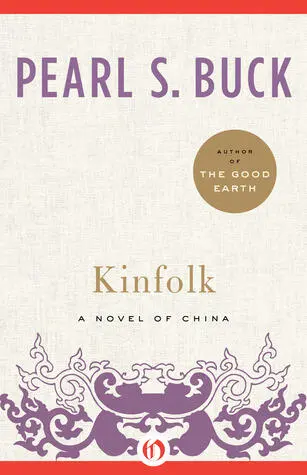
- Название:Kinfolk
- Автор:
- Издательство:Open Road Media
- Жанр:
- Год:2012
- ISBN:нет данных
- Рейтинг книги:4 / 5. Голосов: 1
-
Избранное:Добавить в избранное
- Отзывы:
-
Ваша оценка:
Kinfolk: краткое содержание, описание и аннотация
Предлагаем к чтению аннотацию, описание, краткое содержание или предисловие (зависит от того, что написал сам автор книги «Kinfolk»). Если вы не нашли необходимую информацию о книге — напишите в комментариях, мы постараемся отыскать её.
, a sharp dissection of the expatriate experience, Pearl S. Buck unfurls the story of a Chinese family living in New York. Dr. Liang is a comfortably well-off professor of Confucian philosophy, who spreads the notion of a pure and unchanging homeland. Under his influence, his four grown children decide to move to China, despite having spent their whole lives in America. As the siblings try in various ways to adjust to a new place and culture, they learn that the definition of home is far different from what they expected.
Kinfolk — читать онлайн бесплатно полную книгу (весь текст) целиком
Ниже представлен текст книги, разбитый по страницам. Система сохранения места последней прочитанной страницы, позволяет с удобством читать онлайн бесплатно книгу «Kinfolk», без необходимости каждый раз заново искать на чём Вы остановились. Поставьте закладку, и сможете в любой момент перейти на страницу, на которой закончили чтение.
Интервал:
Закладка:
There was the Li family, also. Why did they stay here? Lili was becoming quite famous now among the Americans. They had taken her up as a fad and only the other day in a picture magazine she had seen Lili’s face, looking at her from a full page. “Chinese Beauty,” was written underneath, and thee there had been a story about her which said she was considered the most beautiful girl in China. But none of the story was true. There were many girls in China more beautiful than Lili. James was lucky not to marry her. Still, if he had married, he would be here and all the children would be here, and the house would not be so quiet. When the children were here she had so much to say, but now she could not think of anything to say to Liang.
Suddenly she heard him cough. Then she heard his step and she ran to the door again and opened it softly. He was awake but he looked unwell and pale. “Liang, here is an electric letter from the children,” she said. Now that they were alone she had returned to speaking Chinese altogether, unless some foreigner came to visit them. Her English was slipping from her.
“Give it to me,” he said.
She stood waiting while he tore open the envelope with his thumbnail and took out the inner sheet. He did not read it aloud. She waited.
“They have arrived safely and they are well. James sends this word,” he said finally.
A misty happiness filled her body. “So they are safe,” she murmured.
“Of course.” He stooped and pulled on his slippers. “You are always so fearful.”
“But the ocean is terrible,” she pleaded.
“Not in the great modern ships,” he replied. “You always behave as though there were nothing but old-fashioned junks.”
She understood that his nap had left him feeling heavy and uncomfortable and so she said, “I will fetch you some hot tea and then it will be good for you to take a short walk in the park. You have to make a talk tonight before American ladies.”
“I don’t see why I am always compelled to make these talks,” he grumbled.
She hastened to agree with him. “Nor do I, Liang. Why do you not refuse? It is so foolish for you to waste your time. How can women understand the things you talk about?”
She hoped to comfort him but instead she made him very angry. “Not all women are like you,” he said coldly. “There are even some women who appreciate the subject to which I have devoted my life.”
“I am always wrong,” she said and turned and went away to the kitchen. Had the children been here she would have answered him with some temper of her own but indeed she had none now. Well, a woman without children had no courage before a man. In the kitchen alone, for she kept the maid now only half a day, she filled the kettle and lit the gas stove. Secretly she was afraid of the suddenness of the gas lighting, but she forced herself to light the match and hold it to the burner.
She made the tea and took it into the study. Liang sat before his desk, drowsing over some notes, and he did not speak when she poured the tea into the bowl and set it on the able, and so she tiptoed away to sit by the window again in he living room. The wind was beginning to rise. She saw the eaves falling faster in the park below, and the building seemed to sway in a slow whirling motion. Certainly she heard it creak. A look of terror came over her face and she clutched he edge of the window sill with both hands.
In his own way Dr. Liang also was suffering. His philosophy had not deserted him, nor did he feel that he had done anything wrong. Therefore he could not understand why his usual buoyancy had left him and why he felt dry and sad. The house was quiet, but he liked quiet. He had done a great deal of work since the children went and so much indeed that he had made entirely new notes for his course in contemporary Chinese literature. The children’s mother was of course somewhat depressed. That was inevitable. She was the mother type rather than the wife type. He had come to this conclusion long ago. In his own way Dr. Liang thought a great deal about women. No woman could have persuaded him from the path of rectitude and he was a man genuinely chaste. But he thought about women, nevertheless, and he analyzed many women in his mind, without any thought of their relation to him. Indeed he wanted nothing of them, for himself. They were merely interesting specimens of the human race. Confucius had thought little of women, and he had long pondered this aspect of the master’s mind. There must have been reason for this contempt. Perhaps the master had endured a willful wife, and had taken his revenge in private by writing down his wishful hope that women were beneath the notice to men. “Women, children and fools,” he had said, although recently Dr. Liang had been inclined to believe that Confucius was partly wrong in this classification, for he was becoming convinced that not all women were fools.
There was, for example, Violet Sung. Beautiful in the most truly exotic fashion, cultivated, even learned, Violet had come from Paris a few months ago to take New York by storm. She was besieged by suitors of every nationality, and she would marry none of them. Marriage, she said in her quiet profound way of speaking, was not for women like her. The rumor now, however, was that she had accepted the love of a handsome middle-aged Englishman whose business interests kept him half the year in New York. If this were true, then it was an affair of the utmost good taste. Violet and Ranald Grahame were seen together often but not too often, and they seldom arrived together at any public place and never went away together.
Yet Dr. Liang was inclined to believe the rumor if only because of the bitter gossip raging among the Chinese. Not, of course, among the commonplace Chinese of Chinatown who were only tradesmen, but among Chinese society, the rich émigrés. Chinese men were especially bitter, as if they felt that Violet had rejected each of them individually when she accepted an Englishman. Dr. Liang had philosophy enough to enjoy this jealousy and to acknowledge half humorously that he had some of it himself. He would have been thoroughly alarmed had Violet pursued him, for he knew that he was not capable of a violent love affair, nor indeed did he desire it. He was not the physical type. Nevertheless, he enjoyed the deference that Violet had always shown him in public, and before others he indulged in a little domineering flirtation, being so much older than she and besides a very famous man. Once he had found himself alone with her by accident when they arrived not quite late enough at a late party, to which Mrs. Liang had not been invited, and he had been afraid of Violet Sung and entirely correct in his behavior. He had asked her formally where her ancestral home was in China. This question she had evaded somewhat, saying that she came from Shanghai, and that her ancestral home she believed was somewhere in Chekiang, although her father had long lived in Paris. Looking at her after other guests came and remembering her evasiveness, it occurred to him that she might be the daughter of a Frenchwoman and a Chinese. Yes, she had the look of foreign blood, very subtly subdued. It was more original to be Chinese than French. And of course the strong Chinese blood always predominated.
Thus Violet Sung made a very interesting type for a philosopher to study. Someday he might work up a lecture on the difference between the mother type and the Violet type, and whether a man should have both types in his life, and if so, how such a relationship could be harmonious with the demands of modern life. In old-fashioned China, of course, all had been well arranged. The first wife was the mother. Thereafter a man took as concubine the other type. But this apparently offended the newer civilization of the Americans, who were not so naturalistic as the older peoples of Asia, or for that matter, of Europe. A formula here had yet to be found. The present number of illegitimate children which he understood to be very large — he must look up the annual number, if he went on with the lecture — was proof of the necessity for man even here of the two types of women.
Читать дальшеИнтервал:
Закладка:
Похожие книги на «Kinfolk»
Представляем Вашему вниманию похожие книги на «Kinfolk» списком для выбора. Мы отобрали схожую по названию и смыслу литературу в надежде предоставить читателям больше вариантов отыскать новые, интересные, ещё непрочитанные произведения.


Обсуждение, отзывы о книге «Kinfolk» и просто собственные мнения читателей. Оставьте ваши комментарии, напишите, что Вы думаете о произведении, его смысле или главных героях. Укажите что конкретно понравилось, а что нет, и почему Вы так считаете.