Pearl Buck - Kinfolk
Здесь есть возможность читать онлайн «Pearl Buck - Kinfolk» весь текст электронной книги совершенно бесплатно (целиком полную версию без сокращений). В некоторых случаях можно слушать аудио, скачать через торрент в формате fb2 и присутствует краткое содержание. Год выпуска: 2012, Издательство: Open Road Media, Жанр: Классическая проза, на английском языке. Описание произведения, (предисловие) а так же отзывы посетителей доступны на портале библиотеки ЛибКат.
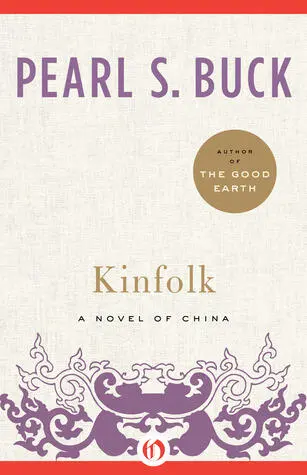
- Название:Kinfolk
- Автор:
- Издательство:Open Road Media
- Жанр:
- Год:2012
- ISBN:нет данных
- Рейтинг книги:4 / 5. Голосов: 1
-
Избранное:Добавить в избранное
- Отзывы:
-
Ваша оценка:
Kinfolk: краткое содержание, описание и аннотация
Предлагаем к чтению аннотацию, описание, краткое содержание или предисловие (зависит от того, что написал сам автор книги «Kinfolk»). Если вы не нашли необходимую информацию о книге — напишите в комментариях, мы постараемся отыскать её.
, a sharp dissection of the expatriate experience, Pearl S. Buck unfurls the story of a Chinese family living in New York. Dr. Liang is a comfortably well-off professor of Confucian philosophy, who spreads the notion of a pure and unchanging homeland. Under his influence, his four grown children decide to move to China, despite having spent their whole lives in America. As the siblings try in various ways to adjust to a new place and culture, they learn that the definition of home is far different from what they expected.
Kinfolk — читать онлайн бесплатно полную книгу (весь текст) целиком
Ниже представлен текст книги, разбитый по страницам. Система сохранения места последней прочитанной страницы, позволяет с удобством читать онлайн бесплатно книгу «Kinfolk», без необходимости каждый раз заново искать на чём Вы остановились. Поставьте закладку, и сможете в любой момент перейти на страницу, на которой закончили чтение.
Интервал:
Закладка:
James smiled. “Better stay a few months anyway, now you’re here,” he said. “Half a year doesn’t matter at your age. And I’ve fixed up rather a nice house in Peking for us all. It’s a fine old city — makes you proud.”
“Is it better than Shanghai?”
“I think so anyway.”
There seemed nothing to say for a few minutes. Then James returned to the effort. “So you don’t know really what Louise did?”
“Oh, I know,” Peter said. “She’s in love with Philip Morgan, and Phil doesn’t want to marry her. That’s about it. I know Phil. He doesn’t want to marry anybody now. When he does he will probably marry some debutante.”
He was careful not to say that Philip probably did not want to marry a Chinese. He thought of himself as an American. Now something occurred to him. “Say, I heard something interesting on the ship. We had a fellow on board from Hollywood. He’s coming out here to shoot some pictures. It’s a story about a GI — sort of a Chinese Madame Butterfly story he said, only the GI doesn’t go away. He takes his gal home. He said that while they don’t want stories about white met and Negroes getting married they don’t mind Chinese any more. Pretty good, isn’t it?”
James smiled. He could not speak, watching this brother of his. Peter was utterly and completely foreign. He had nothing to help him here, no shred of knowledge, no hour of experience, to help him endure being Chinese. For it would be a matter of endurance. Peter had never absorbed either atmosphere or ideas from their father, and now James realized, though grudgingly, that the atmosphere of ancient Chinese philosophy which his father had so persistently built around them had helped only him and Mary. Even after they understood its artificiality, and then perhaps its uselessness in these swift modern times, it had become a part of them, thinly spun, indeed, but there, nevertheless, its mild silvery thread running through the structure of their beings. But Peter and Louise had absorbed none of it. Instead they had come to despise it, and they were never deceived for an instant by its unreality. Nor did they understand or care that once it had been a reality.
“So Louise was sent here to get over a love affair,” James said.
“Something like that,” Peter said briskly. He got up, bored by Louise. “Jim, if I stay for this autumn will you promise to make Pa let me go home in time for midyears?”
“If you won’t call it home,” Jim replied. “This is home, you know.”
“Oh well — you know what I mean,” Peter said. He stood restlessly, his hands jingling some change in his pockets. “I don’t want to waste time, even if I have plenty of it.”
“I think you ought to go back at midyears,” James said, getting to his feet. “There is no good place here to get engineering. The country needs fellows like you — needs them now, if this eternal quarrel would ever end between the government and the Communists. We’re all held up by that. But maybe by the time you’re through, it will be settled one way or the other.” He paused. “Of course there’s always the chance you may not want to go back. Something steals into you. I don’t want to go back — though there’s much I don’t like here, I can tell you.”
“I know I’ll want to go back,” Peter said. “Come on, let’s eat.”
It was the end of talk, and they joined Mary and Louise in the hall and went downstairs to a hearty lunch of barley broth, boiled beef, cabbage and potatoes and a cornstarch pudding. It was the standard hotel meal for foreigners.
But it was quite pleasant in the motion-picture theater. The building had been designed by an American and the seats were still new enough not to have their upholstery torn and the springs exposed. The air was thick with the smell of Chinese food, for everybody seemed to be munching something, but they grew used to that. It was still raining when they came in and it was pleasant to get under shelter. The picture was American, too. It was a Western, and after it was finished there was an old Harold Lloyd comedy, so old that to the four young people sitting together it was new, and they laughed at it. When they came out it was nearly dark and again the hotel seemed shelter. Young Wang had brought their baggage and when they came in he served tea with small cakes and sandwiches from the hotel kitchen. These tasted good and they began talking as they ate. James told them about the house in Peking, which perhaps sounded better than it was as he told of it, and Peter heard about the college and Mary about the hospital. Louise, James said, could make up her mind about what she wanted to do when she got there. Maybe she would just want to keep house for them for a few weeks until she saw everything. None of them talked about America. They did not unpack very much because they were to take the train before noon the next day. The trains were better now and they did not need to go more than an hour before theirs started. Young Wang would go early and spend a little money.
They parted, brothers and sisters, with a warm family feeling. It was good to be together. Before he went to bed James sent a cablegram to his parents. “Children arrived safely. All well. We go north tomorrow. Love and respect. James.”
He lay awake long after Peter was breathing in deep even waves of sleep. He had wanted to get Mary away and ask her about Lili, but he had not dared to leave Louise alone. There was something desperate in her face.
7
LONG AGO MRS. LIANG had learned not to open envelopes addressed to her husband. Therefore she did not open the yellow envelope which she hoped brought news of the children’s safe arrival. It came after luncheon when Dr. Liang was taking a nap in his study, and she tiptoed to the door and listened. She could hear him breathing heavily, and she sighed and went back to the living room and sat down by the window. She held the envelope in her hand, for she was not willing for one moment to lay it down. There was so much she wanted to know which of course it would not tell her. There was so much she wanted to know which indeed no one could tell her, because only someone like herself would perceive it. For example, what was it like now really to live again in Peking? She loved Peking. To herself she called it by the old name of Peking, as most Chinese did, although before foreigners she was careful to say Peiping, to show that she was a modern woman and loyal to the present government.
Still, she had not at all liked Madame Chiang Kai-shek when she came here to New York. She and Dr. Liang had sent a large bouquet of chrysanthemums to Madame Chiang, yellow ones, costing one dollar apiece, but Madame Chiang had not even acknowledged them. Some secretary had merely scrawled a note of receipt. When later among other Chinese they had gone to a reception Liang had taken Madame’s hand very warmly, but she herself had not touched Madame Chiang. She had bowed a little and said in Chinese, “Eh-eh, you’ve come, have you?” exactly as in her old-fashioned home her mother had greeted guests whom she did not like. Madame Chiang’s face had not changed. The Americans thought her beautiful but in China there were many women more beautiful.
“Eh, why do I think about Madame Chiang?” Mrs. Liang asked herself now.
Outside in the park the leaves were beginning to fall and this meant that winter would soon come. She dreaded the long cold American winters. It was cold in Peking, too, but the days were always sunny. Even when there came down a snowstorm from the north, it passed quickly. Peking in the snow! Nothing was more beautiful. And how the bright red berries of Indian bamboo used to shine through the whiteness of the snow! She wiped her eyes quietly. That home in Peking, set so firmly upon the earth that no wind could shake it, was still her dearest memory. When the winds blew here the tall building trembled and she was always afraid, although she had learned not to show it because Liang grew so angry with her. Liang was often angry with her and for many things she did not blame him. He is not very happy here, too, she thought. No one is happy away from the earth and waters of his own home. Then why did Liang stay here?
Читать дальшеИнтервал:
Закладка:
Похожие книги на «Kinfolk»
Представляем Вашему вниманию похожие книги на «Kinfolk» списком для выбора. Мы отобрали схожую по названию и смыслу литературу в надежде предоставить читателям больше вариантов отыскать новые, интересные, ещё непрочитанные произведения.








Обсуждение, отзывы о книге «Kinfolk» и просто собственные мнения читателей. Оставьте ваши комментарии, напишите, что Вы думаете о произведении, его смысле или главных героях. Укажите что конкретно понравилось, а что нет, и почему Вы так считаете.