Pearl Buck - Kinfolk
Здесь есть возможность читать онлайн «Pearl Buck - Kinfolk» весь текст электронной книги совершенно бесплатно (целиком полную версию без сокращений). В некоторых случаях можно слушать аудио, скачать через торрент в формате fb2 и присутствует краткое содержание. Год выпуска: 2012, Издательство: Open Road Media, Жанр: Классическая проза, на английском языке. Описание произведения, (предисловие) а так же отзывы посетителей доступны на портале библиотеки ЛибКат.
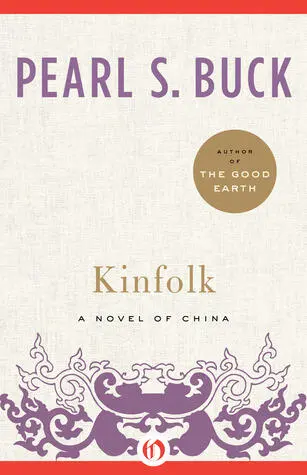
- Название:Kinfolk
- Автор:
- Издательство:Open Road Media
- Жанр:
- Год:2012
- ISBN:нет данных
- Рейтинг книги:4 / 5. Голосов: 1
-
Избранное:Добавить в избранное
- Отзывы:
-
Ваша оценка:
Kinfolk: краткое содержание, описание и аннотация
Предлагаем к чтению аннотацию, описание, краткое содержание или предисловие (зависит от того, что написал сам автор книги «Kinfolk»). Если вы не нашли необходимую информацию о книге — напишите в комментариях, мы постараемся отыскать её.
, a sharp dissection of the expatriate experience, Pearl S. Buck unfurls the story of a Chinese family living in New York. Dr. Liang is a comfortably well-off professor of Confucian philosophy, who spreads the notion of a pure and unchanging homeland. Under his influence, his four grown children decide to move to China, despite having spent their whole lives in America. As the siblings try in various ways to adjust to a new place and culture, they learn that the definition of home is far different from what they expected.
Kinfolk — читать онлайн бесплатно полную книгу (весь текст) целиком
Ниже представлен текст книги, разбитый по страницам. Система сохранения места последней прочитанной страницы, позволяет с удобством читать онлайн бесплатно книгу «Kinfolk», без необходимости каждый раз заново искать на чём Вы остановились. Поставьте закладку, и сможете в любой момент перейти на страницу, на которой закончили чтение.
Интервал:
Закладка:
“Perhaps I can cure him some day,” James replied. He had set his heart upon the house and he was not inclined to listen to Young Wang’s fears.
“Where is the document of rental?” Chen asked.
“Here,” the manservant said and pulled from his sleeve a small scroll which he unrolled; it was handwritten in shaky letters and James read it with difficulty. But Chen read it over his shoulder easily and quickly and he pointed out two places which did not please him.
“The rent is not to be paid two months in advance,” he said. “One month is sufficient.”
The old gentleman’s jaw fell ajar but he nodded and the brush and the ink block were fetched and with much trembling preparation he made the change.
“Now,” Chen said, “you are not to say that you take no responsibility for the house. We will make the repairs but if it is found that a beam is rotten or the foundation yields, that is to be your business.”
Once more in silence the old man made the change.
“I will add one more thing myself,” Chen said, looking very stern. And bending he wrote in a fluent style this sentence, “The landlord agrees never to ask for the rent in advance.”
“Good, good,” Young Wang murmured.
“Now for the seal,” Chen said.
The manservant brought out the red family seal from the table drawer and he stamped it upon the paper, and James wrote his own name beneath it and Chen wrote his as a witness, and so now the money could be given over. James gave it to the old gentleman, who, not having spoken one word all the time, put out his two hands together like a bowl and received it. When he felt the money in his hands he clenched them together and rose and hurried out of the room blindly, his robes dragging after him. The old lady went after him and then the woman servant and there was only the manservant left to see them away. It was so sad a sight that James felt depressed by it and Chen sighed. “These are among the many lost,” he said gently, and they went once again to look at the house that now belonged to James.
Only Young Wang was not sad. He took lively interest in the house and discovered a cistern beyond the well, and he found a good drain, stone lined though very ancient, which could carry the household waste water through the back wall to a creek that ran behind the house. Nor was he afraid of the weasels. He took a fallen tree branch and clubbed one long lank fellow to death where it hid behind a door! “Some big female cats will chase these devils away,” he exclaimed. “Leave it to me, master. Cats are better than exorcists. But they must be big ones who will fight, or the weasels will suck even their blood.”
So in the days that followed, under Young Wang’s interest this house became a shelter again for human beings. He it was who harried carpenters and plasterers and cleaning women until the place was new again and its stale odor of the past was gone. He it was who went to the thieves’ market at dawn and bought tables and chairs and pots and bowls and kitchen ladles of beaten iron and cauldrons for the brick stoves in the kitchen. James and Chen together went to old furniture shops and bought heavy blackwood tables for the main rooms and they bought Western beds.
“My sisters will never be able to sleep on boards, however good Chinese they become,” he told Chen. “And I myself — I prefer American springs under me.”
He indulged himself and bought a few fine scrolls for the wall and an old piano that some Westerner had left behind when he went away before the war. “It is a palace,” Chen said proudly, and did not notice that James did not reply. In such indulgence James took no great pleasure. If he had been preparing a home for Lili, he thought solemnly, how different it might have been! But then, none of this would have been good enough.
The days drew on and the expected letter from his father did not arrive. James was not surprised. He could imagine, as well as though he were in that New York apartment, how his father rose each morning contemplating the writing of the letter, how after contemplation he postponed, and how meanwhile he went to his classes on Chinese literature and came home exhausted, how he refreshed himself with a short nap, some tea which in private he liked to drink with cream and sugar, although publicly he declared these things only spoiled good tea, and how after reading a little while to refresh his spirit it was too late to write a letter that day.
From his mother, however, James did receive a letter. Like most of her letters, it was so rich with piety and good purpose that he was not able to discern from it what had happened. That it concerned Louise, that she had been foolish and led away by the Americans, that she was after all very young and much prettier than Mary, who had never had American young men admirers, and he must not therefore be too harsh a judge of Louise, who was growing up pretty even to Americans, and this was very difficult and a family problem, and she had been trying to persuade his pa to come to China, too, and they would all be happy again together in a house somewhere in Peking, only of course Pa felt he could not leave his work just low and perhaps in another year or two — so his mother wrote. She had not at all approved the sudden way in which Mary had taken Louise away and Peter, too, just about to enter college to become a great engineer, but the ocean was always there and they could come back if they did not like China nowadays. Only Louise of course had better stay long enough to fall in love with a nice young Chinese. It was the elder brother’s duty to take the father’s place and if James, her dear son, knew any nice young men, Chinese of course, and could arrange a marriage for Louise, undoubtedly that would be the solution, although he must not misunderstand and think that Louise had to get married. Luckily there was nothing like that, but still there might have been and they must all be thankful. Such was the gist of his mother’s letter and James read it over thoughtfully three times and gathered that Louise was somehow a new problem.
Without much enlightenment therefore he asked for a week’s vacation and with Young Wang at his heels he waited the day on the familiar dock in Shanghai for the steamship. The house was ready. He had found work for Mary in the children’s annex of the hospital and he had registered Peter in the college now receiving a fresh life under the leadership of a famous Chinese scholar. For Louise he had planned nothing because he knew nothing. She could always enter a girls’ school. There was also a Catholic convent, kept by six sisters, two of them Chinese and four of them French. He must talk with Mary before deciding for Louise.
The day was windy and gray and the waterside was black. Small boats were pushing about scavenging in the filthy river. Each had its family of man and woman and children and a grandparent or two, and these looked cold and unhappy. He was sorry that the three who were coming to him must see the Bund on such a day. The tall modern buildings looked forbidding and alien, as though they did not belong there. They lifted their heads too high above the boats and the crowded streets.
Even Young Wang seemed subdued. He had left a small underservant in charge of the house with his old mother for amah. Young Wang was proving a stern headboy. He did not allow Little Dog the least latitude for laziness, and the boy was beginning to look harried. Young Wang himself, dressed in a clean uniform of the semi-official sort in which he delighted, stood now just behind his master. He would have preferred no women in the household, for a man was easier to serve. His master’s sisters were Chinese, but they had been in America so long that he feared they had the tedious and fussy ways of American ladies in houses. He felt somewhat diminished and in low spirits when he thought of this. Either he was headboy or he was not, he told himself. He would take orders only from his master. So far as he was concerned there was no mistress. When his master married a wife there would be a rightful mistress. This point was clear in his mind by the time the yelling coolies were lassoing the ship, and he felt better and the grin returned to his face.
Читать дальшеИнтервал:
Закладка:
Похожие книги на «Kinfolk»
Представляем Вашему вниманию похожие книги на «Kinfolk» списком для выбора. Мы отобрали схожую по названию и смыслу литературу в надежде предоставить читателям больше вариантов отыскать новые, интересные, ещё непрочитанные произведения.








Обсуждение, отзывы о книге «Kinfolk» и просто собственные мнения читателей. Оставьте ваши комментарии, напишите, что Вы думаете о произведении, его смысле или главных героях. Укажите что конкретно понравилось, а что нет, и почему Вы так считаете.