Pearl Buck - Kinfolk
Здесь есть возможность читать онлайн «Pearl Buck - Kinfolk» весь текст электронной книги совершенно бесплатно (целиком полную версию без сокращений). В некоторых случаях можно слушать аудио, скачать через торрент в формате fb2 и присутствует краткое содержание. Год выпуска: 2012, Издательство: Open Road Media, Жанр: Классическая проза, на английском языке. Описание произведения, (предисловие) а так же отзывы посетителей доступны на портале библиотеки ЛибКат.
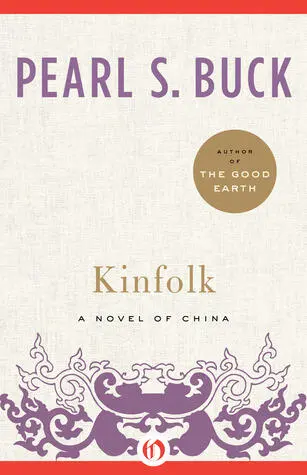
- Название:Kinfolk
- Автор:
- Издательство:Open Road Media
- Жанр:
- Год:2012
- ISBN:нет данных
- Рейтинг книги:4 / 5. Голосов: 1
-
Избранное:Добавить в избранное
- Отзывы:
-
Ваша оценка:
Kinfolk: краткое содержание, описание и аннотация
Предлагаем к чтению аннотацию, описание, краткое содержание или предисловие (зависит от того, что написал сам автор книги «Kinfolk»). Если вы не нашли необходимую информацию о книге — напишите в комментариях, мы постараемся отыскать её.
, a sharp dissection of the expatriate experience, Pearl S. Buck unfurls the story of a Chinese family living in New York. Dr. Liang is a comfortably well-off professor of Confucian philosophy, who spreads the notion of a pure and unchanging homeland. Under his influence, his four grown children decide to move to China, despite having spent their whole lives in America. As the siblings try in various ways to adjust to a new place and culture, they learn that the definition of home is far different from what they expected.
Kinfolk — читать онлайн бесплатно полную книгу (весь текст) целиком
Ниже представлен текст книги, разбитый по страницам. Система сохранения места последней прочитанной страницы, позволяет с удобством читать онлайн бесплатно книгу «Kinfolk», без необходимости каждый раз заново искать на чём Вы остановились. Поставьте закладку, и сможете в любой момент перейти на страницу, на которой закончили чтение.
Интервал:
Закладка:
“It can all be made lovely,” Mary murmured.
“With the lattices we don’t need curtains,” James went on, “and upon these stone floors we can lay carpets in winter if we like. There are fine carpets made here in Peking.”
“It is lovely already,” Mary said.
“But the walls!” Louise cried suddenly. “I hate these walls all around the courts — we can’t see from the windows!”
“We can always walk out of the gate,” James said. “The gate will not be locked. Our ancestors liked walls. You’ll find that everybody here still has walls.”
“Where is my room?” Peter asked.
“We can divide the rooms as we like,” James replied. “But I thought you and I would share this left part of the house, Peter, and the girls will take the rooms on the right. By the way, Mary, if you or Louise see something like a rat, it is only a weasel. I think they are all gone, but in case they aren’t they will not stay long after we move in.”
“Weasels?” Louise shrieked. “I never heard of them in houses!”
“You will hear of many things here,” James said, “some pleasant and some not.”
He had not yet made up his mind how he would treat Louise. Until now she had only been the pretty and spoiled little sister in whom he had a sentimental interest. Now suddenly she had become a woman without any of the lingering years between childhood and womanhood. She was a flower which had not been given time to bloom. The bud had been forced. For Mary had told him at last exactly what had happened. In the hours together in their cabin on the ship she had got from Louise the full story. It had been easy indeed, for Louise spent many evenings in tears, and when she found that Mary was not disposed to scold her, tears had led quickly to confidence, often repeated. Mary had told James everything on the train, while Louise and Peter were in the dining car and James had decided that he was not hungry. James had taken a second-class compartment for the four of them, feeling that the crowded open car was too much to bear so soon after America. While the train swayed and shook over the landscape of small farms and barking dogs and shrieking geese, whose blue-clad peasants stood watching the cars rush past, Mary told James.
“Louise thought Philip would marry her. I excuse her that much,” she said at last.
James had listened amazed and angry with Louise. Strangely, he thought, he could not blame Philip. Americans were not taught as Chinese were. When Louise was willing, it could not be imagined that Philip would not accept.
“Louise was a fool,” he said. Outside the window the hills of central China were flattening into the long levels of the north.
“It was first Estelle’s foolishness,” Mary said. She was watching her brother’s face. James must not be too hard on Louise now. The little sister had suffered from her parents. “Estelle persuaded Louise too much,” Mary went on. “I think she made Louise forget she is Chinese. Such things they can do, but we cannot.”
“Philip wouldn’t marry a Chinese,” James said brusquely.
“Anyway, don’t talk to Louise,” Mary begged. “Pa talked so loud, and Ma cried and cried.”
So James allowed no sign to escape him to let Louise know that now he knew what she had done. But in his heart he agreed that his father had been wise to send her at once thousands of miles away. So young a wound would heal. It would be difficult to marry her now to a man who would forgive her. Yet marriage, it seemed to him, was the only possibility. Louise would not be satisfied to return to girlhood and innocence, even if she could. Everything in her had been forced. A green fruit had been ripened by unseasonable heat.
Yet it seemed to him, after thought, that he must be firm with Louise. She must be treated as a grown woman although as a girl, too, who needed to be watched and restricted. He wished very much that he could arrange a marriage for her in the old-fashioned Chinese way, and transfer to a husband the responsibility for this pretty creature who was no longer a virgin. Only a husband could suffice, even if Louise would scarcely agree to being married off summarily.
He pondered this again while he changed his clothes and arranged his possessions in his new room. Through the open door he heard Peter walking about, flinging down his suitcases, moving chairs and tables. Peter too would not be too easy to look after, but what to do with Louise must be his first care. The thought of Chen came into his mind. If Chen should fall in love with Louise it would be excellent indeed. Certainly he must be careful that none of the doctors who were already married, some to old-fashioned wives whom they kept in the country, grew interested in Louise. There was much looseness in what was called modern society in Peking. Men and women came together and separated. They married and divorced with no more effort than a notice put in the newspapers. There was something about Louise that repelled him and made it hard for him to be affectionate with her in his old brotherly fashion. She looked young and yet experienced. Mary looked the virgin she was, and of the two, Louise now seemed older.
The four came together at their night meal, for they had reached Peking in the late afternoon. Now that the lamps were lit, the rooms looked softened and more homelike. When Young Wang had ordered Little Dog to bring in the dishes of hot food for him to arrange upon the table, they sat down with good appetite. Even Louise looked less sullen, although she was ready at once to complain.
“There are no closets in our rooms,” she said. “Where shall I hang my dresses?”
“I’ll have some built,” James said. “But if you wear Chinese things you won’t need anything but the shelves in the wall cupboard. Our ancestors kept their clothes folded.”
“I shall wear Chinese clothes entirely now,” Mary said.
“Not I,” Louise retorted.
“It’s quiet here,” Peter said suddenly. “You’d never know you were in a city.”
“That’s the beauty of the walls,” James said.
After the meal was over he had to go to the hospital. He had already been away his full week, and he wanted to see his patients, and though he was reluctant to leave the three, yet he must go. They were still at the table, cracking dried lichee nuts and drinking tea, when he rose and stood behind his chair. “If you need me Young Wang can come and fetch me,” he told them. “Tomorrow we will talk over everything and decide what each one is to do. You do not begin work until the first of the month, Mary. You ought to start college, Peter — classes opened last week. But perhaps you all want a few days in which to see the city.”
“We are not babies,” Mary said smiling. “We can look after ourselves. And don’t feel you have to apologize to us for China, Jim.”
He smiled back at her, thankful for her common sense. It was true that, quite without knowing it, he had been fearful lest they dislike everything here, because it was not what they were used to having in America. Mary with her shrewd eyes had understood his fears.
At the hospital he found Chen, in whose care he had left his sick. Chen had been zealous, but in spite of all his care of the patients, a woman had died. She had come into the hospital after birth with puerperal fever, as so many women came. She had seemed better when James left, but the fever had taken a turn for the worse, and she had died quickly the next day.
“Though I was with her, I could do nothing,” Chen mourned. “The fever ate her up. Now she leaves the newborn child. What shall we do with him?”
“Where is he now?” James asked.
“I have him in the children’s ward but he cannot stay there too long — you know how crowded it is, and the nurses are impatient with too many crying at once.”
Читать дальшеИнтервал:
Закладка:
Похожие книги на «Kinfolk»
Представляем Вашему вниманию похожие книги на «Kinfolk» списком для выбора. Мы отобрали схожую по названию и смыслу литературу в надежде предоставить читателям больше вариантов отыскать новые, интересные, ещё непрочитанные произведения.







Обсуждение, отзывы о книге «Kinfolk» и просто собственные мнения читателей. Оставьте ваши комментарии, напишите, что Вы думаете о произведении, его смысле или главных героях. Укажите что конкретно понравилось, а что нет, и почему Вы так считаете.