William Faulkner - Mosquitoes
Здесь есть возможность читать онлайн «William Faulkner - Mosquitoes» весь текст электронной книги совершенно бесплатно (целиком полную версию без сокращений). В некоторых случаях можно слушать аудио, скачать через торрент в формате fb2 и присутствует краткое содержание. Год выпуска: 2012, ISBN: 2012, Издательство: HarperCollins Canada, Жанр: Классическая проза, на английском языке. Описание произведения, (предисловие) а так же отзывы посетителей доступны на портале библиотеки ЛибКат.
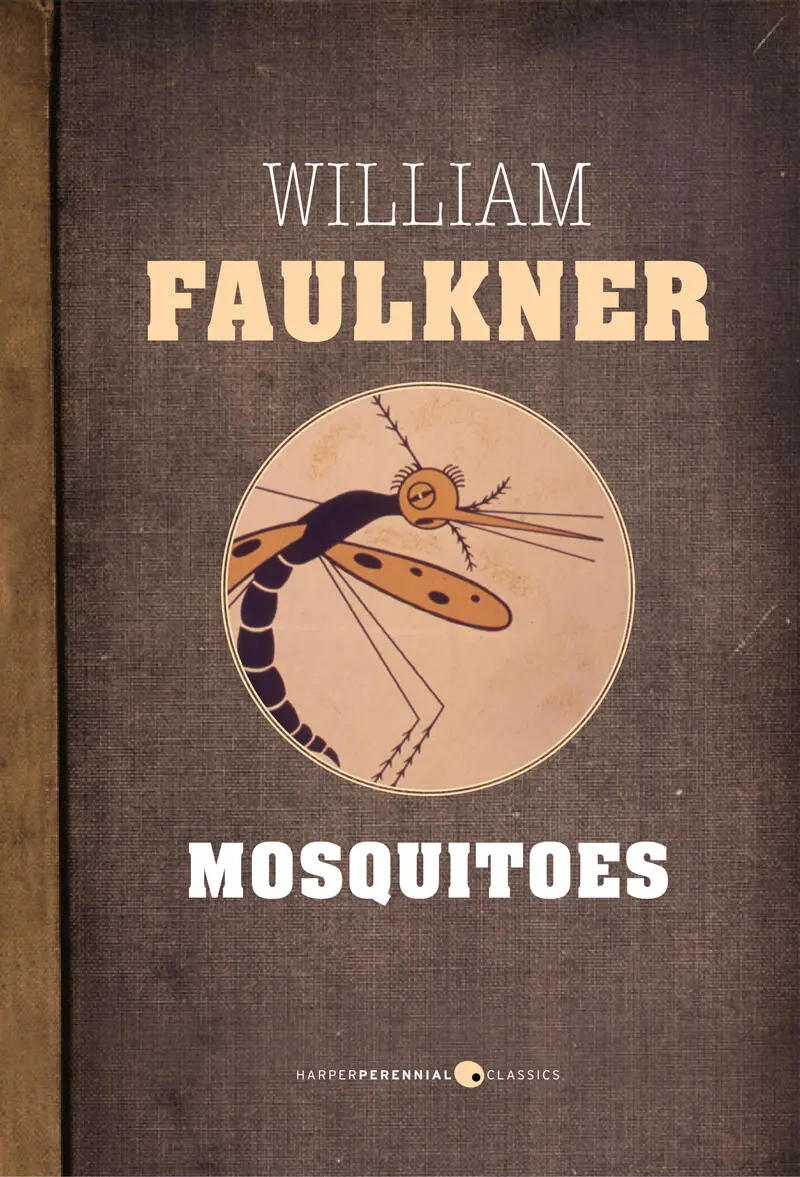
- Название:Mosquitoes
- Автор:
- Издательство:HarperCollins Canada
- Жанр:
- Год:2012
- ISBN:9781443421157
- Рейтинг книги:3 / 5. Голосов: 1
-
Избранное:Добавить в избранное
- Отзывы:
-
Ваша оценка:
Mosquitoes: краткое содержание, описание и аннотация
Предлагаем к чтению аннотацию, описание, краткое содержание или предисловие (зависит от того, что написал сам автор книги «Mosquitoes»). Если вы не нашли необходимую информацию о книге — напишите в комментариях, мы постараемся отыскать её.
explores gender and societal roles, sexual tension, and unrequited love as Faulkner delves into what it means to be an artist.
Faulkner’s second novel,
was first published in 1927, but did not receive any critical response until his literary reputation was well-established.
Mosquitoes — читать онлайн бесплатно полную книгу (весь текст) целиком
Ниже представлен текст книги, разбитый по страницам. Система сохранения места последней прочитанной страницы, позволяет с удобством читать онлайн бесплатно книгу «Mosquitoes», без необходимости каждый раз заново искать на чём Вы остановились. Поставьте закладку, и сможете в любой момент перейти на страницу, на которой закончили чтение.
Интервал:
Закладка:
“What is it? What is it?” Mrs. Maurier chanted, mooning her round alarmed face above them. They brought the tender alongside and held it steady while Mrs. Wiseman helped Jenny across the thwarts and to the rail. Mr. Talliaferro flitted about in a harried distraction, but Jenny shrank from him. “You scared me so bad,” she repeated.
Pete leaned over the rail, reaching his hands while Mr. Talliaferro flitted about his victim. The tender rocked, scraping against the hull of the yacht. Pete caught Jenny’s hands.
“Hold the boat still, you old fool,” he told Mr. Talliaferro fiercely.
* * *
His legs were completely numb beneath her weight, but he would not move. He swished the broken branch about her, and at intervals he whipped it across his own back. Her face wasn’t so flushed, and he laid his hand again above her heart. At his touch she opened her eyes.
“Hello, David. I dreamed about water. . Where’ve you been all these years?” She closed her eyes again. “I feel better,” she said after a while. And then: “What time is it?” He looked at the sun and guessed. “We must go on,” she said. “Help me up.”
She sat up and a million red ants scurried through the arteries of his legs. She stood, dizzy and swaying, holding to him. “Gee, I’m not worth a damn. Next time you elope you’d better make her stand a physical examination, David. Do you hear?. . But we must go on: come on, make me walk.” She took a few unsteady steps and clutched him again, closing her eyes. “Jesus H, if I ever get out of this alive—” She stopped again. “What must we do?” she asked.
“I’ll carry you a ways,” he said.
“Can you? I mean, aren’t you too tired?”
“I’ll carry you a ways, until we get somewhere,” he repeated.
“I guess you’ll have to. . But if you were me, I’d leave you flat. That’s what I’d do.”
He squatted before her and reached back and slid his hands under her knees, and as he straightened up she leaned forward onto his back and put her arms around his neck, clasping the broken branch against his chest. He rose slowly, hitching her legs farther around his hips as the constriction of her skirt lessened.
“You’re awful nice to me, David,” she murmured against his neck, limp upon his back.
* * *
Mrs. Wiseman washed and bound Jenny’s hand, interestingly; then she scrubbed Jenny’s little soft wormlike fingers and cleaned her fingernails while Jenny, naked, dried rosily in the cabined air. Underthings were not difficult, and stockings were simple also. But Jenny’s feet were short rather than small, and shoes were a problem. Though Jenny insisted that Mrs. Wiseman’s shoes were quite comfortable.
But she was clothed at last and Mrs. Wiseman gathered up the two wet garments gingerly and went to lean her hip against the bunk. The dress Jenny now wore belonged to the girl Patricia and Jenny stood before the mirror, bulging it divinely, examining herself in the mirror, smoothing the dress over her hips with a slow preening motion.
I had no idea there was that much difference between them, the other thought. It’s far more exciting than a bathing suit. . . “Jenny,” she said, “I think — really, I — Darling, you simply must not go where men can see you, like that. For Mrs. Maurier’s sake, you know; she’s having enough trouble as it is, without any rioting.”
“Don’t it look all right? It feels all right,” Jenny answered, trying to see as much of herself as possible in a twelve-inch glass.
“I don’t doubt it. You must be able to feel every stitch in it. But we’ll have to get something else for you to wear. Slip it off, darling.”
Jenny obeyed. “It feels all right to me,” she repeated. “It don’t feel funny.”
“It doesn’t look funny, not at all. On the contrary, in fact. That’s the trouble with it,” the other answered delving busily in her bag.
“I always thought I had the kind of figure that could wear anything,” Jenny persisted, holding the dress regretfully in her hands.
“You have,” the other told her, “exactly that kind. Terribly like that. Simple and inevitable. Devastating.”
“Devastating,” Jenny repeated with interest. “There was a kind of funny little man at Mandeville that day—” She turned to the mirror again, trying to see as much of herself as possible. “I’ve been told I have a figure like Dorothy Mackaill’s, only not too thin. . I think a little flesh is becoming to a girl. Don’t you?”
“Devastating,” the other agreed again. She rose and held a dark-colored dress between her hands. “You’ll look worse than ever in this. . terrible as a young widow.”. . She went to Jenny and held the dress against her, contemplative; then still holding the dress between her hands she put her arms around Jenny. “A little flesh is worse than a little dynamite, Jenny,” she said soberly, looking at Jenny with her dark, sad eyes. . ”Does your hand still hurt?”
“It’s all right now.” Jenny craned her neck, peering downward along her flank. “It’s a little long, ain’t it?”
“Yours will dry soon.” She raised Jenny’s face and kissed her on the mouth. “Slip it on, and we’ll hang your things in the sun.”
FOUR O’CLOCK
He strode on in the dust, along the endless shimmering road between pines like fixed explosions on the afternoon. The afternoon was an endless unbearable brightness. Their shapeless, merged shadow moved on: two steps more and he would tread upon it and through it as he did the sparse shadows of pines, but it moved on just ahead of him between the faded forgotten ruts, keeping its distance effortlessly in the uneven dust. The dust was fine as powder and unbroken; only an occasional hoofprint, a fading ghost of a forgotten passage. Above, the metallic implacable sky resting upon his bowed neck and her lax, damp weight upon his back and her cheek against his neck, rubbing monotonously against it. Thin fire darted upon him constantly. He strode on.
The dusty road swam into his vision, passed beneath his feet and so behind like an endless ribbon. He found that his mouth was open, drooling, though no moisture came, and his gums took a thin dry texture like cigarette paper. He closed his mouth, trying to moisten his gums.
Trees without tops passed him, marched up abreast of him, topless, and fell behind; the rank roadside grass approached and became monstrous and separate, blade by blade: lizards hissed in it sibilantly ere it faded behind him. Thin unseen fire darted upon him but he didn’t even feel it, for in his shoulders and arms there was no longer any sensation at all save that of her lax weight upon his back and the brass sky resting against his neck and her moist cheek rubbing against his neck monotonously. He found that his mouth was open again, and he closed it.
“That’s far enough,” she said, presently rousing. “Let me down.” Their merged shadow blended at intervals with the shadows of the tall topless trees, but beyond the shadow of the trees their blended shadow appeared again, two paces ahead of him. And the road went on ahead of him shimmering and blistered and whiter than salt. “Put me down, David,” she repeated.
“No,” he said between his dry, rough teeth, above the remote, imperturbable tramping of his heart, “not tired.” His heart made a remote sound. Each beat seemed to be somewhere in his head, just behind his eyes; each beat was a red tide that temporarily obscured his vision. But it always ended, then another dull surge blinded him for a moment. But remote, like a tramping of soldiers in red uniforms stepping endlessly across the door of a room where he was, where he crouched trying to look out the door. It was a dull, heavy sound, like a steamer’s engines, and he found that he was thinking of water, of a blue monotony of seas. It was a red sound, just back of his eyes.
Читать дальшеИнтервал:
Закладка:
Похожие книги на «Mosquitoes»
Представляем Вашему вниманию похожие книги на «Mosquitoes» списком для выбора. Мы отобрали схожую по названию и смыслу литературу в надежде предоставить читателям больше вариантов отыскать новые, интересные, ещё непрочитанные произведения.



Обсуждение, отзывы о книге «Mosquitoes» и просто собственные мнения читателей. Оставьте ваши комментарии, напишите, что Вы думаете о произведении, его смысле или главных героях. Укажите что конкретно понравилось, а что нет, и почему Вы так считаете.