William Faulkner - Mosquitoes
Здесь есть возможность читать онлайн «William Faulkner - Mosquitoes» весь текст электронной книги совершенно бесплатно (целиком полную версию без сокращений). В некоторых случаях можно слушать аудио, скачать через торрент в формате fb2 и присутствует краткое содержание. Год выпуска: 2012, ISBN: 2012, Издательство: HarperCollins Canada, Жанр: Классическая проза, на английском языке. Описание произведения, (предисловие) а так же отзывы посетителей доступны на портале библиотеки ЛибКат.
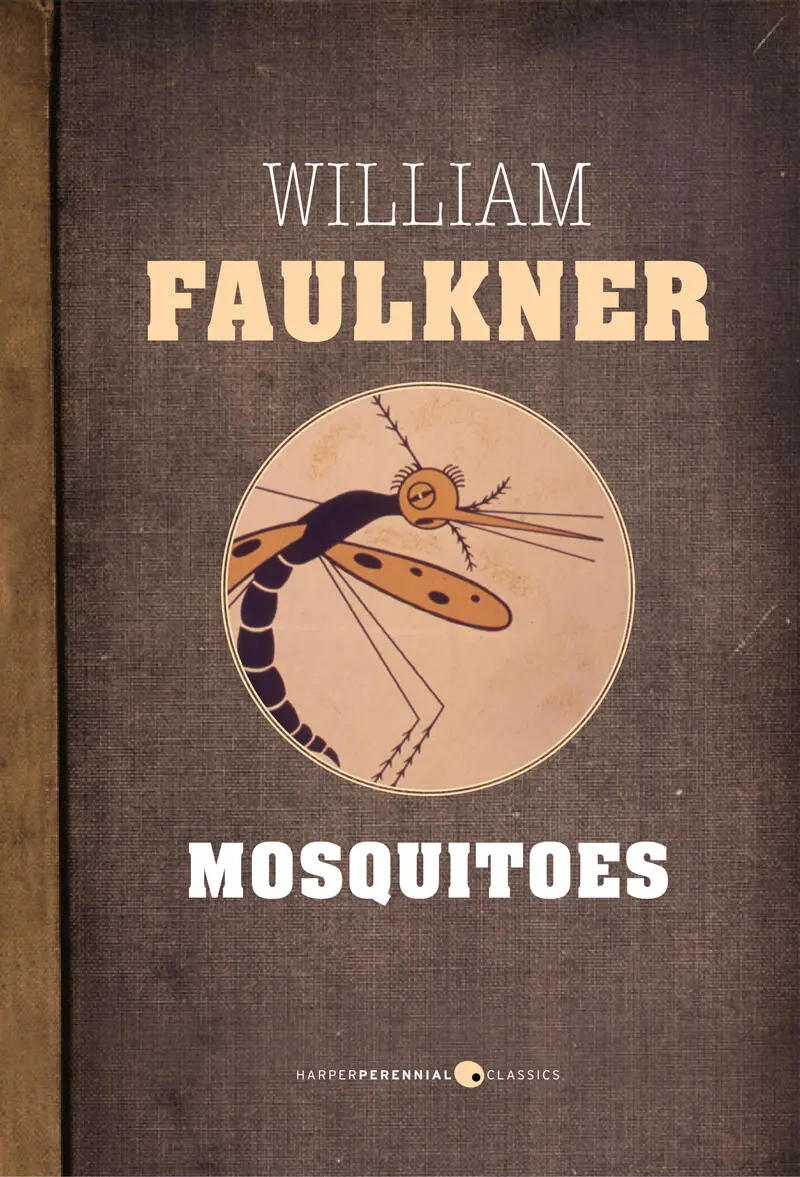
- Название:Mosquitoes
- Автор:
- Издательство:HarperCollins Canada
- Жанр:
- Год:2012
- ISBN:9781443421157
- Рейтинг книги:3 / 5. Голосов: 1
-
Избранное:Добавить в избранное
- Отзывы:
-
Ваша оценка:
Mosquitoes: краткое содержание, описание и аннотация
Предлагаем к чтению аннотацию, описание, краткое содержание или предисловие (зависит от того, что написал сам автор книги «Mosquitoes»). Если вы не нашли необходимую информацию о книге — напишите в комментариях, мы постараемся отыскать её.
explores gender and societal roles, sexual tension, and unrequited love as Faulkner delves into what it means to be an artist.
Faulkner’s second novel,
was first published in 1927, but did not receive any critical response until his literary reputation was well-established.
Mosquitoes — читать онлайн бесплатно полную книгу (весь текст) целиком
Ниже представлен текст книги, разбитый по страницам. Система сохранения места последней прочитанной страницы, позволяет с удобством читать онлайн бесплатно книгу «Mosquitoes», без необходимости каждый раз заново искать на чём Вы остановились. Поставьте закладку, и сможете в любой момент перейти на страницу, на которой закончили чтение.
Интервал:
Закладка:
“They might row out in the tender and anchor,” the Semitic man offered as his mite.
“Why, yes,” Mrs. Maurier agreed, brightening. “If they could just anchor the tender securely, they might. . if there were something to pull the rope with. The men themselves. . Do you suppose the sailors themselves could move a boat like this by hand?”
“I’ve seen a single river tug not much bigger than a Ford hauling a whole string of loaded steel barges up the river,” Fairchild repeated. He sat and stared from one to another of his companions and a strange light came into his eyes. “Say,” he said suddenly, “I bet that if all of us were to. .”
The Semitic man and Mark Frost groaned in simultaneous alarm, and Pete sitting on the outskirt of the group rose hastily and unostentatiously and headed for the companionway. He ducked into his room and stood listening.
Yes, they were really going to try it. He could hear Fairchild’s burly voice calling for all the men, and also one or two voices raised in protest; and above all of them the voice of the old woman in an indistinguishable senseless excitement. Jesus Christ, he whispered, clutching his hat.
People descending the stairs alarmed him and he sprang behind the open door. It was Fairchild and the fat Jew, but they passed his door and entered the room next to his, from which he heard immediately sounds of activity that culminated in a thin concussion of glass and glass.
“My God, man”—the fat Jew’s voice—“what have you done? Do you really think we can move this boat?”
“Naw. I just want to stir ’em up a little. Life’s getting altogether too tame on this boat: nothing’s happened at all today. I did it principally to see Talliaferro and Mark Frost sweat some.” Fairchild laughed. His laughter died into chuckles, heavily. “But I have seen a little river tug no bigger than a Ford hauling a st—”
“Good Lord,” the other man said again. “Finish your drink. O immaculate cherubim,” he said, going on down the passage. Fairchild followed. Pete heard their feet on the stairs, then crossing the deck. He returned to the port.
Yes, sir, they were going to try it, sure as hell. They were now embarking in the tender: he could hear them, thumping and banging around and talking; a thin shriek of momentary alarm. Women, too (Damn to hell, I bet Jenny’s with ’em, Pete whispered to himself). And somebody that didn’t want to go at all.
Voices without; alarums and excursions, etc:
Come on, Mark, you’ve got to go. All the men will be needed, hey, Mrs. Maurier?
Yes, indeed; indeed, yes. All the men must help.
Sure: all you brave strong men have got to go.
I’m a poet, not an oarsman. I can’t—
So is Eva: look at her, she’s going.
Shelley could row a boat.
Yes, and remember what happened to him, too.
I’m going to keep you all from drowning, Jenny. That’s (Damn to hell, Pete whispered) why I’m going.
Aw, come on, Mark; earn your board and keep.
Oooo, hold the boat still, Dawson.
Come on, come on. Say, where’s Pete?
Pete!
Pete! (Feet on the deck.)
Pete! Oh, Pete! (At the companionway.) Pete! (Jesus Christ, Pete whispered, making no sound.)
Never mind, Eva. We’ve got a boatload now. If anybody else comes, they’ll have to walk.
There’s somebody missing yet. Who is it?
Ah, we’ve got enough. Come on.
But somebody ain’t here. I don’t guess he fell overboard while we were not looking, do you?
Oh, come on and let’s go. Shove off, you Talliaferro (a scream).
Look out, there: catch her! Y’all right, Jenny? Let’s go, then. Careful, now.
Ooooooo!
“Damn to hell, she’s with ’em,” Pete whispered again, trying to see through the port. More thumping, and presently the tender came jerkily and lethargically into sight, loaded to the gun-wales like a nigger excursion. Yes, Jenny was in it, and Mrs. Wiseman and five men, including Mr. Talliaferro, Mrs. Maurier leaned over the rail above Pete’s head, waving her handkerchief and shrieking at them as the tender drew uncertainly away, trailing a rope behind it. Almost everyone had an oar: the small boat bristled with oars beating the water vainly, so that it resembled a tarantula with palsy and no knee joints. But they finally began to get the knack of it and gradually the boat began to assume something like a definite direction. As Pete watched it there came again feet on the stairs and a voice said guardedly:
“Ed.”
An indistinguishable response from the captain’s room and the voice added mysteriously, “Come up on deck a minute.” Then the footsteps withdrew, accompanied.
* * *
The tender evinced a maddening inclination to progress in any fashion save that for which it was built. Fairchild turned his head and glanced comprehensively about his small congested island enclosed with an unrhythmic clashing of blades. The oars clashed against each other, jabbing and scuttering at the tortured water until the tender resembled an ancient stiff jointed horse in a state of mad unreasoning alarm.
“We’ve got too many rowers,” Fairchild decided. Mark Frost drew in his oar immediately, striking the Semitic man across the knuckles with it. “No, no: not you,” Fairchild said. “Julius, you quit: you ain’t doing any good, anyhow; you’re the one that’s holding us back. Gordon, and Mark, and Talliaferro and me—”
“I want to row,” Mrs. Wiseman said. “Let me have Julius’s oar. Ernest will have to help Jenny watch the rope.”
“Take mine,” Mark Frost offered quickly, extending his oar and clashing it against someone else’s. The boat rocked alarmingly. Jenny squealed.
“Look out,” Fairchild exclaimed. “Do you want to have us all in the water? Julius, pass your oar along — that’s it. Now, you folks sit still back there. Dammit, Mark, if you hit anybody else with that thing, we’ll throw you out. Shelley could swim, too, you know.”
Mrs. Wiseman got fixed at last with her oar, and at last the tender became comparatively docile. Jenny and Mr. Talliaferro sat in the stern, paying out the line. “Now,” Fairchild glanced about at his crew and gave the command: “Let’s go.”
“Give way, all,” Mrs. Wiseman corrected with inspiration. They dipped their oars anew. Mark Frost drew his oar in once more, clashing it against Gordon’s.
“Let me get my handkerchief,” he said. “My hands are tender.”
“That’s what I want, too,” Mrs. Wiseman decided. “Gimme your handkerchief, Ernest.”
Mark Frost released his oar and it leaped quickly overboard. “Catch that paddle!” Fairchild shouted. Mrs. Wiseman and Mr. Talliaferro both reached for it and Gordon and the Semitic man trimmed the boat at the ultimate instant. It became stable presently and Jenny closed her mouth upon her soundless scream.
The oar swam away and stopped just beyond reach, raising and falling on the faint swells. “We’ll have to row over and get it,” Mrs. Wiseman said. So they did, but just before they reached it the oar swam on again, slowly and maddeningly. The rowers clashed and churned. Mr. Talliaferro sat in a taut diffident alarm.
“I really think,” he said, “we’d better return to the yacht. The ladies, you know.” But they didn’t heed him.
“Now, Ernest,” Mrs. Wiseman directed sharply, “reach, out and grab it.” But it eluded them again, and Fairchild said:
“Let’s let the damn thing go. We’ve got enough left to row with, anyway.” But at that moment the oar, rocking sedately, swung slowly around and swam docilely up alongside.
“Grab it! grab it!” Mrs. Wiseman cried.
“I really think—” Mr. Talliaferro offered again. Mark Frost grabbed it and it came meekly and unresistingly out of the water.
Читать дальшеИнтервал:
Закладка:
Похожие книги на «Mosquitoes»
Представляем Вашему вниманию похожие книги на «Mosquitoes» списком для выбора. Мы отобрали схожую по названию и смыслу литературу в надежде предоставить читателям больше вариантов отыскать новые, интересные, ещё непрочитанные произведения.




Обсуждение, отзывы о книге «Mosquitoes» и просто собственные мнения читателей. Оставьте ваши комментарии, напишите, что Вы думаете о произведении, его смысле или главных героях. Укажите что конкретно понравилось, а что нет, и почему Вы так считаете.