William Faulkner - Mosquitoes
Здесь есть возможность читать онлайн «William Faulkner - Mosquitoes» весь текст электронной книги совершенно бесплатно (целиком полную версию без сокращений). В некоторых случаях можно слушать аудио, скачать через торрент в формате fb2 и присутствует краткое содержание. Год выпуска: 2012, ISBN: 2012, Издательство: HarperCollins Canada, Жанр: Классическая проза, на английском языке. Описание произведения, (предисловие) а так же отзывы посетителей доступны на портале библиотеки ЛибКат.
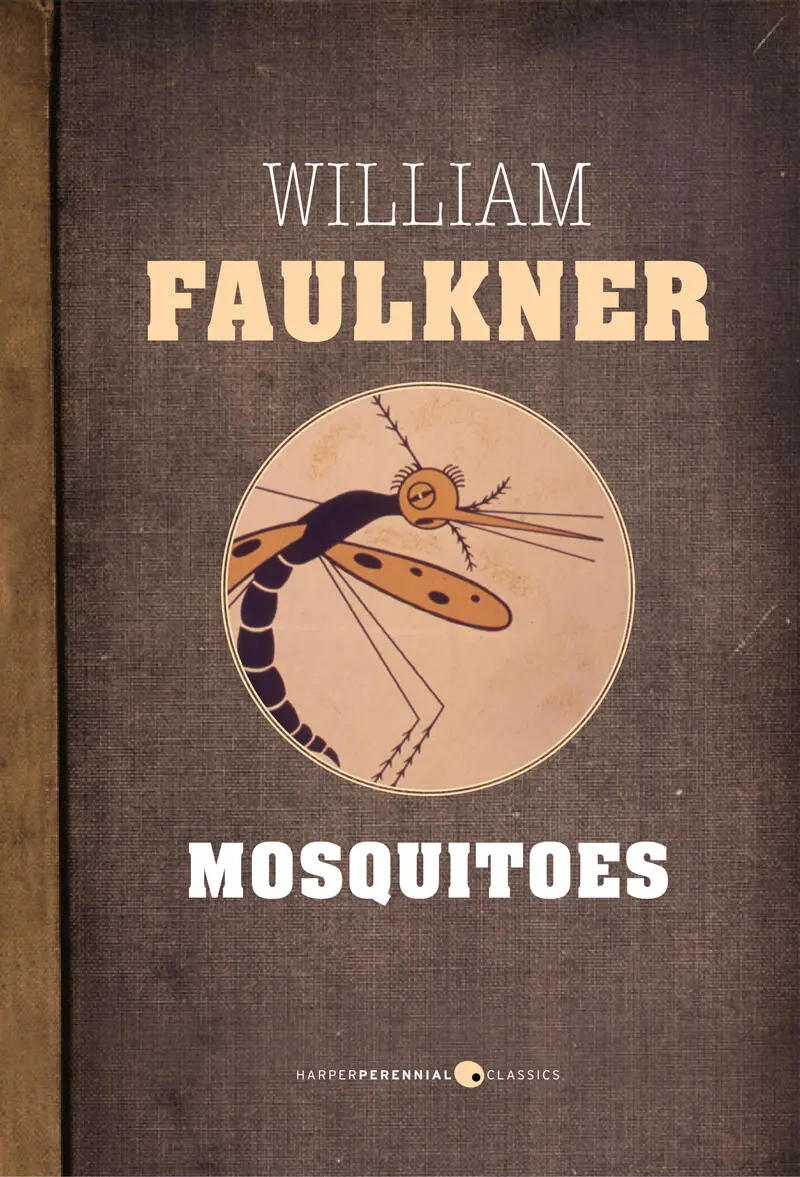
- Название:Mosquitoes
- Автор:
- Издательство:HarperCollins Canada
- Жанр:
- Год:2012
- ISBN:9781443421157
- Рейтинг книги:3 / 5. Голосов: 1
-
Избранное:Добавить в избранное
- Отзывы:
-
Ваша оценка:
Mosquitoes: краткое содержание, описание и аннотация
Предлагаем к чтению аннотацию, описание, краткое содержание или предисловие (зависит от того, что написал сам автор книги «Mosquitoes»). Если вы не нашли необходимую информацию о книге — напишите в комментариях, мы постараемся отыскать её.
explores gender and societal roles, sexual tension, and unrequited love as Faulkner delves into what it means to be an artist.
Faulkner’s second novel,
was first published in 1927, but did not receive any critical response until his literary reputation was well-established.
Mosquitoes — читать онлайн бесплатно полную книгу (весь текст) целиком
Ниже представлен текст книги, разбитый по страницам. Система сохранения места последней прочитанной страницы, позволяет с удобством читать онлайн бесплатно книгу «Mosquitoes», без необходимости каждый раз заново искать на чём Вы остановились. Поставьте закладку, и сможете в любой момент перейти на страницу, на которой закончили чтение.
Интервал:
Закладка:
“Don’t be silly, Mark,” Mrs. Wiseman said sharply. “That’s exactly how art came to the attention of the ninety-nine who don’t produce it and so have any possible reason for buying it — postcards and lithographs barely esoteric enough to escape police persecution. Ask any man on the street what he understands by the word art: he’ll tell you it means a picture. Won’t he?” she appealed to Fairchild.
“That’s so,” he agreed. “And it’s a wrong impression. Art means anything consciously done well, to my notion. Living, or building a good lawn mower, or playing poker. I don’t like this modern idea of restricting the word to painting, at all.”
“The art of Life, of a beautiful and complete existence of the Soul,” Mrs. Maurier put in. “Don’t you think that is Art’s greatest function, Mr. Gordon?”
“Of course you don’t, child,” Mrs. Wiseman told Fairchild, ignoring Mrs. Maurier. “As rabidly American as you are, you can’t stand that, can you? And there’s the seat of your bewilderment, Dawson — your belief that the function of creating art depends on geography.”
“It does. You can’t grow corn without something to plant it in.”
“But you don’t plant corn in geography: you plant it in soil. It not only does not matter where that soil is, you can even move the soil from one place to another — around the world, if you like — and it will still grow corn.”
“You’d have a different kind of corn, though — Russian corn, or Latin or Anglo-Saxon corn.”
“All corn is the same to the belly,” the Semitic man said.
“Julius!” exclaimed Mrs. Maurier. “The Soul’s hunger: that is the true purpose of Art. There are so many things to satisfy the grosser appetites. Don’t you think so, Mr. Talliaferro?”
“Yes,” Mrs. Wiseman took her brother up. “Dawson clings to his conviction for the old reason: it’s good enough to live with and comfortable to die with — like a belief in immortality. Insurance against doubt or alarm.”
“And laziness,” her brother added. Mrs. Maurier exclaimed “Julius” again. “Clinging spiritually to one little Spot of the earth’s surface, so much of his labor is performed for him. Details of dress and habit and speech which entail no hardship in the assimilation and which, piled one on another, become quite as imposing as any single startling stroke of originality, as trivialities in quantities will. Don’t you agree? But then, I suppose that all poets in their hearts consider prosewriters shirkers, don’t they?”
“Yes,” his sister agreed. “We do think they are lazy — just a little. Not mentally, but that their. . not hearts—” “Souls?” her brother suggested. “I hate that word, but it’s the nearest thing. . ” She met her brother’s quizzical eyes and exclaimed, “Oh, Julius! I could kill you, at times. He’s laughing at me, Dawson.”
“He’s laughing at us both,” Fairchild said. “But let him have his fun, poor fellow.” He chuckled, and lit a cigarette. “Let him laugh. I always did want to be one of those old-time eunuchs, for one night. They must have just laughed themselves to death when those sultans and things would come visiting.”
“Mister Fairchild! Whatever in the world!” exclaimed Mrs. Maurier.
“It’s a good thing there’s someone to see something amusing in that process,” the other rejoined. “The husbands, the active participants, never seem to.”
“That’s a provision of nature’s for racial survival,” Fairchild said. “If the husbands ever saw the comic aspect of it. . But they never do, even when they have the opportunity, no matter how white and delicate the hand that decorates their brows.”
“It’s not lovely ladies nor dashing strangers,” the Semitic man said, “it’s the marriage ceremony that disfigures our foreheads.”
Fairchild grunted. Then he chuckled again. “There’d sure be a decline in population if a man were twins and had to stand around and watch himself making love.”
“Mister Fairchild!”
“Chopin,” Mrs. Wiseman interrupted. “Really, Dorothy, I’m disappointed in you.” She shrugged again, flashing her hands. Mrs. Maurier said with relief:
“How much Chopin has meant to me in my sorrows”—she looked about in tragic confiding astonishment—“no one will ever know.”
“Surely,” agreed Mrs. Wiseman, “he always does.” She turned to Miss Jameson. “Just think how much better Dawson would have done you than God did. With all deference to Mrs. Maurier, so many people find comfort in Chopin. It’s like having a pain that aspirin will cure, you know. I could have forgiven you even Verdi, but Chopin! Chopin,” she repeated, then with happy inspiration: “Snow rotting under a dead moon.”
Mark Frost sat staring at his hands on his lap, beneath the edge of the table, moving his lips slightly. Fairchild said:
“What music do you like, Eva?”
“Oh — Debussy, George Gershwin. Berlioz perhaps — why not?”
“Berlioz,” repeated Miss Jameson mimicking the other’s tone: “Swedenborg on a French holiday.” Mark Frost stared at his hands on his lap, moving his lips slightly.
“Forget your notebook, Mark?” Fairchild asked quizzically.
“It’s very sad,” the Semitic man said. “Man gets along quite well until that unhappy day on which someone else discovers him thinking. After that, God help him: he doesn’t dare leave home without a notebook. It’s very sad.”
“Mark’s not such an accomplished buccaneer as you and Dawson,” his sister answered quickly. “At least he requires a notebook.”
“My dear girl,” the Semitic man murmured in his lazy voice, “you flatter yourself.”
“So do I,” Fairchild said. “I always—”
“Whom?” the Semitic man asked. “Yourself, or me?”
“What?” said Fairchild, staring at him.
“Nothing. Excuse me: you were saying—?”
“I was saying that I always carry my portfolio with me because it’s the only comfortable thing I ever found to sit on.”
* * *
Talk, talk, talk: the utter and heartbreaking stupidity of words. It seemed endless, as though it might go on forever. Ideas, thoughts, became mere sounds to be bandied about until they were dead.
Noon was oppressive as a hand, as the ceaseless blow of a brass hand: a brass blow neither struck nor withheld; brass rushing wings that would not pass. The deck blistered with it, the rail was too hot to touch and the patches of shadow about the deck were heavy and heat-soaked as sodden blankets. The water was an unbearable glitter, the forest was a bronze wall cast at a fearful heat and not yet cooled, and no breeze was anywhere under the world’s heaven.
But the unbearable hiatus of noon passed at last and the soundless brazen wings rushed westward. The deck was deserted as it had been on that first afternoon when he had caught her in midflight like a damp swallow, a swallow hard and passionate with flight; and it was as though he yet saw upon the deck the wet and simple prints of her naked feet, and he seemed to feel about him like an odor that young hard graveness of hers. No wonder she was gone out of it: she who here was as a flame among stale ashes, a little tanned flame; who, gone, was as a pipe blown thinly and far away, as a remembered surf on a rocky coast at dawn. . ay ay strangle your heart o israfel winged with loneliness feathered bitter with pride.
* * *
Dust spun from their feet, swirling sluggish and lazy in the brooding dreadful noon. Beside them always and always those eternal bearded trees, bearded and brooding, older and stiller than eternity. The road ran on like a hypnotism: a dull and endless progression from which there was no escape.
After a while he missed her from her position at his shoulder and he stopped and looked back. She was kneeling beside the foul ditch. He watched her stupidly, then he suddenly realized what she was about and he ran back to her, grasping her by the shoulder. “Here, you can’t do that! That stuff is poison: you can’t drink it!”
Читать дальшеИнтервал:
Закладка:
Похожие книги на «Mosquitoes»
Представляем Вашему вниманию похожие книги на «Mosquitoes» списком для выбора. Мы отобрали схожую по названию и смыслу литературу в надежде предоставить читателям больше вариантов отыскать новые, интересные, ещё непрочитанные произведения.



Обсуждение, отзывы о книге «Mosquitoes» и просто собственные мнения читателей. Оставьте ваши комментарии, напишите, что Вы думаете о произведении, его смысле или главных героях. Укажите что конкретно понравилось, а что нет, и почему Вы так считаете.