William Faulkner - Mosquitoes
Здесь есть возможность читать онлайн «William Faulkner - Mosquitoes» весь текст электронной книги совершенно бесплатно (целиком полную версию без сокращений). В некоторых случаях можно слушать аудио, скачать через торрент в формате fb2 и присутствует краткое содержание. Год выпуска: 2012, ISBN: 2012, Издательство: HarperCollins Canada, Жанр: Классическая проза, на английском языке. Описание произведения, (предисловие) а так же отзывы посетителей доступны на портале библиотеки ЛибКат.
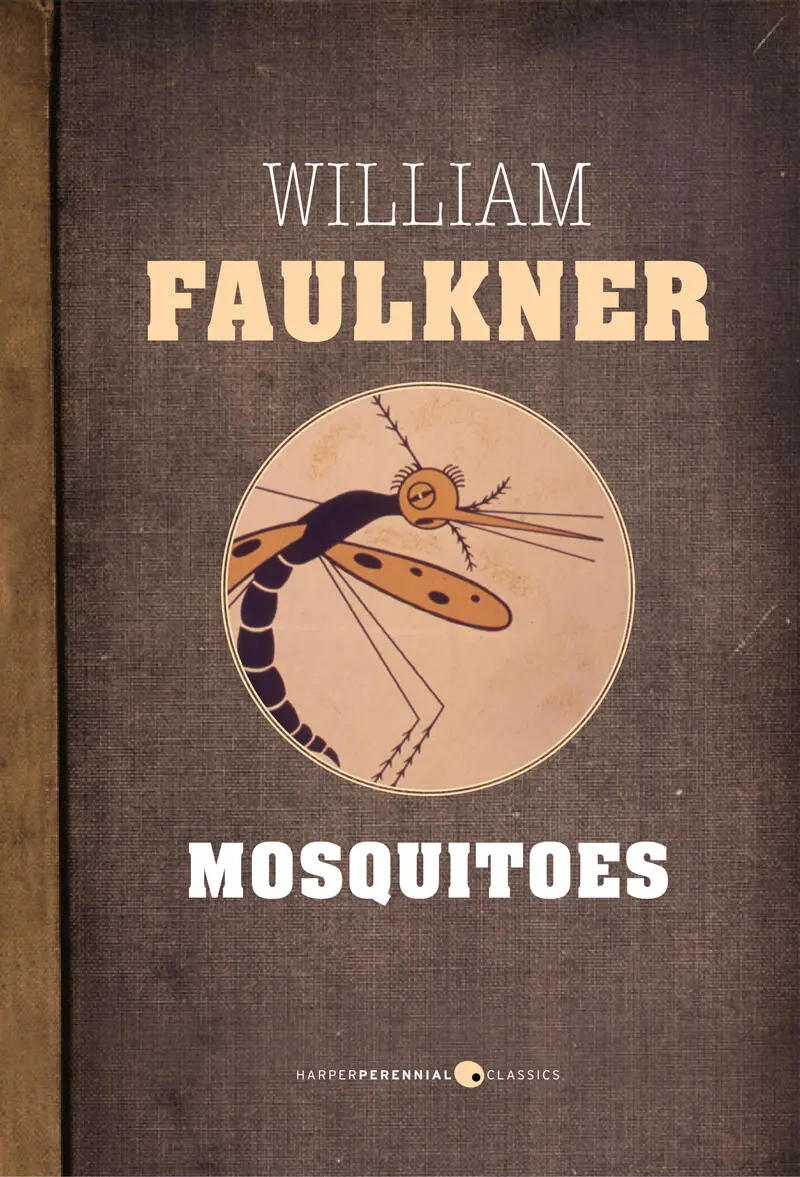
- Название:Mosquitoes
- Автор:
- Издательство:HarperCollins Canada
- Жанр:
- Год:2012
- ISBN:9781443421157
- Рейтинг книги:3 / 5. Голосов: 1
-
Избранное:Добавить в избранное
- Отзывы:
-
Ваша оценка:
Mosquitoes: краткое содержание, описание и аннотация
Предлагаем к чтению аннотацию, описание, краткое содержание или предисловие (зависит от того, что написал сам автор книги «Mosquitoes»). Если вы не нашли необходимую информацию о книге — напишите в комментариях, мы постараемся отыскать её.
explores gender and societal roles, sexual tension, and unrequited love as Faulkner delves into what it means to be an artist.
Faulkner’s second novel,
was first published in 1927, but did not receive any critical response until his literary reputation was well-established.
Mosquitoes — читать онлайн бесплатно полную книгу (весь текст) целиком
Ниже представлен текст книги, разбитый по страницам. Система сохранения места последней прочитанной страницы, позволяет с удобством читать онлайн бесплатно книгу «Mosquitoes», без необходимости каждый раз заново искать на чём Вы остановились. Поставьте закладку, и сможете в любой момент перейти на страницу, на которой закончили чтение.
Интервал:
Закладка:
“Whose brother, honey?” Mrs. Wiseman paused and watched Jenny curiously.
“The one with that saw.”
“Oh, Yes, fairly so. He seems to be too busy to be anything else. Why?”
“And that popeyed man. All English men are refined, though. There was one in a movie I saw. He was awful refined.” Jenny looked at her reflected face, timelessly and completely entertained. Mrs. Wiseman gazed at Jenny’s fine minted hair, at her sleazy little dress revealing the divine inevitability of her soft body.
“Come here, Jenny,” she said.
TWELVE O’CLOCK
When he reached her she sat huddled in the road, crouching bonelessly upon herself, huddling her head in her crossed thin arms. He stood beside her, and presently he spoke her name. She rocked back and forth, then wrung her body in an ecstasy. “They hurt me, they hurt me,” she wailed, crouching again in that impossible spasm of agony. David knelt beside her and spoke her name again, and she sat up.
“Look,” she said wildly, “on my legs — look, look,” staring with a sort of fascination at a score of great gray specks hovering about her blood-flecked stockings, making no effort to brush them away. She raised her wild face again. “Do you see them? They are everywhere on me — my back, my back, where I can’t reach.” She lay suddenly flat, writhing her back in the dust, clutching his hand. Then she sat up again and against his knees she turned wringing her body from the hips, trying to draw her bloody legs beneath her brief skirt. He held her while she writhed in his grasp, staring her wild bloodless face up at him. “I must get in water,” she panted. “I must get in water. Mud, anything. I’m dying, I tell you.”
“Yes, yes: I’ll get you some water. You wait here. Will you wait here?”
“You’ll get me some water? You will? You promise?”
“Yes, yes,” he repeated. “I’ll get you some. You wait here. You wait here, see?” he repeated idiotically. She bent again inward upon herself, moaning and writhing in the dust, and he plunged down the bank, stripping his shirt off and dipped it into the foul warm ditch. She had dragged her dress up about her shoulders, revealing her startling white bathing suit between her knickers and the satin band binding her breasts. “On my back,” she moaned, bending forward again, “quick! quick!”
He laid the wet shirt on her back and she caught the ends of it and drew it around her, and presently she leaned back against his knees with a long shuddering sigh. “I want a drink. Can’t I have a drink of water, David?”
“Soon,” he promised with despair. “You can have one soon as we get out of the swamp.”
She moaned again, a long whimpering sound, lowering her head between her arms. They crouched together in the dusty road. The road went on shimmering before them, endless beneath bearded watching trees, crossing the implacable swamp with a puerile bravado like a thin voice cursing in a cathedral. Needles of fire darted about them, about his bare shoulders and arms. After a while she said:
“Wet it again, please, David.”
He did so, and returned, scrambling up the steep rank levee side.
“Now, bathe my face, David.” She raised her face and closed her eyes and he bathed her face and throat and brushed her damp coarse hair back from her brow.
“Let’s put the shirt on you,” he suggested.
“No,” she demurred against his arm, without opening her eyes, drowsily. “They’ll eat you alive without it.”
“They don’t bother me like they do you. Come on, put it on.” She demurred again and he tried awkwardly to draw the shirt over her head. “I don’t need it,” he repeated.
“No. . Keep it, David. . You ought to keep it. Besides, I’d rather have it underneath. . Oooo, it feels so good. You’re sure you don’t need it?” She opened her eyes, watching him with that sober gravity of hers. He insisted and she sat up and slipped her dress over her head. He helped her to don the shirt, then she slipped her dress on again. “I wouldn’t take it, only they hurt me so damn bad. I’ll do something for you some day, David. I swear I will.”
“Sure,” he repeated. “I don’t need it.”
He rose, and she came to her feet in a single motion, before he could offer to help her. “I swear I wouldn’t take it if they didn’t hurt me so much, David,” she persisted, putting her hand on his shoulder and raising her tanned serious face.
“Sure, I know.”
“I’ll pay you back somehow. Come on: let’s get out of here.”
ONE O’CLOCK
Mrs. Wiseman and Miss Jameson drove Mrs. Maurier moaning and wringing her hands from the galley and prepared lunch — grapefruit again, disguised thinly.
“We have so many of them,” the hostess apologized helplessly. “And the steward gone. . We are aground, too, you see,” she explained.
“Oh, we can stand a little hardship, I guess,” Fairchild reassured her jovially. “The race hasn’t degenerated that far. In a book, now, it would be kind of terrible; if you forced characters in a book to eat as much grapefruit as we do, both the art boys and the humanitarians would stand on their hind legs and howl. But in real life — In life, anything might happen; in actual life people will do anything. It’s only in books that people must function according to arbitrary rules of conduct and probability; it’s only in books that events must never flout credulity.”
“That’s true,” Mrs. Wiseman agreed. “People’s characters, when writers delineate them by revealing their likings and dislikings, always appear so perfect, so inevitably consistent, but in li—”
“That’s why literature is art and biology isn’t,” her brother interrupted. “A character in a book must be consistent in all things, while man is consistent in one thing only: he is consistently vain. It’s his vanity alone which keeps his particles damp and adhering one to another, instead of like any other handful of dust which any wind that passes can disseminate.”
“In other words, he is consistently inconsistent,” Mark Frost recapitulated.
“I guess so,” the Semitic man replied. “Whatever that means. . But what were you saying, Eva?”
“I was thinking of how book people, when you find them in real life, have such a perverse and disconcerting way of liking and disliking the wrong things. For instance, Dorothy here. Suppose you were drawing Dorothy’s character in a novel, Dawson. Any writer would give her a liking for blue jewelry: white gold, and platinum, and sapphires in dull silver — you know. Wouldn’t you do that?”
“Why, yes, so I would,” Fairchild agreed with interest. “She would like blue things, sure enough.”
“And then,” the other continued, “music. You’d say she would like Grieg, and those other cold mad northern people with icewater in their veins, wouldn’t you?”
“Yes,” Fairchild agreed again, thinking immediately of Ibsen and the Peer Gynt legend and remembering a sonnet of Siegfried Sassoon’s about Sibelius that he had once read in a magazine. “That’s what she would like.”
“Should like,” Mrs. Wiseman corrected. “For the sake of esthetic consistency. But I bet you are wrong. Isn’t he, Dorothy?”
“Why, yes,” Miss Jameson replied. “I always liked Chopin.”
Mrs. Wiseman shrugged: a graceful dark gesture. “And there you are. That’s what makes art so discouraging. You come to expect anything associated with and dependent on the actions of man to be discouraging. But it always shocks me to learn that art also depends on population, on the herd instinct just as much as manufacturing automobiles or stockings does—”
“Only they can’t advertise art by means of women’s legs yet,” Mark Frost interrupted.
Читать дальшеИнтервал:
Закладка:
Похожие книги на «Mosquitoes»
Представляем Вашему вниманию похожие книги на «Mosquitoes» списком для выбора. Мы отобрали схожую по названию и смыслу литературу в надежде предоставить читателям больше вариантов отыскать новые, интересные, ещё непрочитанные произведения.



Обсуждение, отзывы о книге «Mosquitoes» и просто собственные мнения читателей. Оставьте ваши комментарии, напишите, что Вы думаете о произведении, его смысле или главных героях. Укажите что конкретно понравилось, а что нет, и почему Вы так считаете.