William Faulkner - Mosquitoes
Здесь есть возможность читать онлайн «William Faulkner - Mosquitoes» весь текст электронной книги совершенно бесплатно (целиком полную версию без сокращений). В некоторых случаях можно слушать аудио, скачать через торрент в формате fb2 и присутствует краткое содержание. Год выпуска: 2012, ISBN: 2012, Издательство: HarperCollins Canada, Жанр: Классическая проза, на английском языке. Описание произведения, (предисловие) а так же отзывы посетителей доступны на портале библиотеки ЛибКат.
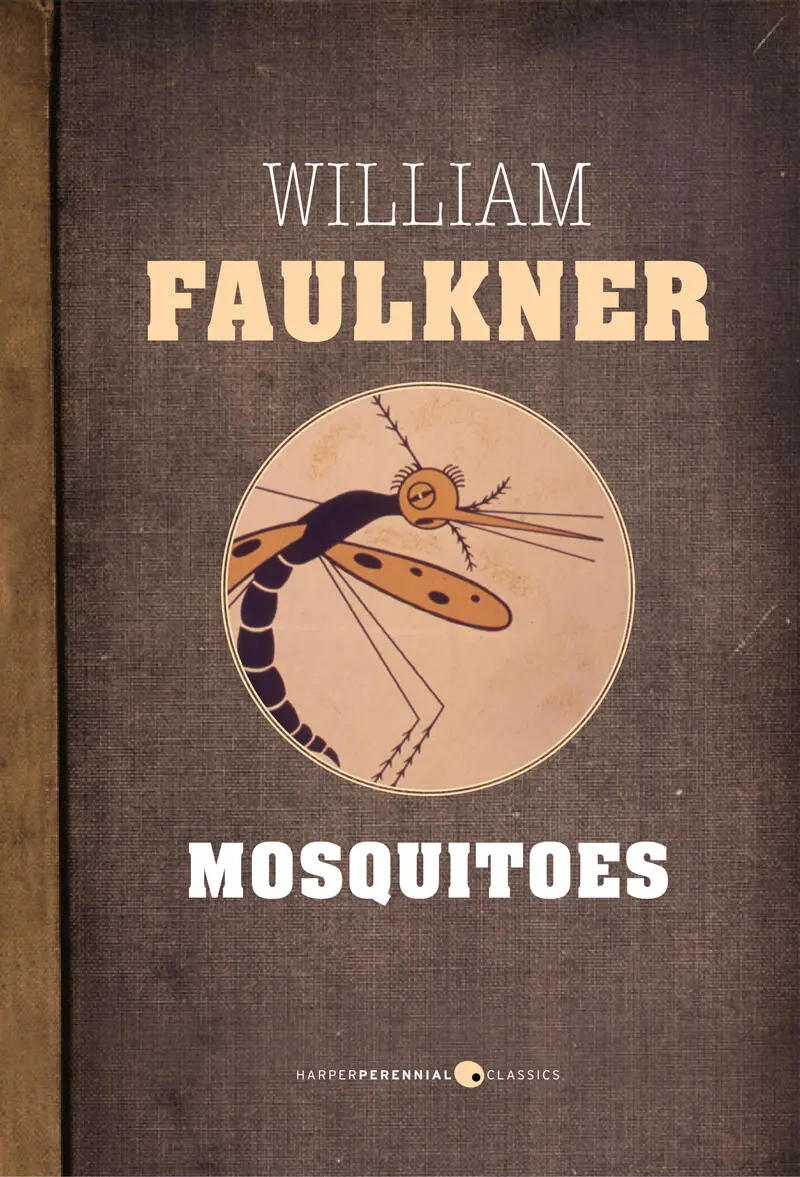
- Название:Mosquitoes
- Автор:
- Издательство:HarperCollins Canada
- Жанр:
- Год:2012
- ISBN:9781443421157
- Рейтинг книги:3 / 5. Голосов: 1
-
Избранное:Добавить в избранное
- Отзывы:
-
Ваша оценка:
Mosquitoes: краткое содержание, описание и аннотация
Предлагаем к чтению аннотацию, описание, краткое содержание или предисловие (зависит от того, что написал сам автор книги «Mosquitoes»). Если вы не нашли необходимую информацию о книге — напишите в комментариях, мы постараемся отыскать её.
explores gender and societal roles, sexual tension, and unrequited love as Faulkner delves into what it means to be an artist.
Faulkner’s second novel,
was first published in 1927, but did not receive any critical response until his literary reputation was well-established.
Mosquitoes — читать онлайн бесплатно полную книгу (весь текст) целиком
Ниже представлен текст книги, разбитый по страницам. Система сохранения места последней прочитанной страницы, позволяет с удобством читать онлайн бесплатно книгу «Mosquitoes», без необходимости каждый раз заново искать на чём Вы остановились. Поставьте закладку, и сможете в любой момент перейти на страницу, на которой закончили чтение.
Интервал:
Закладка:
“I can’t help it! I’ve got to have some water, I’ve got to!” She strained against his hands. “Please, David. Just one mouthful. Please, David. Please, David.”
He got his hands under her arms, but his feet slid in the rank sloping grass and he went up to his knees in thick reluctant water. She twisted in his hands. “Please, oh, please! Just enough to wet my mouth. Look at my mouth.” She raised her face: her broad pale lips were parched, rough. “Please, David.”
But he held her. “Put your feet in it, like mine. That’ll help some,” he said through his own dry harsh throat. “Here, let me take off your shoes.”
She sat whimpering like a dog while he removed her slippers. Then she slid her legs into the water and moaned with partial relief. The sunlight was beginning to slant at last, slanting westward like a rushing of unheard golden wings across the sky; though the somber twilight under the trees was unchanged — somber and soundless, brooding, and filled with a vicious darting of invisible fire.
“I must have water,” she said at last. “You’ll have to find me some water, David.”
“Yes.” He climbed heavily out of the hot ooze, out of the mud and slime. He bent and slid his hands under her arms. “Get up. We must go on.”
TWO O’CLOCK
Jenny yawned, frankly, then she did something to the front of her dress, drawing it away from her to peer down into her bosom. It seemed to be all right, and she settled her dress again with a preening motion, lifting her shoulders and smoothing it over her hips. She went upstairs and presently she saw them, sitting around like always. Mrs. Maurier wasn’t there.
She drifted over to the rail and laxed herself against it and stood there, placidly waiting until Mr. Talliaferro became aware of her presence.
“I was watching these things in the water,” she said when he came to her like a tack to a magnet, volitionless and verbose.
“Where?” He also stared overside.
“That stuff there,” she answered, looking forward to the group of chairs.
“Why, that’s just refuse from the galley,” Mr. Talliaferro said with surprise.
“Is it? It’s kind of funny-looking. . There’s some more of it down here a ways.” Mr. Talliaferro followed her, intrigued and curious. She stopped and glanced back over her shoulder and beyond him: Mr. Talliaferro aped her but saw no living thing except Mark Frost on the edge of the group. The others were out of sight beyond the deckhouse. “It’s farther on,” Jenny said.
Farther along she stopped again and again she looked forward. “Where?” Mr. Talliaferro asked.
“Here.” Jenny stared at the lake a moment. Then she examined the deck again. Mr. Talliaferro was thoroughly puzzled now, even a trifle alarmed. “It was right here, that funny thing I saw. I guess it’s gone, though.”
“What was it you saw?”
“Some kind of a funny thing,” she answered with detachment. . “The sun is hot here.” Jenny moved away and went to where an angle of the deckhouse wall formed a shallow niche. Mr. Talliaferro followed her in amazement. Again Jenny peered around him, examining that part of the deck which was in sight and the immediate approaches to it. Then she became utterly static beside him and without moving at all she seemed to envelop him, giving him to think of himself surrounded, enclosed by the sweet cloudy fire of her thighs, as young girls can.
Mr. Talliaferro saw her as through a blond mist. A lightness was moving down his members, a lightness so exquisite as to be almost unbearable, while above it all he listened to the dry interminable incoherence of his own voice. That unbearable lightness moved down his arms to his hands, and down his legs, reaching his feet at last, and Mr. Talliaferro fled.
Jenny looked after him. She sighed.
* * *
After a while the white dusty road left the swamp behind. It ran now through a country vaguely upland: sand and pines and a crisp thick undergrowth sunburned and sibilant.
“We’re out of it at last,” she called back to him. Her pace quickened and she called over her shoulder, “It can’t be much farther now. Come on, let’s run a while.” He shouted to her, but she trotted on, drawing away from him. He followed her splotched flashing legs at a slower pace, steadily losing distance.
Her legs twinkled on ahead in the shimmering forgotten road. Heat wavered and shimmered above the road and the sky was a metallic intolerable bowl and the tall pines in the windless afternoon exuded a thin exhilarating odor of resin and heat, casting sparse patches of shade upon the shimmering endless ribbon of the road. Lizards scuttled in the dust before them, hissing abruptly amid the dusty brittle undergrowth beside the road. The road went on and on, endless and shimmering ahead of them. He called to her again, but she trotted on unheeding.
Without faltering in her pace she turned and ran from the road and when he reached her she leaned against a tree, panting. “I ran too much,” she gasped through her pale open mouth. “I feel funny — all gone. Better hold me up,” she said, staring at him. “No: let me lie down.” She slumped against him. “My heart’s going too fast. Feel how it’s going.” He felt her heart leaping against his hand. “It’s too fast, isn’t it? What’ll I do now?” she asked soberly. “Do something quick, David,” she told him, staring at him, and he lowered her awkwardly and knelt beside her, supporting her head. She closed her eyes against the implacable sky, but opened them immediately and struggled to rise. “No, no: I mustn’t stay here. I want to get up again. Help me up.”
He did so, and had to hold her on her feet. “I must go on,” she repeated. “Make me go on, David. I don’t want to die here. Make me go on, I tell you.” Her face was flushed: he could see blood pumping in her throat, and holding her so he knew sharp and utter terror. “What must I do?” she was saying. “You ought to know. Don’t you know what to do? I’m sick, I tell you. They’ve given me hydrophobia or something.”
She closed her eyes and all her muscles relaxed at once and she slipped to the ground and he knelt again beside her in terror and despair. “Raise my head a little,” she muttered and he sat and drew her across his legs and raised her head against his breast, smoothing her damp hair from her forehead. “That’s right.” She opened her eyes. “Cheer up, David. . I told you once about looking at me like that.” Then she closed her eyes again.
THREE O’CLOCK
“If we were only afloat,” Mrs. Maurier moaned for the twelfth time. “They can’t be farther than Mandeville: I know they can’t. What will Henry say to me!”
“Why don’t they start her up and try to get off again?” Fairchild asked. “Maybe the sand has settled or something by now,” he added vaguely.
“The captain says they can’t, that we’ll have to wait for the tug. They sent for the tug yesterday, and it hasn’t come yet,” she added in a sort of stubborn astonishment. She rose and went to the rail and stared up the lake toward Mandeville.
“You wouldn’t think it’d take a tug to pull us off,” Fairchild remarked. “She ain’t such a big boat, you know. Seems like any sort of a boat would pull us off. I’ve seen little launches hauling bigger boats than this around. And a river tug can haul six or eight of these steel barges, upstream, too.”
Mrs. Maurier returned hopefully. “It really doesn’t seem necessary to have a tug to move this yacht, does it? You’d think that sailors could think of some way, something with ropes and things,” she added, also vaguely.
“What would they stand on while they pulled the ropes?” Mark Frost wanted to know. “They couldn’t pull from the shore. That isn’t the way we want to go.”
Читать дальшеИнтервал:
Закладка:
Похожие книги на «Mosquitoes»
Представляем Вашему вниманию похожие книги на «Mosquitoes» списком для выбора. Мы отобрали схожую по названию и смыслу литературу в надежде предоставить читателям больше вариантов отыскать новые, интересные, ещё непрочитанные произведения.




Обсуждение, отзывы о книге «Mosquitoes» и просто собственные мнения читателей. Оставьте ваши комментарии, напишите, что Вы думаете о произведении, его смысле или главных героях. Укажите что конкретно понравилось, а что нет, и почему Вы так считаете.