William Faulkner - Mosquitoes
Здесь есть возможность читать онлайн «William Faulkner - Mosquitoes» весь текст электронной книги совершенно бесплатно (целиком полную версию без сокращений). В некоторых случаях можно слушать аудио, скачать через торрент в формате fb2 и присутствует краткое содержание. Год выпуска: 2012, ISBN: 2012, Издательство: HarperCollins Canada, Жанр: Классическая проза, на английском языке. Описание произведения, (предисловие) а так же отзывы посетителей доступны на портале библиотеки ЛибКат.
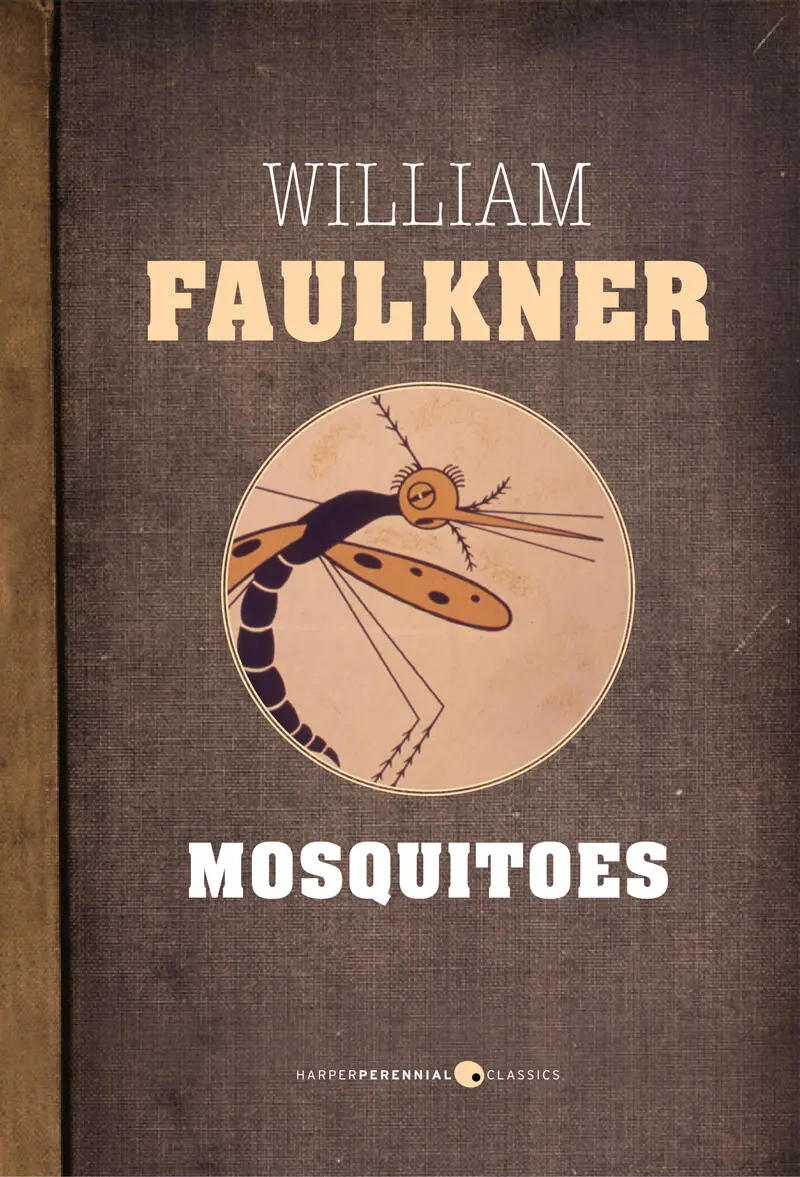
- Название:Mosquitoes
- Автор:
- Издательство:HarperCollins Canada
- Жанр:
- Год:2012
- ISBN:9781443421157
- Рейтинг книги:3 / 5. Голосов: 1
-
Избранное:Добавить в избранное
- Отзывы:
-
Ваша оценка:
Mosquitoes: краткое содержание, описание и аннотация
Предлагаем к чтению аннотацию, описание, краткое содержание или предисловие (зависит от того, что написал сам автор книги «Mosquitoes»). Если вы не нашли необходимую информацию о книге — напишите в комментариях, мы постараемся отыскать её.
explores gender and societal roles, sexual tension, and unrequited love as Faulkner delves into what it means to be an artist.
Faulkner’s second novel,
was first published in 1927, but did not receive any critical response until his literary reputation was well-established.
Mosquitoes — читать онлайн бесплатно полную книгу (весь текст) целиком
Ниже представлен текст книги, разбитый по страницам. Система сохранения места последней прочитанной страницы, позволяет с удобством читать онлайн бесплатно книгу «Mosquitoes», без необходимости каждый раз заново искать на чём Вы остановились. Поставьте закладку, и сможете в любой момент перейти на страницу, на которой закончили чтение.
Интервал:
Закладка:
The road came on, an endless blistering ribbon between worn ruts where nothing had passed for a long time. The sea makes a swishing sound in your ears. Regular. Swish. Swish. Not against your eyes, though. Not against the backs of your eyes. The shadow came out of a blotch of larger shadows cast by trees that had no tops. Two steps more. No, three steps now. Three steps. Getting to be afternoon, getting to be later than it was once. Three steps, then. All right. Man walks on his hind legs; a man can take three steps, a monkey can take three steps, but there is water in a monkey’s cage, in a pan. Three steps. All right. One. Two. Three. Gone. Gone. Gone. It’s a red sound. Not behind your eyes. Sea. See. Sea. See. You’re in a cave, you’re in a cave of dark sound, the sound of the sea is outside the cave. Sea. See. See. See. Not when they keep stepping in front of the door.
There was another sound in his ears now, a faint annoying sound, and the weight on his back was shifting of its own volition, thrusting him downward toward the blistering, blanched dust in which he walked, took three steps a man can take three steps and he staggered, trying to shift his numb arms and get a new grip. His mouth was open again and when he tried to shut it, it made a dry, hissing sound. One. Two. Three. One. Two. Three.
“Let me down, I tell you,” she repeated, thrusting herself backward. “Look, there’s a signboard. Let me down, I tell you. I can walk now.”
She thrust herself away from him, twisting her legs from his grasp and forcing him down, and he stumbled and went to his knees. Her feet touched the ground and still astride of his body she braced herself and held him partially up by his shoulders. He stopped at last, on all fours like a beast, his head hanging between his shoulders; and kneeling beside him in the dust she slid her hand under his forehead to lessen the tension on his neck and raised her eyes to the signboard. Mandeville. Fourteen miles, and a crude finger pointing in the direction from which they had come. The front of her dress was damp, blotched darkly with his sweat.
* * *
After the women had hovered Jenny’s draggled helplessness below decks Fairchild removed his hat and mopped his face, looking about upon his fatuous Frankenstein with a sort of childlike astonishment. Then his gaze came to rest on Mr. Talliaferro’s haggard damp despair and he laughed and laughed.
“Laugh you may,” the Semitic man told him, “but much more of this sort of humor and you’ll be doing your laughing ashore. I think now, if Talliaferro’d start an active protest with you as its immediate object, that we’d all be inclined to support him.” Mr. Talliaferro dripped forlornly: an utter and hopeless dejection. The Semitic man looked at him, then he too looked about at the others and upon the now peaceful scene of their recent activities. “One certainly pays a price for art,” he murmured, “one really does.”
“Talliaferro’s the only one who has suffered any actual damage,” Fairchild protested. “And I’m just going to buy him off now. Come on, Talliaferro, we can fix you up.”
“That won’t be sufficient,” the Semitic man said, still ominous. “The rest of us have been assailed enough in our vanities to rise from principle.”
“Well, then, if I have to, I’ll buy you all off,” Fairchild answered. He led the way toward the stairs. But he halted again and looked back at them. “Where’s Gordon?” he asked. Nobody knew. “Well, no matter. He knows where to come.” He went on. “After all,” he said, “there are compensations for art, ain’t there?”
The Semitic man admitted that there were. “Though,” he added, “it’s a high price to pay for whisky.” He descended in his turn. “Yes, we really must get something out of it. We spend enough time on it and suffer enough moral and mental turmoil because of it.”
“Sure,” Fairchild agreed. “The ones that produce it get a lot from it. They get the boon of keeping their time pretty well filled. And that’s a whole lot to expect in this world,” he said profoundly, fumbling at his door. It opened at last and he said, “Oh, here you are. Say, you just missed it.”
Major Ayers, his neglected tumbler beside him and clutching a book, came up for air when they entered, festooned yet with a kind of affable bewilderment. “Missed what?” he repeated.
They all began to tell him about it at once, producing Mr. Talliaferro as evidence from where he lurked unhappily in their midst, for Major Ayers’s inspection and commiseration; and still telling him about it they found seats while Fairchild again assumed the ritual of his hidden suitcase. Major Ayers already had the chair, but the Semitic man attempted the book anyway. “What have you got there?” he asked.
Major Ayers’s hearty bewilderment descended upon him again. “I was passing the time,” he explained quickly. He stared at the book. “It’s quite strange,” he said. Then he added, “I mean, the way — the way they get their books up nowadays. I like the way they get their books up. Jolly, with colors, y’know. But I—” He considered a moment. “I rather lost the habit of reading at Sandhurst,” he explained in a burst of confidence. “And then, on active service constantly. .”
“War is bad,” the Semitic man agreed. “What were you reading?”
“I rather lost the habit of reading at Sandhurst,” Major Ayers explained again. He raised the book again.
Fairchild opened a fresh bottle. “Somebody’ll have to dig up some more glasses. Mark, see if you can slip back to the kitchen and get one or two more. Let’s see the book,” he said reaching his hand. The Semitic man forestalled him.
“You go ahead and give us some whisky. I’d rather forget my grief that way, just now.”
“But look,” Fairchild insisted. The other fended him off.
“Give us some whisky, I tell you,” he repeated. “Here’s Mark with the glasses. What we need in this country is protection from artists. They even want to annoy us with each other’s stuff.”
“Go ahead,” Fairchild replied equably, “have your joke. You know my opinion of smartness,” He passed glasses among them.
“He can’t mean that,” the Semitic man said. “Just because the New Republic gives him hell—”
“But the Dial once bought a story of him,” Mark Frost said with hollow envy.
“And what a fate for a man in all the lusty pride of his Ohio valley masculinity: immolation in a home for old young ladies of either sex. . That atmopshere was too rare for him. Eh, Dawson?”
Fairchild laughed. “Well, I ain’t much of an Alpinist. What do you want to be in there for, Mark?”
“It would suit Mark exactly,” the Semitic man said, “that vague polite fury of the intellect in which they function. What I can’t see is how Mark has managed to stay out of it. . But then, if you’ll look close enough, you’ll find an occasional grain of truth in these remarks which Mark and I make and which you consider merely smart. But you utter things not quite clever enough to be untrue, and while we are marveling at your profundity, you lose courage and flatly contradict yourself the next moment. Why, only that tactless and well-meaning God of yours alone knows. Why anyone should worry enough about the temporary meaning or construction of words to contradict himself consciously or to feel annoyed when he has done it unconsciously, is beyond me.”
“Well, it is a kind of sterility — Words,” Fairchild admitted. “You begin to substitute words for things and deeds, like the withered cuckold husband that took the Decameron to bed with him every night, and pretty soon the thing or the deed becomes just a kind of shadow of a certain sound you make by shaping your mouth a certain way. But you have a confusion, too. I don’t claim that words have life in themselves. But words brought into a happy conjunction produce something that lives, just as soil and climate and an acorn in proper conjunction will produce a tree. Words are like acorns, you know. Everyone of ’em won’t make a tree, but if you just have enough of ’em, you’re bound to get a tree sooner or later.”
Читать дальшеИнтервал:
Закладка:
Похожие книги на «Mosquitoes»
Представляем Вашему вниманию похожие книги на «Mosquitoes» списком для выбора. Мы отобрали схожую по названию и смыслу литературу в надежде предоставить читателям больше вариантов отыскать новые, интересные, ещё непрочитанные произведения.



Обсуждение, отзывы о книге «Mosquitoes» и просто собственные мнения читателей. Оставьте ваши комментарии, напишите, что Вы думаете о произведении, его смысле или главных героях. Укажите что конкретно понравилось, а что нет, и почему Вы так считаете.