William Faulkner - Mosquitoes
Здесь есть возможность читать онлайн «William Faulkner - Mosquitoes» весь текст электронной книги совершенно бесплатно (целиком полную версию без сокращений). В некоторых случаях можно слушать аудио, скачать через торрент в формате fb2 и присутствует краткое содержание. Год выпуска: 2012, ISBN: 2012, Издательство: HarperCollins Canada, Жанр: Классическая проза, на английском языке. Описание произведения, (предисловие) а так же отзывы посетителей доступны на портале библиотеки ЛибКат.
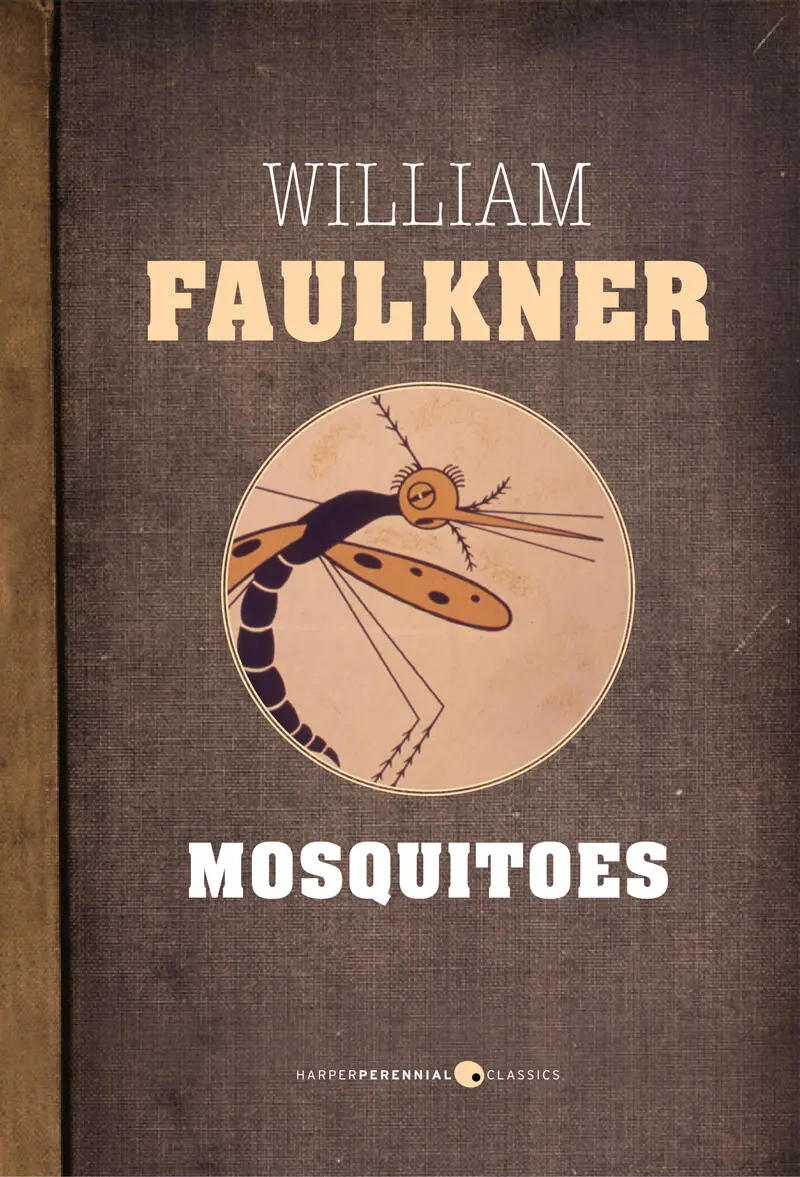
- Название:Mosquitoes
- Автор:
- Издательство:HarperCollins Canada
- Жанр:
- Год:2012
- ISBN:9781443421157
- Рейтинг книги:3 / 5. Голосов: 1
-
Избранное:Добавить в избранное
- Отзывы:
-
Ваша оценка:
Mosquitoes: краткое содержание, описание и аннотация
Предлагаем к чтению аннотацию, описание, краткое содержание или предисловие (зависит от того, что написал сам автор книги «Mosquitoes»). Если вы не нашли необходимую информацию о книге — напишите в комментариях, мы постараемся отыскать её.
explores gender and societal roles, sexual tension, and unrequited love as Faulkner delves into what it means to be an artist.
Faulkner’s second novel,
was first published in 1927, but did not receive any critical response until his literary reputation was well-established.
Mosquitoes — читать онлайн бесплатно полную книгу (весь текст) целиком
Ниже представлен текст книги, разбитый по страницам. Система сохранения места последней прочитанной страницы, позволяет с удобством читать онлайн бесплатно книгу «Mosquitoes», без необходимости каждый раз заново искать на чём Вы остановились. Поставьте закладку, и сможете в любой момент перейти на страницу, на которой закончили чтение.
Интервал:
Закладка:
“If you just talk long enough, you’re bound to say the right thing some day. Is that what you mean?” the Semitic man asked.
“Let me show you what I mean,” Fairchild reached again for the book.
“For heaven’s sake,” the other exclaimed, “let us have this one drink in peace. We’ll admit your contention, if that’s what you want. Isn’t that what you say, Major?”
“No, really,” Major Ayers protested, “I enjoyed the book. Though I rather lost the habit of reading at Sa—”
“I like the book myself,” Mark Frost said. “My only criticism is that it got published.”
“You can’t avoid that,” Fairchild told him. “It’s inevitable; it happens to everyone who will take the risk of writing down a thousand coherent consecutive words.”
“And sooner than that,” the Semitic man added, “if you’ve murdered your husband or won a golf championship.”
“Yes,” Fairchild agreed. “Cold print. Your stuff looks so different in cold print. It lends a kind of impersonal authority even to stupidity.”
“That’s backward,” the other said. “Stupidity lends a kind of impersonal authority even to cold print.”
Fairchild stared at him. “Say, what did you just tell me about contradicting myself?”
“I can afford to,” the other answered. “I never authenticate mine.” He drained his glass. “But as for art and artists, I prefer artists: I don’t even object to paying my pro rata to feed them, so long as I am not compelled to listen to them.”
“It seems to me,” Fairchild rejoined, “that you spend a lot of time listening to them, for a man who professes to dislike it and who don’t have to.”
“That’s because I’d have to listen to somebody — artist or shoe clerk. And the artist is more entertaining because he knows less about what he is trying to do. . And besides, I talk a little, myself. I wonder what became of Gordon?”
FIVE O’CLOCK
Evening came sad as horns among the trees. The road had dropped downward again into the swamp where amid rank, impenetrable jungle dark streams wallowed aimless and obscene, and against the hidden flame of the west huge trees brooded bearded and ancient as prophets out of Genesis. David lay at full length at the roadside. He had lain there a long time, but at last he sat up and looked about for her.
She stood beside a cypress, up to her knees in thick water, her arms crossed against the tree trunk and her face hidden in her arms, utterly motionless. About them, a moist green twilight filled with unseen fire.
“David.” Her voice was muffled by her arms, and after it, there was no sound in this fecund, timeless twilight of trees. He sat beside the road, and presently she spoke again. “It’s a mess, David. I didn’t know it was going to be like this.” He made a harsh, awkward sound, as though it were someone else’s voice he was trying to speak with. “Hush,” she said. “It’s my fault: I got you into this. I’m sorry, David.”
These trees were thicker, huger, more ancient than any yet, amid the brooding twilight of their beards. “What must we do now, David?” After a while she raised her head and looked at him and repeated the question.
He answered slowly, “Whatever you want to do.”
She said, “Come here, David.” And he got slowly to his feet and stepped into the black, thick water and went to her, and for a while she looked at him soberly, without moving. Then she turned from the tree and came nearer and they stood in the foul, black water, embracing. Suddenly she clasped him fiercely. “Can’t you do something about it? Can’t you make it different? Must it be like this?”
“What do you want me to do?” he asked slowly in that voice which was not his. She loosed her arms, and he repeated as though prompted, “You do whatever you want to.”
“I’m damn sorry, David, for getting you into this. Josh is right: I’m just a fool.” She writhed her body beneath her dress, whimpering again. “They hurt me so damn bad,” she moaned.
“We must get out of this,” he said. “You tell me what you want to do.”
“It will be all right, if I do what I think is best?” she asked quickly, staring at him with her grave opaque eyes. “You swear it will?”
“Yes,” he answered with utter weariness. “You do whatever you want to.”
She became at once passive, a submissive docility in his embrace. But he stood holding her loosely, not even looking at her. As abruptly her passiveness faded and she said, “You’re all right, David. I’d like to do something for you. Pay you back, some way.” She looked at him again and found that he was looking at her. “David! why, David! Don’t feel that way about it!” But he continued to look at her with his quiet utter yearning. “David, I’m sorry, sorry, sorry. What can I do about it? Tell me: I’ll do it. Anything, just anything.”
“It’s all right,” he said.
“But it isn’t. I want to make it up to you, some way, for getting you into this.” His head was averted: he seemed to be listening. Then the sound came again across the afternoon, among the patriarchal trees — a faint, fretful sound.
“There’s a boat,” he said. “We are close to the lake.”
“Yes,” she agreed. “I heard it a while ago. I think it’s coming in near here.” She moved, and he released her. She listened again, touch his shoulder lightly. “Yes, it’s coming this way. You’d better take your shirt again. Turn your back, please, David.”
SIX O’CLOCK
“Sure, I know where your boat is, seen her hove to when I come along. In mighty shaller water, too. Ain’t more’n three miles down the lake,” the man told them, setting a galvanized pail of water on the edge of the veranda. His house stood on piles driven into the moist earth at the edge of the jungle. Before it a dark broad stream was seemingly without any movement at all between rigid palisades of trees.
The man stood on the veranda and watched her while she poured dippersful of heavenly water on her head. The water ran through her hair and dripped down her face, sopping her dress, while the man stood and watched her. His blue collarless shirt was fastened at the throat by a brass collar, button, his sweat-stained suspenders drew his faded cotton trousers snugly over his paunch. His loose jowls moved rhythmically and he spat brownly upon the earth at their feet, barely averting his head:
“You folks been wandering around in the swamp all day?” he asked staring at her with his pale, heavy eyes, roving his gaze slowly up her muddy stockings and her stained dress. “What you want to go back fer, now? Feller got enough, huh?” He spat again, and made a heavy sound of disparagement and disgust. “Ain’t no such thing as enough. Git a real man, next time.” He looked at David and asked him a question, using an unprintable verb.
Anger, automatic and despite his weariness, fired him slowly, but she forestalled him. “Let’s get back to the boat, first,” she said, to him. She looked at the man again, meeting his pale heavy stare. “How much?” she asked briskly.
“Five dollars.” He glanced at David again. “In advance.”
David put his hand to his waist. “With my money,” she said quickly, watching him as he dug into his watch pocket and extracted a single bill, neatly folded. “No, no: with mine,” she insisted peremptorily, staying his, hand. “Where’s mine?” she asked, and he drew from his trousers her crumpled mass of notes, and she took it.
The man accepted the bill and spat again. He descended heavily from the porch and led the way down to the water where his launch was moored. They got in and he cast off and thrust the boat away from the shore and bent heavily over the engine. “Yes, sir, that’s the way with these town fellers. No guts. Next time, come over to this side and git you a real man. I kin git off most any day. And I won’t be honing to git home by sundown, neither,” he added, looking back over his shoulder.
Читать дальшеИнтервал:
Закладка:
Похожие книги на «Mosquitoes»
Представляем Вашему вниманию похожие книги на «Mosquitoes» списком для выбора. Мы отобрали схожую по названию и смыслу литературу в надежде предоставить читателям больше вариантов отыскать новые, интересные, ещё непрочитанные произведения.



Обсуждение, отзывы о книге «Mosquitoes» и просто собственные мнения читателей. Оставьте ваши комментарии, напишите, что Вы думаете о произведении, его смысле или главных героях. Укажите что конкретно понравилось, а что нет, и почему Вы так считаете.