William Faulkner - Mosquitoes
Здесь есть возможность читать онлайн «William Faulkner - Mosquitoes» весь текст электронной книги совершенно бесплатно (целиком полную версию без сокращений). В некоторых случаях можно слушать аудио, скачать через торрент в формате fb2 и присутствует краткое содержание. Год выпуска: 2012, ISBN: 2012, Издательство: HarperCollins Canada, Жанр: Классическая проза, на английском языке. Описание произведения, (предисловие) а так же отзывы посетителей доступны на портале библиотеки ЛибКат.
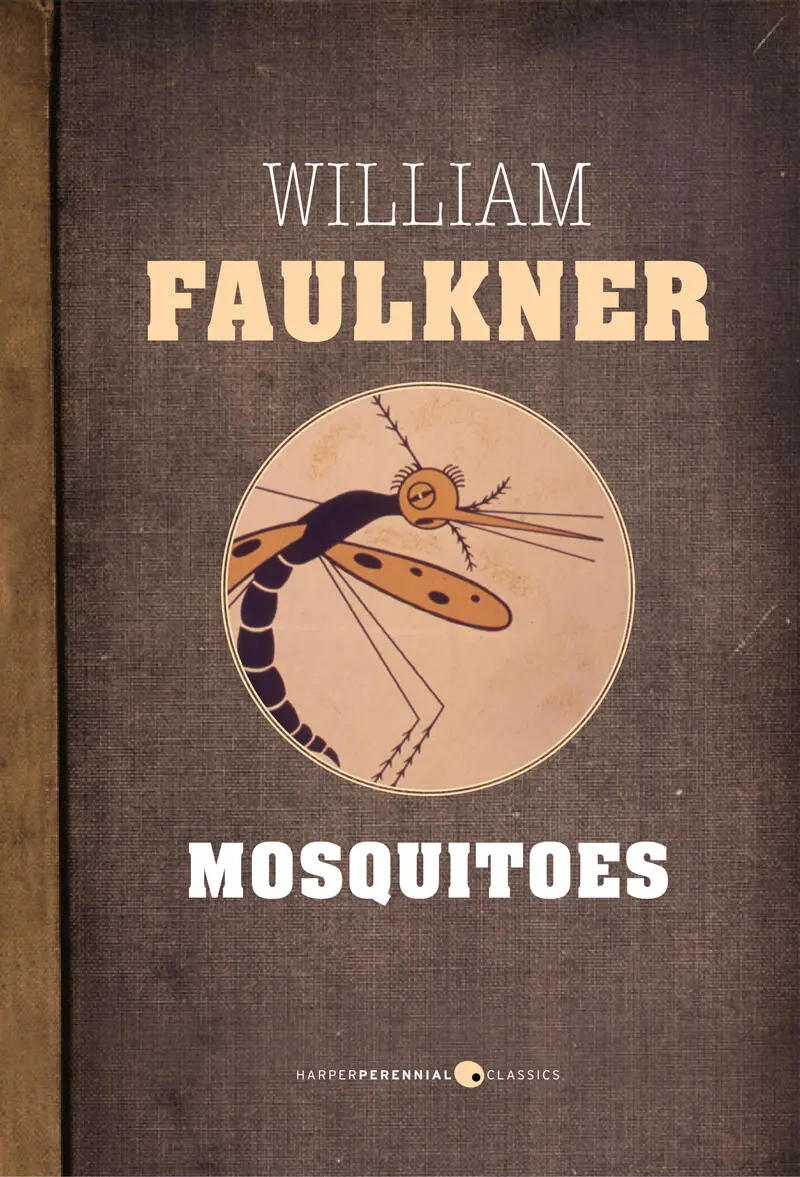
- Название:Mosquitoes
- Автор:
- Издательство:HarperCollins Canada
- Жанр:
- Год:2012
- ISBN:9781443421157
- Рейтинг книги:3 / 5. Голосов: 1
-
Избранное:Добавить в избранное
- Отзывы:
-
Ваша оценка:
Mosquitoes: краткое содержание, описание и аннотация
Предлагаем к чтению аннотацию, описание, краткое содержание или предисловие (зависит от того, что написал сам автор книги «Mosquitoes»). Если вы не нашли необходимую информацию о книге — напишите в комментариях, мы постараемся отыскать её.
explores gender and societal roles, sexual tension, and unrequited love as Faulkner delves into what it means to be an artist.
Faulkner’s second novel,
was first published in 1927, but did not receive any critical response until his literary reputation was well-established.
Mosquitoes — читать онлайн бесплатно полную книгу (весь текст) целиком
Ниже представлен текст книги, разбитый по страницам. Система сохранения места последней прочитанной страницы, позволяет с удобством читать онлайн бесплатно книгу «Mosquitoes», без необходимости каждый раз заново искать на чём Вы остановились. Поставьте закладку, и сможете в любой момент перейти на страницу, на которой закончили чтение.
Интервал:
Закладка:
“Shut your mouth,” she told him sharply. “Make him shut up, David.” The man paused, staring at her with his pale sleepy eyes.
“Now, look-a-here,” he began heavily.
“Shut up and start your flivver,” she repeated. “You’ve got your money, so let’s go if we are going.”
“Well, that’s all right, too. I like ’em to have a little git-up-and-git to ’em.” He stared at her with his lazy drooping eyes, chewing rhythmically, then he called her a name.
David rose from his seat, but she restrained him with one hand and she cursed the man fluently ‘and glibly. “Now get started,” she finished. “If he opens his head again, David, just knock him right out of the boat.”
The man snarled his yellow teeth at them, then he bent again over the engine. Its fretful clamor rose soon and the boat slid away circling, cutting the black motionless water. Ahead, soon, there was a glint of space beyond the trees, a glint of water; and soon they had passed froni the bronze nave of the river onto the lake beneath the rushing soundless wings of sunset and a dying glory of day under the cooling brass bowl of the sky.
* * *
The Nausikaa was more like a rosy gull than ever in the sunset, squatting sedately upon the darkening indigo of the water, against the black metallic trees. The man shut off his fussy engine and the launch slid up alongside and the man caught the rail and held his boat stationary, watching her muddy legs as she climbed aboard the yacht.
No one was in sight. They stood at the rail and looked downward upon his thick backside while he spun the flywheel again. The engine caught at last and the launch circled away from the yacht and headed again into the sunset while the fussy engine desecrated the calm of water and sky and trees. Soon the boat was only a speck in the fading path of the sunset.
“David?” she said, when it had gone. She turned and put her firm tanned hand on his breast, and he turned his head also and looked at her with his beastlike longing.
“It’s all right,” he said after a time. She put her arms around him again, sexless and hard, drawing his cheek down to her sober moist kiss. This time he didn’t move his head.
“I’m sorry, David.”
“It’s all right,” he repeated. She laid her hands flat on his chest and he released her. For a time they gazed at each other. Then she left him and crossed the deck and descended the companionway without looking back, and so left him and the evening from which the sun had gone suddenly and into which night was as suddenly come, and across which the fretful thin sound of the launch came yet faintly along the dreaming water, beneath the tarnished sky where stars were already pricking Iike a hushed magical blooming of flowers.
* * *
She found the others at dinner in the saloon, since what breeze there was was still offshore and the saloon was screened. They greeted her with various surprise, but she ignored them and her aunt’s round suffused face, going haughtily to her place.
“Patricia,” Mrs. Maurier said at last, “where have you been?”
“Walking,” the niece snapped. In her hand she carried a small crumpled mass and she put this on the table, separating the notes and smoothing them into three flat sheaves.
“Patricia,” said Mrs. Maurier again.
“I owe you six dollars,” she told Miss Jameson, putting one of the sheaves beside her plate. “You only had a dollar,” she informed Mrs. Wiseman, passing a single note across the table to her. “I’ll pay you the rest of yours when we get home,” she told her aunt, reaching across Mr. Talliaferro’s shoulder with the third sheaf. She met her aunt’s apoplectic face again. “I brought your steward back, too. So you haven’t got anything to kick about.”
“Patricia,” Mrs. Maurier said. She said, chokingly, “Mr. Gordon, didn’t he come back with you?”
“He wasn’t with me. What would I want to take him along for? I already had one man.”
Mrs. Maurier’s face became dreadful, and as the blood died swooning in her heart she had again that brief vision of floating inert buttocks, later to wash ashore with that inopportune and terrible implacability of the drowned. “Patricia,” she said dreadfully.
“Oh, haul in your sheet,” the niece interrupted wearily. “You’re jibbing. Gosh, I’m hungry.” She sat down and met her brother’s cold gaze. “And you too, Josh,” she added, taking a piece of bread.
The nephew glanced briefly at his aunt’s wrung face. “You ought to beat hell out of her,” he said calmly, going on with his dinner.
NINE O’CLOCK
“But I saw him about four o’clock,” Fairchild argued. “He was in the boat with us. Didn’t you see him, Major? but that’s so: you were not with us. You saw him, Mark, didn’t you?”
“He was in the boat when we started. I remember that. But I don’t remember seeing him after Ernest fell out.”
“Well, I do. I know I saw him on deck right after we got back. But I can’t remember seeing him in the boat after Jenny and Talliaferro — Ah, he’s all right, though. He’ll show up soon. He ain’t the sort to get drowned.”
“Don’t be too sure of that,” Major Ayers said. “There are no women missing, you know.”
Fairchild laughed his burly appreciative laugh. Then he met Major Ayers’s glassy solemn stare, and ceased. Then he laughed once more, somewhat after the manner of one feeling his way into a dark room, and ceased again, turning on Major Ayers his trustful baffled expression. Major Ayers said:
“This place to which these young people went today”—“Mandeville,” the Semitic man supplied—“what sort of a place is it?” They told him. “Ah, yes. They have facilities for that sort of thing, eh?”
“Well, not more than usual,” the Semitic man answered, and Fairchild said, still watching Major Ayers with a sort of cautious baffiement:
“Not any more than you can carry along with you. We Americans always carry our own facilities with us. It’s living high tension go-getting lives like we do in this country, you see.”
Major Ayers glared at him politely. “Somewhat like the Continent,” he suggested after a time.
“Not exactly,” the Semitic man said. “In America you often find an H in caste.” Fairchild and Major Ayers stared at the Semitic man.
“As well as a cast in chaste,” Mark Frost put in. Fairchild and Major Ayers now stared at him, watching him while he lit a fresh cigarette from the stub of his present one, and left his chair and went to lie at full length on the deck.
“Why not?” the Semitic man took him up. “Love itself is stone blind.”
“It has to be,” Mark Frost answered. Major Ayers stared from one to the other for a while. He said:
“This Mandeville, now. It is a convention, eh? A local convention?”
“Convention?” Fairchild repeated,
“I mean, like our Gretna Green. You ask a lady there, and immediately there is an understanding: saves unnecessary explanations and all that.”
“I thought Gretna Green was a place where they used to go to get marriage licenses in a hurry,” Fairchild said suspiciously.
“It was, once,” Major Ayers agreed. “But during the Great Fire all the registrars’ and parsons’ homes were destroyed. And in those days communication was so poor that word didn’t get about until a fortnight or so later. In the meantime quite a few young people had gone there in all sincerity, you know, and were forced to return the next day without benefit of clergy. Of course the young ladies durst not tell until matters were remedied, which, during those unsettled times, might be any time up to a month or so. But by that time, of course, the police had heard of it — London police always hear of things in time, you know.”
Читать дальшеИнтервал:
Закладка:
Похожие книги на «Mosquitoes»
Представляем Вашему вниманию похожие книги на «Mosquitoes» списком для выбора. Мы отобрали схожую по названию и смыслу литературу в надежде предоставить читателям больше вариантов отыскать новые, интересные, ещё непрочитанные произведения.




Обсуждение, отзывы о книге «Mosquitoes» и просто собственные мнения читателей. Оставьте ваши комментарии, напишите, что Вы думаете о произведении, его смысле или главных героях. Укажите что конкретно понравилось, а что нет, и почему Вы так считаете.