Marina Cramer - Roads
Здесь есть возможность читать онлайн «Marina Cramer - Roads» весь текст электронной книги совершенно бесплатно (целиком полную версию без сокращений). В некоторых случаях можно слушать аудио, скачать через торрент в формате fb2 и присутствует краткое содержание. Город: Chicago, Год выпуска: 2017, ISBN: 2017, Издательство: Academy Chicago Publishers, Жанр: Историческая проза, на английском языке. Описание произведения, (предисловие) а так же отзывы посетителей доступны на портале библиотеки ЛибКат.
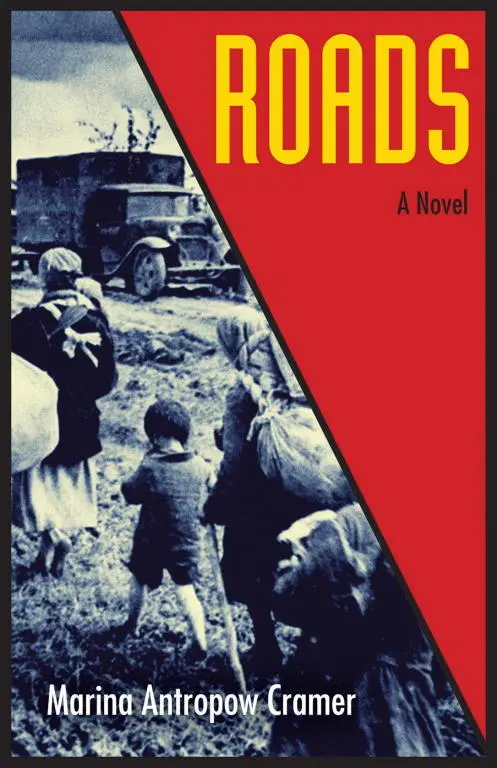
- Название:Roads
- Автор:
- Издательство:Academy Chicago Publishers
- Жанр:
- Год:2017
- Город:Chicago
- ISBN:978-1-61373-558-9
- Рейтинг книги:5 / 5. Голосов: 1
-
Избранное:Добавить в избранное
- Отзывы:
-
Ваша оценка:
Roads: краткое содержание, описание и аннотация
Предлагаем к чтению аннотацию, описание, краткое содержание или предисловие (зависит от того, что написал сам автор книги «Roads»). Если вы не нашли необходимую информацию о книге — напишите в комментариях, мы постараемся отыскать её.
By winter 1945, Allied air raids destroy strategic sites; Dresden, a city of no military consequence, seems safe. The world knows Dresden’s fate.
Roads
Roads — читать онлайн бесплатно полную книгу (весь текст) целиком
Ниже представлен текст книги, разбитый по страницам. Система сохранения места последней прочитанной страницы, позволяет с удобством читать онлайн бесплатно книгу «Roads», без необходимости каждый раз заново искать на чём Вы остановились. Поставьте закладку, и сможете в любой момент перейти на страницу, на которой закончили чтение.
Интервал:
Закладка:
They paid him with anything they had: cigarettes, crackers, Hershey bars, a few German coins, stamps from the letters every soldier carried in his breast pocket. He accepted everything and kept working, turning out pin after pin, learning the unfamiliar names. Nancy. Evelyn. Rosemary. Molly. Edith.
He worked carefully, without haste, twisting the wire into a fluid rendition of each name. Sometimes Filip sat nearby, watching. Not helping; he had neither the skill nor the inclination. He considered his father-in-law’s craft to be not much better than a parlor trick, like those bazaar artists who will sketch your likeness for a few pennies, making you look just like anyone else. He liked the chocolate, though, and cherished the American stamps that came his way.
The day Filip saw Sergeant Evans standing at Ilya’s table, he leaned the broom he’d been using to sweep the yard against the barracks wall and sauntered over. He sat down on an upturned crate and muttered, “This has to be the cleanest piece of ground in all Germany.”
“We’ll have work for you soon,” Evans said curtly, nodding at the broom. “The road needs repair, and there’s cleanup building projects in the area.” He spoke in a curious blend of languages, German and English words tripping over each other. “Lots of work. Just waiting for orders.” He turned to Ilya. “Can you do Priscilla?”
“Write it for me.” Ilya slid a notepad and pencil across the table.
“And Gary. Do Gary, too.”
“Pri… sci… lla.” Ilya studied the name, sounding out the letters. “Your wife?”
“My little girl, not quite two years old.” He took a photograph from his wallet. A plump, sweet-faced toddler clutching a stuffed rabbit gazed at them with wide, serious eyes. “She doesn’t know her daddy yet. And Gary.” He pointed to himself. “That’s me.”
When the pins were done, Evans rewarded Ilya with a small coil of fine-gauge copper wire. “Better than money,” Ilya said. “Thank you.”
“I have a little girl, too.” The German words fell from Filip’s mouth almost before he thought them.
“Where? Near here?” Evans held the name pins in his hand, rubbing his thumb gently over the graceful letters.
“I don’t know. We were taken away before she was born.”
“So how do you know?”
“Men who arrived after us said one of their wives had seen her at the hospital,” Ilya put in.
“The grapevine,” Evans muttered in English, pocketing his pins.
“Pardon?” Filip threw Ilya an annoyed glare. Why did he always have to interfere?
“Grapevine,” Evans repeated. Then in broken German, “Gossip telegraph. Never mind. Come to me in the morning; I’ll find you some work.”
When Evans had gone, Filip turned on Ilya. “Why couldn’t you stay out of it? Why tell them how we know? It doesn’t concern you.” He felt the foolishness of his words at once, but the damage was done.
“The birth of my first grandchild and the welfare of the two people who mean more to me than anyone in the world? Could anything concern me more?” Ilya gathered up his files and pliers and placed them into his toolbox. “These people are not the enemy. Maybe they can help us.” He closed the lid, secured the latch, and walked off with the box under his arm.
“Not while we’re cooped up here!” Filip shot back.
He found a quiet shady spot behind one of the barracks. A little way off, some of the men were playing a game, kicking a ball around. A ball—a bundle of rags wrapped around a handful of stones; he had watched them fashion the thing last night, with much joking, intent on their project as if making a Christmas present for a child. A child , he thought, the image faceless, silent, vague. My child.
He lowered himself to his haunches, back against the sun-warmed wall, and rolled a cigarette. His eye caught a movement in the newly grown grass. Three fledgling birds hopped around, pecking at the ground, their movements swift but jerky, as if unpracticed. They were tiny, with the familiar markings of the breed, miniature copies of the full-grown sparrows they would soon be, but with the endearingly disheveled look of all animal young. His memory brought up the image of the baby elephant in Dresden, the spiky tuft on its smooth head, the little trunk flailing in the air. Galina’s hand extended, unable to reach it, the chagrin on her face. He shook his head, as if to clear his mind. When he looked again, the birds were gone.
The next day, he was assigned to a new work detail: finishing the barn for use as an infirmary. And he met Anneliese.
4
FILIP DID NOT KNOW how long she’d been standing just inside the doorway, watching him and two other men unload portable cots from the truck. She was pretty, with short reddish hair and laughing eyes. She wore men’s trousers and a shirt that had once been red, the rolled-up sleeves revealing firm, lightly freckled arms. Older than his own twenty years, he was sure, but possessed of a radiance that made it all but impossible to guess her age.
“Oh.” He nearly dropped the cots he was carrying, one under each arm.
“ Guten Tag ,” she addressed him in German. “I am looking for the sergeant?” He had heard it before, the lilt that seemed to make a question out of every utterance, but never before had it struck him as charming.
“He is… somewhere. I’ll find him for you,” he offered, but made no move to leave.
“Wait—you are German, nicht wahr ? Isn’t that so?”
“No, Russian.” He stopped, flustered, forgetting he was passing for Yugoslav these days, but still wore the German clothes. “The uniform. I can explain. But it’s a long story.”
“Everybody has a story. Everybody who is still alive.” She looked grave for a moment, then lit up with a brilliant smile. “This will be a hospital, yes? With sheets?”
“Yes, with sheets. I mean, I think so.” Americans have everything , he thought. Why not sheets?
“So. I live in the town. I can wash the sheets, and other things. Shirts, other things. My sister helps me.”
“Stay right there.” Filip put down the cots and ran out into the compound. “I’ll get Sergeant Evans.”
He had only seen a woman in trousers in the movies, or on the patriotic posters showing farm and factory workers toiling cheerfully for the good of the people. Anneliese didn’t look like them; she had neither the self-conscious smugness of the workers nor the slick risqué elegance of the movie stars. She simply looked comfortable.
She came twice a week, exchanged clean linens for soiled ones, and picked up shirts and underwear from her growing list of laundry clients. Everybody liked her—the easy manner that stopped just short of flirting, the careful way she delivered each man’s bundle, tied with string and marked with his initials.
Her clients were all Americans. None of the refugees could afford the luxury, nor did they have much to wash. When she came, breezing past the sentry at the gate with a friendly greeting, they would stop to watch her lean her bicycle against the fence, hoist the basket onto her shoulder, and make her way to the building where the officers were housed.
Filip was sweeping out one of the empty barracks that the American wounded had occupied while the infirmary was being prepared. Someone was whistling. He stopped and listened; it was definitely a Mozart tune. Don Giovanni ? He couldn’t be sure of the opera, but in his head, he could almost hear the words. His mother would know the lyrics, fill in the story, nodding her head in time to the music, the crochet hook moving swiftly through the work in her hands.
He started sweeping again. The whistling came closer, and Anneliese stepped in, setting her empty basket down on the nearest bunk. “I come for the sheets. Where are the sick ones?”
Читать дальшеИнтервал:
Закладка:
Похожие книги на «Roads»
Представляем Вашему вниманию похожие книги на «Roads» списком для выбора. Мы отобрали схожую по названию и смыслу литературу в надежде предоставить читателям больше вариантов отыскать новые, интересные, ещё непрочитанные произведения.











Обсуждение, отзывы о книге «Roads» и просто собственные мнения читателей. Оставьте ваши комментарии, напишите, что Вы думаете о произведении, его смысле или главных героях. Укажите что конкретно понравилось, а что нет, и почему Вы так считаете.