Marina Cramer - Roads
Здесь есть возможность читать онлайн «Marina Cramer - Roads» весь текст электронной книги совершенно бесплатно (целиком полную версию без сокращений). В некоторых случаях можно слушать аудио, скачать через торрент в формате fb2 и присутствует краткое содержание. Город: Chicago, Год выпуска: 2017, ISBN: 2017, Издательство: Academy Chicago Publishers, Жанр: Историческая проза, на английском языке. Описание произведения, (предисловие) а так же отзывы посетителей доступны на портале библиотеки ЛибКат.
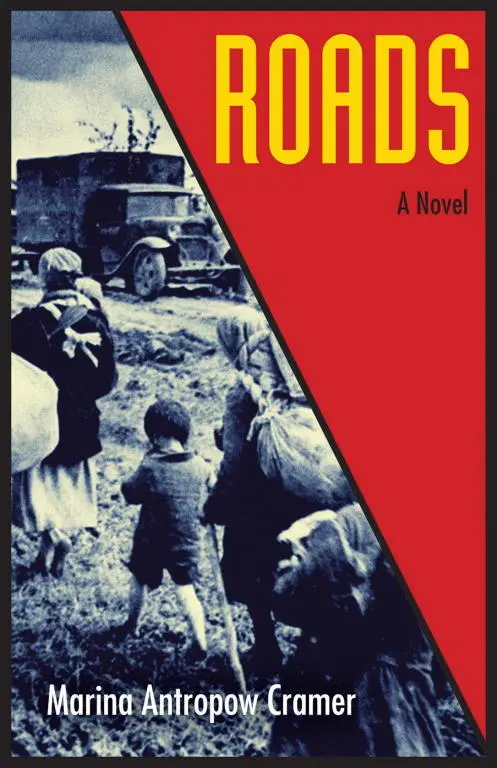
- Название:Roads
- Автор:
- Издательство:Academy Chicago Publishers
- Жанр:
- Год:2017
- Город:Chicago
- ISBN:978-1-61373-558-9
- Рейтинг книги:5 / 5. Голосов: 1
-
Избранное:Добавить в избранное
- Отзывы:
-
Ваша оценка:
Roads: краткое содержание, описание и аннотация
Предлагаем к чтению аннотацию, описание, краткое содержание или предисловие (зависит от того, что написал сам автор книги «Roads»). Если вы не нашли необходимую информацию о книге — напишите в комментариях, мы постараемся отыскать её.
By winter 1945, Allied air raids destroy strategic sites; Dresden, a city of no military consequence, seems safe. The world knows Dresden’s fate.
Roads
Roads — читать онлайн бесплатно полную книгу (весь текст) целиком
Ниже представлен текст книги, разбитый по страницам. Система сохранения места последней прочитанной страницы, позволяет с удобством читать онлайн бесплатно книгу «Roads», без необходимости каждый раз заново искать на чём Вы остановились. Поставьте закладку, и сможете в любой момент перейти на страницу, на которой закончили чтение.
Интервал:
Закладка:
Filip couldn’t imagine where that might be. If Stalin had succeeded in driving the Fascists from Soviet soil, it seemed absurd to fight the Reds in Germany. What if they were captured? Were these old men so deluded by, whatever, idealism or nostalgia, that they couldn’t see the only possible outcome? There would be no trial, no repatriation or gulag sentence. He could see them now, each stripped of any usable clothing, lined up to receive a bullet in the head. Field justice.
He was seized with panic. If the Germans had lost—and why else would they abandon the camp?—then the Reds could be anywhere, drunk with victory and eager to exact revenge on those who had attacked their homeland. “We’re sitting ducks here,” he said. “Don’t you see? We have no weapons, no food, no supplies. Not even a radio. Count me out.” His fingers gripped the edge of the ROA patch, ready to rip it off his sleeve.
“Wait!” Ilya held Filip’s wrist. “Grisha sent some men out to get news. We owe him that much.”
“We owe him nothing. Or I don’t, anyway.” Filip was suddenly aware of everything that irritated him about his father-in-law: the calm benevolence, the senseless piety, the infuriating patience of the man, even the careful way he crafted his useless decorative pieces. “You do what you want.”
“Filip. Wait. We have to stay together, you and I. How else can we hope to find my Ksenia and Galya? Your wife and newborn child?” Ilya dropped his hands to his sides and looked at the younger man with a pleading expression of such reasonableness it made Filip’s blood boil.
“Fifty men. Fifty men armed with slingshots will liberate the Soviet Union. Bah! You’re all crazy.” Filip turned with a dismissive wave of the hand and headed toward the barracks, the offending patch hanging from his sleeve by a few loose threads.
And then they heard the trucks.
3
THEY DROVE IN SLOWLY, as if on parade—four open trucks overflowing with American soldiers, waving and cheering like big unruly children. These were followed by a half dozen covered vehicles holding wounded men in various stages of recuperation.
“The war is over. Hitler is dead,” the fair-haired sergeant told the assembled inmates, his words rendered into heavily accented but adequate Russian by a soldier Filip’s age.
“What’s that I hear, Grisha? That sound…,” Filip, standing a few feet behind, asked in a voice loud enough to carry over the murmuring crowd.
Grisha gave his head a quarter turn, as if listening. “What sound?”
“The sound of a door slamming. The door to our home. Every man here wearing this damn patch can hear it clearly.” He tore the loose ROA insignia off his sleeve and jammed it into his pocket.
The sergeant held up a hand for silence. “All right. You are to stay in this camp as DPs while we process your documents. Your status is ‘stateless’ unless you have valid papers to the contrary, in which case you will be repatriated as soon as we receive the go-ahead.” He scanned the hollow-cheeked faces, unshaven and sallow and mostly expressionless, though some registered anxiety, and some relief. “The processing will begin at once, followed by a visit to Corporal Dominick Macaluso, also known as Nick the Barber. You’ll report to your assigned work detail in the morning. That’s all.”
Two men brought the kitchen table outside. The sergeant himself did the questioning, filling out the forms in large rounded letters that looked fresh and innocent after the precisely etched German script they had become used to.
Processing was rapid; the registration line snaked around the yard but moved at a good pace, the sergeant assisted by an enlisted man who knew a little Russian. Name, age, place of birth, occupation. Luggage search for hidden weapons or contraband. Barrack assignment, work detail.
“Tell them Yugoslavia,” Ilya, standing behind his son-in-law, whispered in his ear.
“What? Why?” Filip protested.
“I’ll explain later.”
That left Filip in a quandary. If the old man was right about the need to conceal their true origins, how could he, Filip, claim to be an interpreter with knowledge of German and Russian? On the other hand, why would they need one? He knew as much English as he did Serbian—none at all.
“Occupation?”
Filip hesitated. Student? Ridiculous. Interpreter? Too risky. Carpenter? Patently untrue. Then he remembered stringing lights at the amateur theater, splicing brittle wires together, which, with a little instinct and a lot of luck, had lit the stage for their plays. “Electrician,” he said bravely, hoping his poor skills would not be tested.
“Place of birth?”
“Yugoslavia.” The sergeant kept writing.
“What city?”
“Belgrade. But I’ve been in school in Germany for several years,” he added.
“Papers?”
“Lost in the fire, in Dresden.”
“Huh. Right. Stateless. Barrack three. Be ready for work in the morning.”
Stepping aside, Filip heard Ilya say, “Yugoslavia.”
The man looked up. “Another one. How do you say bread?”
“ Pogacha ,” Ilya replied, to Filip’s surprise.
“Occupation?”
“Craftsman.”
“That’s not an occupation. What work can you do?”
“I can make beautiful things out of simple materials,” Ilya protested, “with my tools.” He pointed to his toolbox, which lay open on the table between them.
“Lovely. We’ve been looking for someone like you, no doubt. In the meantime, you can push a broom and empty bedpans in the infirmary.” He snapped the lid shut and slid the box toward its owner. “Stateless. Barrack three.”
A dozen men were sent to clean out the barn. The rest were put to work making a barbed-wire enclosure in one corner of the camp, with a shallow ditch at one end.
“I wonder if they’re bringing in animals. Cows or sheep. Maybe dogs?” Filip speculated, wrapping rags around his bleeding fingers. “Damn, this hurts.”
“Then why use barbed wire? And why the ditch? Animals would fall in, break a leg. And there’s no roof, no shelter from the weather,” another man replied. “Here, hold this end steady while I fix the door.” The “door” was a flap of the same merciless material, hinged to the enclosure with loops of heavy wire. “That should do it,” the man said, giving each loop one last twist with his pliers. “Isn’t that your father? What’s he doing?”
“He’s not my father.” They stood a moment and watched Ilya walk around the enclosure, his eyes fixed on the ground.
“What treasure are you finding there, Ilya Nikolaevich?” the man called out.
Ilya stooped to pick something up. “Treasure it is, boys. Treasure it is.” Smiling, he showed them several scraps of wire, each no more than a few centimeters, glinting in the palm of his hand.
Filip walked away, heading for the farmhouse headquarters to report the job finished. The old man’s losing his wits , he thought. What now?
Nothing much happened in the next few days. Some lumber appeared—used boards with rusted nails and peeling paint, and each barracks’ occupants were permitted to build a table and benches. Grisha organized a morning exercise routine. Participation was voluntary, but most men came. There wasn’t much else to do.
“Reminds me of home,” one of the men said while waiting his turn to wash at the rain barrel outside the kitchen door. “Doing exercises to the radio before breakfast.”
“Reminds me of school,” Filip answered. “And the Pioneers. Keep your body clean and strong for your country.” At least it’s not combat training , he thought. I’ve had enough of those games.
Ilya spent his free time at the newly built table, pounding his wire scraps with a little mallet from his toolbox. He was cordial with anyone who came by to watch, whether fellow detainee or American soldier, keeping up a steady pace, ignoring their amused expressions. Under his single-minded efforts, the wire bits grew longer and thinner and more pliable. He twisted them together end to end with infinite care, in nearly invisible joins. Soon he was ready for business.
Читать дальшеИнтервал:
Закладка:
Похожие книги на «Roads»
Представляем Вашему вниманию похожие книги на «Roads» списком для выбора. Мы отобрали схожую по названию и смыслу литературу в надежде предоставить читателям больше вариантов отыскать новые, интересные, ещё непрочитанные произведения.









Обсуждение, отзывы о книге «Roads» и просто собственные мнения читателей. Оставьте ваши комментарии, напишите, что Вы думаете о произведении, его смысле или главных героях. Укажите что конкретно понравилось, а что нет, и почему Вы так считаете.