Marina Cramer - Roads
Здесь есть возможность читать онлайн «Marina Cramer - Roads» весь текст электронной книги совершенно бесплатно (целиком полную версию без сокращений). В некоторых случаях можно слушать аудио, скачать через торрент в формате fb2 и присутствует краткое содержание. Город: Chicago, Год выпуска: 2017, ISBN: 2017, Издательство: Academy Chicago Publishers, Жанр: Историческая проза, на английском языке. Описание произведения, (предисловие) а так же отзывы посетителей доступны на портале библиотеки ЛибКат.
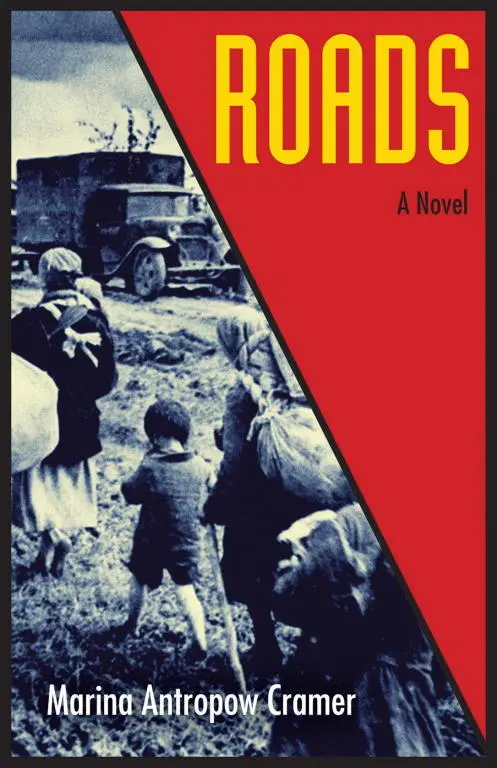
- Название:Roads
- Автор:
- Издательство:Academy Chicago Publishers
- Жанр:
- Год:2017
- Город:Chicago
- ISBN:978-1-61373-558-9
- Рейтинг книги:5 / 5. Голосов: 1
-
Избранное:Добавить в избранное
- Отзывы:
-
Ваша оценка:
Roads: краткое содержание, описание и аннотация
Предлагаем к чтению аннотацию, описание, краткое содержание или предисловие (зависит от того, что написал сам автор книги «Roads»). Если вы не нашли необходимую информацию о книге — напишите в комментариях, мы постараемся отыскать её.
By winter 1945, Allied air raids destroy strategic sites; Dresden, a city of no military consequence, seems safe. The world knows Dresden’s fate.
Roads
Roads — читать онлайн бесплатно полную книгу (весь текст) целиком
Ниже представлен текст книги, разбитый по страницам. Система сохранения места последней прочитанной страницы, позволяет с удобством читать онлайн бесплатно книгу «Roads», без необходимости каждый раз заново искать на чём Вы остановились. Поставьте закладку, и сможете в любой момент перейти на страницу, на которой закончили чтение.
Интервал:
Закладка:
“We moved them to the infirmary yesterday.”
“ Ach , ja .” She picked up her basket and turned to go.
“That song you were whistling—Mozart, yes? What is it called?”
“The song? Oh, I wouldn’t know. My father played the violin. Some of the tunes stay in my head. So.”
“My mother has many opera records,” he said, suddenly desperate to keep Anneliese from leaving. “She plays them all the time. Not here. Home, in Russia. Yalta.” He forced himself to stop babbling, overcome with sadness and yearning, but for what, exactly, he could not say.
“You are a sweet boy.” Anneliese laid a hand on his cheek. He covered it with his own, then embraced her. The broom clattered to the ground. He closed his eyes, his senses filled with the bittersweet aroma of her hair.
She pulled away, looking wistful. With the slightest possible touch of one finger, she stroked the thin brass band on his right hand. “And married?”
“Yes.” His voice caught in his throat. “Yes. Married.”
Sergeant Evans gave Grisha permission to use one of the empty barracks as a common room, where the men could gather to talk and eat their meals, smoke, and play cards. They were sometimes joined by off-duty soldiers whose naive friendliness enlivened the gatherings with their poor command of European languages and their infectious laughter.
Someone had etched a rough checkerboard into the tabletop, using a pocket knife to scratch in the lines and charcoal to color the dark squares; acorn caps and pebbles made good playing pieces. Soon a tournament was under way, Grisha keeping track as man after man sat down at the board to vie for the championship. For the winner, Ilya fashioned a wire pin to wear until defeated by a cleverer, or luckier, opponent.
They spent the better part of an hour, one evening, deciding what the pin should look like. A lily—too French; a star—too provocative; a rose—too complicated. “Make it a daisy,” someone suggested. “Simple, and not political.” And so it was; everyone in the camp could recognize the reigning checkers champion by the innocent wire flower pinned to his collar.
Some afternoons, Anneliese would join them. She would stand, the basket of soiled laundry balanced on her hip, and watch the men play, her expression attentive and amused. Eventually, they convinced her to try her hand. “We need a new challenger! By now, we all know each other’s tricks.”
“I have not played since I was a girl,” she protested. “When my brothers were still at home.”
She proceeded to beat Grisha, the current champion, in a game that started slowly, then picked up speed, rushing to its merciless conclusion in record time. “When I play against my brothers,” Anneliese confessed with a wicked smile, “I always win.”
Watching Grisha pin the daisy to Anneliese’s shirt, then stoop to kiss her ceremonially on both cheeks, Filip felt distinctly uneasy. Why did it bother him to see Grisha’s big hands on her shoulders, holding her while his lips grazed her face? A German woman who does the laundry. She is nothing to me. Nothing more than a passing friendship.
Filip did not join in the games. Like the others, he did his assigned work. He amused himself by sketching in a notebook Anneliese had bought for him at his request—buildings, mostly. He strained to remember details he had seen, roofs and cornices, the contours of windows, arches, and doorways. He drew imaginary interiors, drafting elaborate floor plans with staircases, adding balconies, terraces, gardens landscaped with trees and shrubs. He knew they were crude, these dream-house drawings of his untutored hand, and showed them to no one.
The decision to have Anneliese keep the daisy pin was unanimous. “A memento of our time together here. May our nations always be friends,” Grisha, carried away into flights of rhetoric, intoned.
She pressed her lips together as if considering her reply, then raised her chin and spoke clearly. “How can our nations be friends when your Red Army comrades are behaving like animals? They hurt our women, humiliate our men. This cage you made”—she pointed in the direction of the empty barbed-wire enclosure—“is it not for German prisoners? We have lost the war, but we still have our pride.” She unpinned the daisy and laid it on the table, next to the checkerboard. “I, Anneliese, can be a friend to you. But not on behalf of my country.”
After this, the men continued to play, but much of the joy, the childish enthusiasm, went out of their games.
Assigned to clean out the shelves of the farmhouse cellar, Filip discovered a box of chess pieces the Germans had left behind. He was tempted to hide them away, keep them for himself, but thought better of it and showed Evans his find.
“Keep it.” The American waved him away. “I’m pretty sure our boys won’t know what to do with it.”
Using a discarded cupboard door and some scrap wood, Filip hammered together a table small enough to carry easily into the yard, away from the noisy checker players. He drew another board, replaced three missing pawns with white stones and the black queen with a spent shell casing. He found a few willing partners among the detainees, but playing chess required concentration and more time than any of them were willing to spare. Often, he sat at the table alone, trying to remember the classic openings and strategies outlined in the chess books he had left behind in Dresden.
Anneliese came up behind him one such early evening. “My father played this game with his friends,” she said, setting her basket on the ground. “I did not know you could do it by yourself.”
Filip looked up, surprised but not displeased at the interruption. “You can’t, unless you can think like two people.” The sun, low in the sky, outlined her form so that he could not see her face. “I wish Borya was here.”
Anneliese sat down, placed her elbows on the table. “So. Show me how to play.”
The ache in his ear came on gradually, like a woodwind note in a Beethoven symphony, picked up and repeated by the other sections, building to an insistent crescendo that thrummed and crashed, filling his head with pain. Filip stumbled into the infirmary, where the medic was finishing the paperwork for the most recent batch of wounded Americans patched up well enough to be sent home.
“Help me,” Filip said through gritted teeth. “My ear…”
The medic examined him. “I have no glycerin for the ear, but I can give you some aspirin to knock this fever down. You may as well lie down.” He waved at the empty room. “Plenty of beds.”
Filip understood the gesture, if not the words. He unlaced his boots and collapsed on the nearest cot. “Thank you,” he said, enunciating the English syllables with care. “Thank. You.”
The fever came down a bit, then shot back up within the hour when the aspirin wore off. “Buck up, man,” the medic said. “I’ve got no more morphine until supplies come in. You’ll be all right.”
Filip understood only no morphine and moaned, surrendering to the fresh waves of agony inside his head. Through the hot red haze of fever and pain, he thought he saw Anneliese talking to the medic. Then she was gone.
He didn’t know how long he tossed on the narrow cot; shaking his head was worse, so he tried to lie still, the room spinning behind his burning eyes. Someone was turning him onto his side; something cool dripped into his inflamed ear, and suddenly the pain receded. Not gone, no, but reduced to a dull, throbbing pattern, like timpani winding down for the concert finale, the kettle drums still reverberating but softer now, ever softer.
Anneliese sat next to the bed, arms folded in her lap. When she saw his eyes open, she smiled. “Better? Good. I put a little cooking oil in; it helps with the pain until the infection passes. My grandmother taught me.”
Читать дальшеИнтервал:
Закладка:
Похожие книги на «Roads»
Представляем Вашему вниманию похожие книги на «Roads» списком для выбора. Мы отобрали схожую по названию и смыслу литературу в надежде предоставить читателям больше вариантов отыскать новые, интересные, ещё непрочитанные произведения.









Обсуждение, отзывы о книге «Roads» и просто собственные мнения читателей. Оставьте ваши комментарии, напишите, что Вы думаете о произведении, его смысле или главных героях. Укажите что конкретно понравилось, а что нет, и почему Вы так считаете.