Marina Cramer - Roads
Здесь есть возможность читать онлайн «Marina Cramer - Roads» весь текст электронной книги совершенно бесплатно (целиком полную версию без сокращений). В некоторых случаях можно слушать аудио, скачать через торрент в формате fb2 и присутствует краткое содержание. Город: Chicago, Год выпуска: 2017, ISBN: 2017, Издательство: Academy Chicago Publishers, Жанр: Историческая проза, на английском языке. Описание произведения, (предисловие) а так же отзывы посетителей доступны на портале библиотеки ЛибКат.
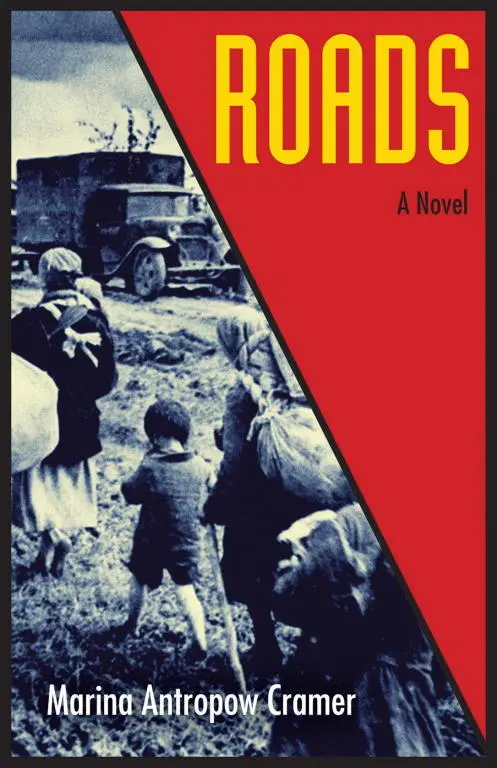
- Название:Roads
- Автор:
- Издательство:Academy Chicago Publishers
- Жанр:
- Год:2017
- Город:Chicago
- ISBN:978-1-61373-558-9
- Рейтинг книги:5 / 5. Голосов: 1
-
Избранное:Добавить в избранное
- Отзывы:
-
Ваша оценка:
Roads: краткое содержание, описание и аннотация
Предлагаем к чтению аннотацию, описание, краткое содержание или предисловие (зависит от того, что написал сам автор книги «Roads»). Если вы не нашли необходимую информацию о книге — напишите в комментариях, мы постараемся отыскать её.
By winter 1945, Allied air raids destroy strategic sites; Dresden, a city of no military consequence, seems safe. The world knows Dresden’s fate.
Roads
Roads — читать онлайн бесплатно полную книгу (весь текст) целиком
Ниже представлен текст книги, разбитый по страницам. Система сохранения места последней прочитанной страницы, позволяет с удобством читать онлайн бесплатно книгу «Roads», без необходимости каждый раз заново искать на чём Вы остановились. Поставьте закладку, и сможете в любой момент перейти на страницу, на которой закончили чтение.
Интервал:
Закладка:
In the compound everyone moved at once. The cook dropped the sack of bread he had been distributing. Evans reached for his pistol. Several soldiers rushed forward, but Filip got there first, took the pistol out of the sergeant’s weakened grasp and held it up to Becker’s forehead, while two of the Germans tried to loosen the lieutenant’s grip and pull him away from the fence.
The cord around the sergeant’s neck snapped just as Filip pulled the trigger. Evans slumped forward into the arms of several of his men. Becker staggered against the crush of prisoners at his back. Filip stood, dumbfounded, and let the gun slip through his fingers to the ground. In the melee, someone had jostled his arm; the bullet had missed its mark, grazing the top of Becker’s head, where a thread of blood now trickled down his temple.
Filip watched, spellbound, as it ran down the side of the German’s neck and oozed into the collar of his shirt. In the dust at his feet, he saw a piece of the would-be strangler’s cord. He picked it up. It was made of threads pulled from woven cloth—shirts, fraying coat sleeves, and the like, he guessed—braided together in many strands and twisted into a thicker length. Strong enough to strangle a man , Filip thought, not without admiration for the painstaking work, the patience, the ingenuity. Almost. Like Ilya and his bits of wire, making something out of nothing, fighting with all his wits for a shred of human dignity.
In the evening, the Russians gathered around the stove in the common room, not for the heat but for the “coffee” brewed from toasted acorns the cook had ground for them in his spare time. It was bitter and earthy, but no one complained.
“I still don’t understand why they won’t let the Germans use the empty barracks.” Ilya’s hands were busy, as always, with his pliers and wire. From time to time, he glanced at the scrap of paper where his new customers had written out their orders: Duluth. Chicago. Syracuse. Philadelphia. Nashville. Also Peace, and Love. “It’s cruel to keep them caged like that. One could easily go mad.”
“And it’s in violation of the international rules for treatment of prisoners,” Grisha agreed. “Becker’s right about that. He’s an officer; he shouldn’t even be in there, with the enlisted men. But the Americans don’t have enough guards to watch them. This is only meant to be a transit stop on the way to larger facilities.”
“How do you know?” Filip squinted at the older man through a haze of cigarette smoke.
“I had some English at university.” Grisha packed his pipe and lit it with a burning brand from the stove. “I paid attention.”
The next morning, Becker was gone. Not even Grisha could learn what had happened to him. “Maybe he’s been transferred to another camp, with facilities for officers.” Filip stirred his oatmeal.
“Or maybe he had an accident along the way,” Grisha growled. “Move along. You’re holding up the line.”
After their own breakfast, the German prisoners were taken in groups of three or four to wash under the camp’s cold-water shower, and issued clean underwear from the Americans’ own supplies. Anneliese offered to launder for them without pay. “Every person should have clean clothes, ja ?” she cajoled a reluctant Sergeant Evans with her disarming smile. “Your men can check their Unterhosen for secret messages, if you want.”
In supply, they also found two large canvas tarpaulins. Half a dozen refugees were put to work climbing the barbed wire to stretch them across the top of the enclosure. Filip was spared this task, leaving it to others to cut their hands and arms to shelter the very men who had so recently been their own captors. War is strange , he thought. It could have been the other way around. We could be the ones inside the cage.
He found Evans in the far corner of the compound, as far from the prisoners as it was possible to be. “Filip.” The sergeant shook a cigarette from his pack. Filip took it, tucked it into his shirt pocket to savor later. “You saved my neck, buddy. I owe you one. That SOB would have strung me up for sure.”
Filip strained to understand the unfamiliar words. He could read the American’s easy, friendly delivery and pleasant expression, but the language, the words, remained shrouded in mystery.
“I’m assigning you and Ilya to the road repair project. You’ll be able to come and go at will, pretty much. What else can I do for you?”
That, for the most part, Filip understood. “Teach me English,” he said.
6
FILIP WAS AN EAGER STUDENT, even if Evans, preoccupied with his administrative duties, was a haphazard teacher. Evans gave him old copies of Stars and Stripes for practice. “Just underline the words you don’t know. You can ask me or one of the boys what they mean.” He reached into a desk drawer. “Better yet, use this dictionary. It’s English to German. That should help you out.”
The new project occupied all of Filip’s spare time. He found Stars and Stripes , with its personal accounts of the American experience of the war, entirely accessible; he especially enjoyed the poems, humorous anecdotes, and cartoons. Soon he was reading independently, calling on the sergeant only to clarify some colloquial expressions not found in his dictionary.
Before long, he had exhausted the camp’s stock of back issues. “Are there any books? Anything, just so long as it’s in English.”
Evans raised an eyebrow at the young Russian’s temerity. And surely he was Russian; that Yugoslav designation was an obvious self-preserving lie. “You think this is a library?” He wavered between respect for Filip’s thirst for knowledge and annoyance at his presumption. Did this bold fellow think he could have anything he wanted?
And yet. Here was a man facing the future with nothing to depend on but his wits. The years when he should have been meeting girls, studying at university, learning a trade, going out with friends, had been stolen from him without even the compensation of fighting for his country. Who knew what scars he carried under that arrogant facade, after being kicked around from camp to camp like a goddam football? Who knew what he had seen?
Evans sighed. “I’ll ask the boys, see if they can lend you something. But you can start with this.” He handed Filip a pocket-sized army-issue Bible. “It’s been through a lot with me. I want it back. By the way, if you want to find your family, start with your churches. It’s where a lot of people go when they’re in trouble.”
Filip wasn’t sure he could use that advice, even if it made a certain kind of sense. He wasn’t in the habit of visiting churches, had no idea how to start looking for one. He was glad to lay the Bible aside and return it almost unread when one of the men came up with a battered copy of David Copperfield . He had read a great deal of Dickens at home, in translation; the Soviets approved of the social criticism in his works and honored the author’s self-made status. Here was a chance to read a real book, in its original language. It helped that he already knew the story and could focus on learning scores of new words.
“Be careful with it, man,” the soldier had said. “I picked it up in London, for my kids back home.” Filip nodded and smiled, already immersed in the first paragraph. Whether I shall turn out to be the hero of my own life…
He carried the book everywhere, stopping to read whenever he had the time. It was slow going, its pages full of words he did not yet know, but he resisted using his dictionary so as not to interrupt the flow of the lively tale, picking up meaning from the context of each scene. How can people live without books? he thought. What kind of life is that?
Читать дальшеИнтервал:
Закладка:
Похожие книги на «Roads»
Представляем Вашему вниманию похожие книги на «Roads» списком для выбора. Мы отобрали схожую по названию и смыслу литературу в надежде предоставить читателям больше вариантов отыскать новые, интересные, ещё непрочитанные произведения.









Обсуждение, отзывы о книге «Roads» и просто собственные мнения читателей. Оставьте ваши комментарии, напишите, что Вы думаете о произведении, его смысле или главных героях. Укажите что конкретно понравилось, а что нет, и почему Вы так считаете.