Marina Cramer - Roads
Здесь есть возможность читать онлайн «Marina Cramer - Roads» весь текст электронной книги совершенно бесплатно (целиком полную версию без сокращений). В некоторых случаях можно слушать аудио, скачать через торрент в формате fb2 и присутствует краткое содержание. Город: Chicago, Год выпуска: 2017, ISBN: 2017, Издательство: Academy Chicago Publishers, Жанр: Историческая проза, на английском языке. Описание произведения, (предисловие) а так же отзывы посетителей доступны на портале библиотеки ЛибКат.
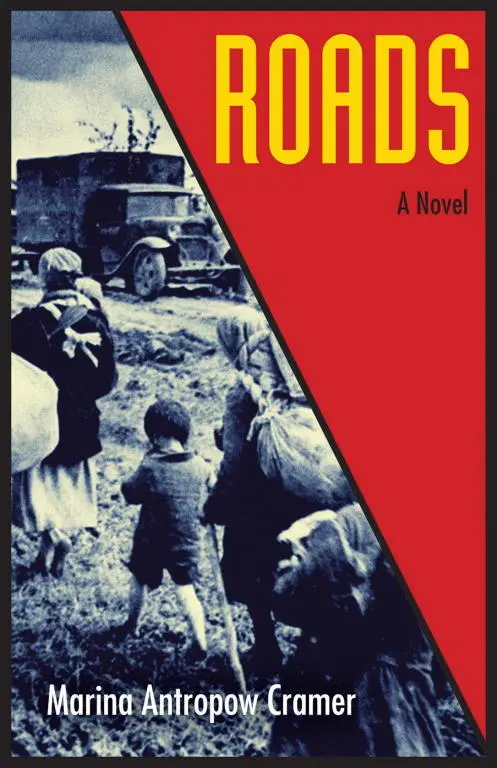
- Название:Roads
- Автор:
- Издательство:Academy Chicago Publishers
- Жанр:
- Год:2017
- Город:Chicago
- ISBN:978-1-61373-558-9
- Рейтинг книги:5 / 5. Голосов: 1
-
Избранное:Добавить в избранное
- Отзывы:
-
Ваша оценка:
Roads: краткое содержание, описание и аннотация
Предлагаем к чтению аннотацию, описание, краткое содержание или предисловие (зависит от того, что написал сам автор книги «Roads»). Если вы не нашли необходимую информацию о книге — напишите в комментариях, мы постараемся отыскать её.
By winter 1945, Allied air raids destroy strategic sites; Dresden, a city of no military consequence, seems safe. The world knows Dresden’s fate.
Roads
Roads — читать онлайн бесплатно полную книгу (весь текст) целиком
Ниже представлен текст книги, разбитый по страницам. Система сохранения места последней прочитанной страницы, позволяет с удобством читать онлайн бесплатно книгу «Roads», без необходимости каждый раз заново искать на чём Вы остановились. Поставьте закладку, и сможете в любой момент перейти на страницу, на которой закончили чтение.
Интервал:
Закладка:
But this was no reverie. There really was a trumpet. He had followed the direction of its blare, pulled along the dusk-darkened streets by its resounding timbre. Approaching the tavern, he had heard other instruments, too—an accordion and then, closer still, a guitar. He had ducked in through the open doorway and listened, watching the trio at the far end of the room, the boy trumpeter full of joyous energy, accompanied by a sprightly white-haired accordion player. The guitarist, perched on a tall stool, beat out the tempo with his wooden leg.
They had made a fine noise, those three, the sounds from their unlikely ensemble clean and bright and lively. The old accordionist seemed to lead, his yellowed fingers bent to the chipped keys with easy familiarity, followed by the guitar player, who picked and strummed a scarred instrument crisscrossed with scratches. The trumpet, too, had seen better days, the horn surface pocked and dinged, the finish dulled, but the sound, when the young musician closed his eyes and blew, was thrilling, reverberating in the hot crowded room like a call to freedom.
Filip had threaded his way between the dancing couples. He’d scanned the room for Red Army uniforms and found none. He signaled a serving girl for a glass of beer and slipped his wedding ring into his coin purse. Just a glass or two. What’s the harm? He would find honey or medicine in the morning. It felt good to be young and free, with money in his pocket, even if the money was, strictly speaking, not his own, and the freedom illusory.
After the second glass, he was dancing with a succession of nameless smiling girls. And weren’t they all pretty in their short-sleeved cotton dresses, moving easily into his arms and out again, their low-heeled shoes skimming the creaking floorboards, bare legs flashing in the dim light? He had not danced in such a long time; he gave himself up to it with no thought at all, letting go of obligations, promises, memories, and caution.
When the band stopped playing, he noticed the girl he’d been dancing with, and realized he had partnered her several times in the last hour. She looked up at him, her round, open face blooming with freshness and glowing with sweat. “ Ein Bier ?” he said, pointing the way to a vacant table near the back door.
“ Nein ,” she smiled. “ Wein , bitte .” He paid for the unlabeled bottle, pushing his ring out of sight with his little finger while he counted out nearly all his remaining coins. The wine was sharp, young, and bitter, but they drank it willingly, thirsty for a good time. They had talked, their heads nearly touching, Filip intoxicated with her fine russet curls, her vulnerable, perfectly formed ears. He poured the last of the wine into his glass—she had only drunk a little—and asked her name.
“Krista,” she said. She had pulled him to his feet, taking him out of the crowded room, into the yard, where they danced under a sky filled with threads of dark clouds before retreating into the shadows, away from other couples. “Krista,” he repeated, pressing her back against a tree. “Krista.”
And the honey? He had remembered Ilya’s cough, remembered asking her where he could get some honey when all the shops were closed.
“Come with me,” she said. “We have honey at home, not far from here.”
The walk to her house was a vague memory. Had they turned this corner, passed this pond? It was a farmhouse, of that he was sure, but which one? Stumbling in the dark, one arm draped around Krista’s neck, his head buzzing, he had paid little attention to his surroundings. And what had happened to the honey? He could clearly see Krista lifting the crock out of the cupboard, doling several large spoonfuls into a jar, giving him her fingers to lick, one by one. And then all was muddled, the girl pushing him out the door, answering a voice from upstairs, an unseen presence descending slowly, with heavy tread, down the steps.
Filip remembered walking along the road—this road? The early morning sun had found him sitting under a tree, with a sore head and stiff legs, a foul taste on his desiccated tongue, his head hammering a dull relentless rhythm. He had found his way back to the shed without much difficulty; it stood some distance from the road, in a yard fringed with apple trees, behind an abandoned cottage with a ragged hole in the roof.
Now he needed to find Krista’s house, his wallet, and his ring.
It was hopeless. The half dozen small farms he passed all looked very much the same: the same green tile roof, same painted gate, same flower trellis outside the same sturdy door. Even the lace curtains that billowed out the open windows looked identical. There were differences, individual details that marked each house distinctly from its neighbors, but nothing he would have noticed in the dark, his head thick with drink, all his senses trained on an amorous conquest he still did not know if he had achieved. He leaned against a boulder at the side of the road and lit the stub of his cigarette. What to do?
He watched a lone figure come into view in the distance, a woman on a bicycle just rounding the curve in the road. Guess I’ll have to ask , he told himself. Can’t sit here all day.
He had already stepped into the road, raising his arm to get the woman’s attention, when he heard the sound of an automobile engine and retreated, instinctively, into the shelter of the trees.
The country was overrun with military personnel: British, American, Soviet—all waiting for instructions on how the newly brokered peace was to be administered. Most private cars had been commandeered by one unit or another. But who could be trusted? Not these men. Judging by the Russian catcalls, they were Red Army, and that could only mean trouble for him.
Filip heard the car slow down just short of his hiding place. He heard a door slam and the woman’s bicycle fall to the ground.
“Sashka, we have no time! The colonel wants his brandy,” one of the men called out.
“You just had one, anyway.” Another voice, deeper, older. “Let this one go.”
“That was two hours ago, and she was ugly. This one’s not bad. Horosha . Look how smooth and ripe she is. Who can resist? The colonel can wait five minutes.” This voice was young, brash, and confident.
Careful not to disturb the foliage concealing him, Filip peered out. A young soldier had the woman by both arms, pinned against the car. She turned her head from side to side, struggling, kicking at him with short, desperate thrusts of her small feet.
Sashka moved her arms behind her back, easily grasping both wrists in one hand while he yanked at the neck of her dress with the other. He laughed. “What? You don’t like it here in the road? Excuse me, comrades, we need a little privacy.” He spun the girl around and pushed her, still holding her wrists, toward the woods.
Filip froze. Krista. He almost said the name out loud, catching himself just in time. He moved silently deeper among the trees, ducking behind a wide oak for cover. He should do something, but what?
He had no papers. He could impersonate a German, but that would get him, at the very least, a severe beating. If they found out he was Russian, it would most certainly be worse. Out of uniform, without papers, he could expect arrest, deportation, exile, even death. Krista was a nice girl, but he did not know how far things had gone between them after the dance, or how many such encounters she may already have survived. The young stud was sure to take exception to having his fun interrupted. If I had a gun , Filip thought, maybe I could be brave. But what good were his bare hands against three armed men? It was unthinkable. Maybe something would happen. Maybe she would get away.
Читать дальшеИнтервал:
Закладка:
Похожие книги на «Roads»
Представляем Вашему вниманию похожие книги на «Roads» списком для выбора. Мы отобрали схожую по названию и смыслу литературу в надежде предоставить читателям больше вариантов отыскать новые, интересные, ещё непрочитанные произведения.





Обсуждение, отзывы о книге «Roads» и просто собственные мнения читателей. Оставьте ваши комментарии, напишите, что Вы думаете о произведении, его смысле или главных героях. Укажите что конкретно понравилось, а что нет, и почему Вы так считаете.