Marina Cramer - Roads
Здесь есть возможность читать онлайн «Marina Cramer - Roads» весь текст электронной книги совершенно бесплатно (целиком полную версию без сокращений). В некоторых случаях можно слушать аудио, скачать через торрент в формате fb2 и присутствует краткое содержание. Город: Chicago, Год выпуска: 2017, ISBN: 2017, Издательство: Academy Chicago Publishers, Жанр: Историческая проза, на английском языке. Описание произведения, (предисловие) а так же отзывы посетителей доступны на портале библиотеки ЛибКат.
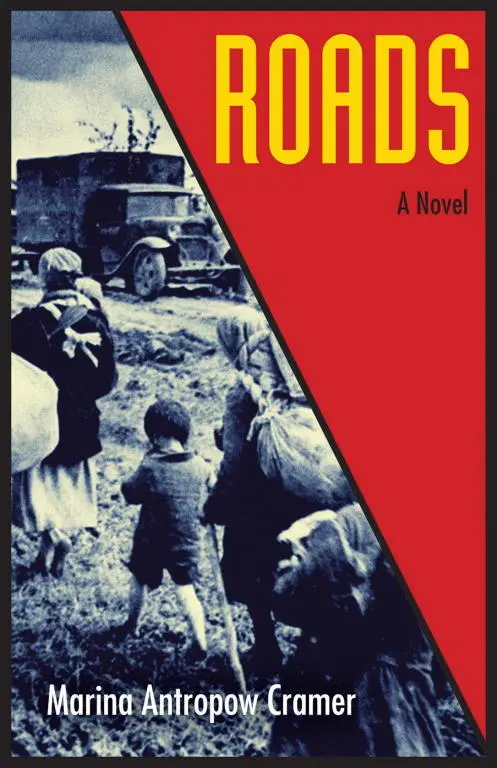
- Название:Roads
- Автор:
- Издательство:Academy Chicago Publishers
- Жанр:
- Год:2017
- Город:Chicago
- ISBN:978-1-61373-558-9
- Рейтинг книги:5 / 5. Голосов: 1
-
Избранное:Добавить в избранное
- Отзывы:
-
Ваша оценка:
Roads: краткое содержание, описание и аннотация
Предлагаем к чтению аннотацию, описание, краткое содержание или предисловие (зависит от того, что написал сам автор книги «Roads»). Если вы не нашли необходимую информацию о книге — напишите в комментариях, мы постараемся отыскать её.
By winter 1945, Allied air raids destroy strategic sites; Dresden, a city of no military consequence, seems safe. The world knows Dresden’s fate.
Roads
Roads — читать онлайн бесплатно полную книгу (весь текст) целиком
Ниже представлен текст книги, разбитый по страницам. Система сохранения места последней прочитанной страницы, позволяет с удобством читать онлайн бесплатно книгу «Roads», без необходимости каждый раз заново искать на чём Вы остановились. Поставьте закладку, и сможете в любой момент перейти на страницу, на которой закончили чтение.
Интервал:
Закладка:
He stood awkwardly in the room. The woman and the teenaged girl, kerchiefs tied over their hair, swept the rough, age-stained floor, wiped down the painted icons, collected the burnt-out candle stubs and wax drippings into a large pickle jar, talking quietly among themselves. How often had his mother taken him to church? Had she, too, performed these homely tasks? In that time long ago, the time before conscious memory, had he formed impressions, stored in some recess of his mind; impressions that now, nudged by the sight of candle flames undulating before doleful Byzantine faces and, even more, by the scent that reached directly back into an intimate place completely unknown to him?
Filip shook his head to clear away the bewildering thoughts. “Just hungry,” he muttered, then louder, “Thank you, Father…”
“Stefan,” the man answered. “I am only a deacon. I can lead prayers and Bible reading but am not authorized to perform the Mass. Once a month, we have a priest come from the city to conduct a proper service, along with baptisms and weddings. Burial services I can do, of necessity; they cannot wait. I also bake the church bread for Communion.” With a hand on Filip’s elbow, he led him toward the counter near the door. “Write the names, first names only, of your loved ones, living and dead, in separate columns. We will add them to our prayers. Leave a coin, if you can, to help us buy flour and oil. If not, God bless.”
Well, what can it hurt? Maybe someone would recognize the names, grouped together like that. The paper was rough, with an ochre discoloration around the edges, an Orthodox cross hand-drawn at the top. In the column headed zdravie (long life), he entered “Zoya, Vadim, Ksenia, Ilya, Galina, and child,” realizing he did not know his child’s name. Under za upokoi (in memory), he wrote “Maksim,” and, after a moment’s pause, “Boris.”
Father Stefan stood by his side, combing the fingers of his left hand through his grizzled beard. With his right, he reached across the counter and extracted a diminutive loaf, no bigger than a small apple, composed of a flattened circle topped with a smaller disk of dough, stamped with a cross, the whole thing pasty white and hard to the touch. “It is only flour, water, and salt, unleavened as indicated in the Bible,” the deacon said, placing the bread in Filip’s hand. “And it is not consecrated, since that can only be done during Mass. But it will feed you, body and soul, if you will let it.” He turned and walked toward the iconostasis, crossed himself broadly, touched his lips to Christ’s image, and disappeared into the altar area, closing the door soundlessly behind him.
Filip knew he should save the bread for Ilya, but hunger got the better of him. He broke off a piece and ate it, almost without chewing, to quiet the relentless ache in his gut. The bread came apart in his hands, the two layers separating with only the slightest pressure from his fingers. He ate the bottom piece, saving the smaller disk, the one with the Orthodox cross etched into its surface, for Ilya. The old man would care about something like that , he told himself, neglecting to acknowledge that he had eaten the larger of the two pieces.
Back on the road, he walked rapidly, the late summer dusk gathering around him, gradually obscuring the landscape, painting the sky in shades of indigo and mauve. He had gone only a short distance when he glimpsed an object lying partially concealed in roadside weeds. His wallet.
He picked it up, turned it, felt the familiar horseshoe shape in his hands. When he opened it, after a minute’s hesitation, he was not surprised to find it empty. No money. No ring.
He felt nothing. No loss, no anger, not even disappointment. Nothing.
Filip quickened his pace, anxious to reach the shed and confront Ilya with the words that were forming in his mind. We can’t continue this way. If you can walk, let’s go. If you’re too sick, we must find help. I found the church. We can go there and talk to people, figure out what to do. He rehearsed his speech, his stride becoming purposeful, his will strong and clear. It’s time to stop hiding like rabbits, scurrying from hole to hole. Time to do something, find a way to live. If not here, then somewhere else. “And we need papers,” he said aloud, pulling hard on the door of the shed, dislodging one of its shaky planks. He kicked it aside and peered into the dim interior.
3
THE SHED WAS EMPTY. The smell of stale sweat and urine, unwashed bodies and soiled clothing, mixed in his nostrils with half-rotted hay, hard-packed dirt, a whiff of animal musk. How had they endured it, thinking themselves fortunate to find such a good resting place? And where was the old man?
Filip stared at the spot where he had last seen his father-in-law, as if willing him to materialize on the tamped-down hay that still held the contours of his body. Nothing there, only the faint, surreptitious rustling of mice in dark corners.
Nothing but the rucksack. It had been moved, dragged, judging by the track in the dirt, toward the door, but it was still there. So Ilya must be nearby. Maybe he felt better and decided to try to find some food or went out looking for water.
Filip picked up the rucksack and immediately noticed how light it felt. Thieves? But why not take the whole thing? He took a quick inventory: hatchet, boots, an extra shirt, socks, matches, his sketchbook and stamp albums, the shovel they had taken from the American camp. It was all there. The only thing missing was Ilya’s workbox, with its cutting patterns, sketches, half-finished pieces, scavenged wire, and materials.
Had the old man gone completely out of his mind? He was in no condition to work; his hands could not be steady enough, after days of fever, to cut, carve, or shape anything successfully. Something was wrong here, something that filled Filip with dread, a premonition compounded with the strong possibility that whatever had happened, it was once again his fault.
He slung the rucksack onto his shoulder, grateful, in spite of his alarm, for its lighter weight. He stepped out of the shed and stood looking around, immobilized by indecision. Which way would Ilya have gone? Did it make sense to look for him now, or should he wait until morning?
No, he needed to go now, before whatever trail there was grew cold. He adjusted the strap on his burden, felt it slip into the groove it had worn in his shoulder during these weeks of tramping, and set off toward the nearest farmhouse. He approached it from the front, but seeing light at the back of the house, he went around and knocked on the kitchen door.
The woman who answered eyed him with suspicion, holding the door open just enough to see him. It was enough for him to see, too; he glimpsed a bowl of boiled potatoes steaming on a painted wooden table, inhaled the incomparable aroma of cabbage and bacon cooking on the stove. For a long moment, hunger rendered him mute.
“Well?” the woman said, with no hint of welcome. “What is it? I have no work for you.”
Filip gathered his wits, forced himself to look away from the food and into her questioning face. She was handsome, he saw, in the sturdy way of some middle-aged women, blue eyes set off by tanned, lightly freckled skin.
“I… no… I’m looking for my… friend. An older man, dark-haired, a little gray. He is sick. I must find him.”
“We saw no one,” the woman replied firmly. “We were in the field.” She waved her hand toward the outside, opening the door a little wider as she did so. Filip could see several children, ranging in age from a gangly teenaged boy to a small girl of five or six with big blue eyes and short yellow hair.
“I saw a man, Mutti , when I came back for water,” she declared loudly. “He was walking like this,” she demonstrated, weaving comically around the room. “He was drunk, ja ?”
Читать дальшеИнтервал:
Закладка:
Похожие книги на «Roads»
Представляем Вашему вниманию похожие книги на «Roads» списком для выбора. Мы отобрали схожую по названию и смыслу литературу в надежде предоставить читателям больше вариантов отыскать новые, интересные, ещё непрочитанные произведения.




Обсуждение, отзывы о книге «Roads» и просто собственные мнения читателей. Оставьте ваши комментарии, напишите, что Вы думаете о произведении, его смысле или главных героях. Укажите что конкретно понравилось, а что нет, и почему Вы так считаете.