Marina Cramer - Roads
Здесь есть возможность читать онлайн «Marina Cramer - Roads» весь текст электронной книги совершенно бесплатно (целиком полную версию без сокращений). В некоторых случаях можно слушать аудио, скачать через торрент в формате fb2 и присутствует краткое содержание. Город: Chicago, Год выпуска: 2017, ISBN: 2017, Издательство: Academy Chicago Publishers, Жанр: Историческая проза, на английском языке. Описание произведения, (предисловие) а так же отзывы посетителей доступны на портале библиотеки ЛибКат.
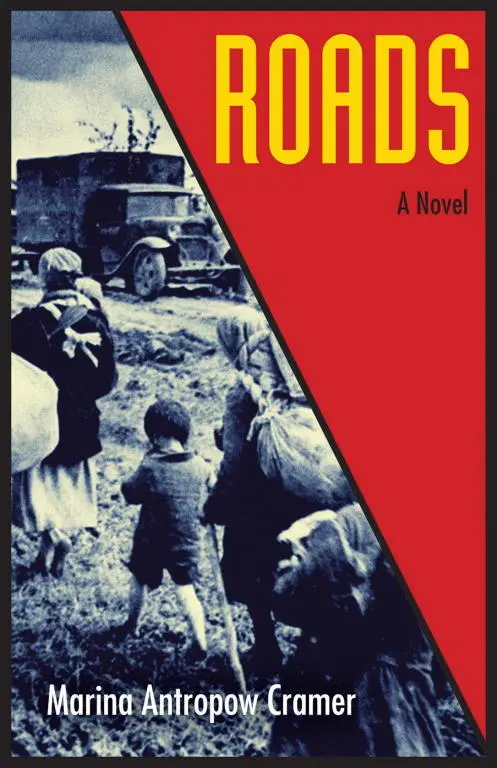
- Название:Roads
- Автор:
- Издательство:Academy Chicago Publishers
- Жанр:
- Год:2017
- Город:Chicago
- ISBN:978-1-61373-558-9
- Рейтинг книги:5 / 5. Голосов: 1
-
Избранное:Добавить в избранное
- Отзывы:
-
Ваша оценка:
Roads: краткое содержание, описание и аннотация
Предлагаем к чтению аннотацию, описание, краткое содержание или предисловие (зависит от того, что написал сам автор книги «Roads»). Если вы не нашли необходимую информацию о книге — напишите в комментариях, мы постараемся отыскать её.
By winter 1945, Allied air raids destroy strategic sites; Dresden, a city of no military consequence, seems safe. The world knows Dresden’s fate.
Roads
Roads — читать онлайн бесплатно полную книгу (весь текст) целиком
Ниже представлен текст книги, разбитый по страницам. Система сохранения места последней прочитанной страницы, позволяет с удобством читать онлайн бесплатно книгу «Roads», без необходимости каждый раз заново искать на чём Вы остановились. Поставьте закладку, и сможете в любой момент перейти на страницу, на которой закончили чтение.
Интервал:
Закладка:
“Hush, child,” the woman said quickly. “You talk nonsense.”
Filip squatted down to the girl’s level and looked at her seriously. “Was the man carrying something? Did you see? Where did he go?”
“I don’t know. He had a box. A big green ugly box.” The girl, suddenly timid from so much attention, ran out of the room.
Filip stood up. He felt the blood drain from the rapid movement, leaving him light-headed; he reached out to grasp the door frame to steady himself until the faintness passed.
“ Ach , you people. Why don’t you go home?” The woman turned away but did not close the door. A moment later, she handed him a small bowl filled with potatoes and cabbage. She stood watching, arms folded across her chest, while he devoured the food. Filip gave her the empty bowl, licking the fork one last time. “ Danke ,” he said, backing away from the house. “Thank you.”
Back on the road, now in near-total moonless darkness, he went on, refreshed by the simple food and energized by fresh information. Cabbage and potatoes. Peasant food. Had anything ever tasted so good? His mouth relived the profound satisfaction of boiled potatoes, the rich surprise of crisped bacon slivers flavoring shredded cooked cabbage. He was not blind to the woman’s act of gratuitous kindness; with all those children to feed, she could have closed the door on him, and no one would have blamed her. She did not. Maybe it was a mother’s instinct or plain human compassion, but she had responded to a stranger’s unspoken need instinctively and without fanfare. Would he have done the same?
“ Ach , ja , the man with the box.” The woman in a house farther down the road nodded. She pulled her sweater close around her body. “ Ja . My Otto found him, near the road. So sick, so much fever!”
“I thought he was dead.” A man, presumably Otto, came to stand next to the woman. They were the same height, equally thin and gray-haired, with deeply creased weathered faces and large, work-rough hands. “But when I tried to take the box from him, to look inside, you know, in case there was a gun…”
“Pah!” the woman exclaimed. “How you talk!”
“Anyway. He came alive quick, holding that box like it had treasure in it.” The man shook his head from side to side.
Filip did not bother to explain about the toolbox. “Where is he? Do you have him here?” He had all but given up, his search taking him from house to house until, due to the lateness of the hour, people stopped opening their doors to his knock.
“Here? No. We took him, and the box, too, in the wagon, to the Sisters of Perpetual Mercy. They have a small infirmary. They helped many people in the war.”
“Is it far?”
“Not far. But it is late now. You will not see the road. Go in the morning. We will tell you the way.” Otto had one hand on the door.
“Wait,” the woman said. She peered up at Filip as if appraising the risk of helping him. “You have eaten?”
“A little,” he admitted, which was true enough.
She disappeared into the house, came back with a piece of cheese and a wedge of coarse bread. “Sleep in the barn,” she said, handing him the food wrapped in a cloth. “We are up with the chickens.”
In the morning, the woman gave him milk and porridge, letting him sit at the kitchen table while she went about her work. He was well aware of the trust she displayed by allowing him, a vagrant, to enter her house. He repaid her by telling a little of his story, of the wife and child—had she seen them?—he was eager to find. She had not, at least from the sketchy description he gave, but she told him of her own wartime experience: a son felled in Berlin, a daughter perished in a fire caused by Allied bombing, their farm raided first by retreating German troops, then by marauding Soviet soldiers on a spree. “But they left me enough chickens to start again, and did not burn the field. Now the Americans are here. They leave us alone. Otto and I, we work hard. We will survive,” she said without emotion, setting a pan of dried beans to soak at the back of the stove.
4
THE INFIRMARY OCCUPIED one wing of the convent’s main building; the rest of the one-story structure held a chapel, laundry, administrative office, kitchen, and dining hall. A separate house, surrounded by vegetable and flower gardens studded with beehives, was set back against a screen of poplars and birches. Filip assumed this served as the sisters’ residence. There were signs of recent damage here, too, but, just as in the village, things were clearly in the process of being repaired. Nearly everything, from spotless louvered windows to freshly whitewashed walls, seemed to sparkle in the morning sun.
A tall nun greeted him at the door. Her face, smooth as a baby’s, hinted at maturity with a fine web of wrinkles around the eyes and mouth. A stiff wimple concealed her hair.
“Yes, he is here, your friend. Ilya is his name, yes?” She led him past a long room with white iron beds arranged dormitory style, a few of them occupied by reclining or seated patients. Across the hall, he saw a similar room; this one had several cribs along one wall and bassinets next to some of the beds. The wail of an infant and a muffled cough punctured the otherwise total silence.
The air here was clean. A fresh breeze from several open windows mingled with the scent of starched linen, taking him home again, his mother ironing sheets, making up his cot, plumping his pillow for him, her hands smelling of rosewater. What was her life like? Would he see her again?
The nun stopped outside a closed door, her hand on the handle. “Your friend is very sick,” she said, looking at him gravely. “The doctor only comes on Friday, but in the meantime we put Ilya in this room, alone. We think it might be tuberculosis. When he coughs, there is blood.”
“Wait.” Filip leaned against the wall, his stomach gripped by cold fear, his head aflame. Who had decided he could manage this responsibility? He wanted to turn and run, to be anywhere but here, far from this developing melodrama. He wanted to lose himself in a crowd, to walk a city street, to think about nothing but which café was likely to have a chess game going, what film was playing at the movie theater. It was all too much, the specter of this illness, the search for his wife and child, the past a montage of memories, the future a blank. He could not do this. He wanted his life back.
And yet. This man had, in so many wise decisions, so many seemingly small ways, saved his life. He was the father of Galya, his Galya, who loved her father beyond imagining. Ilya could be unyielding in his insistent judgments; his goodness was unquestionably annoying, his stolid habits boring in the extreme. Even his craftsman’s work, fine as it was, was predictably routine. But if this moment was not the very definition of duty, then what was? Duty was not some high-flown patriotic principle, as he had been taught in school. It was this—a hand extended to one in need, an honorable carrying through of human obligation.
He was not at all sure he could do it. “He is not my friend. He is my father-in-law. We have been traveling together for many weeks, looking for the rest of the family. His wife and his daughter, my wife. And our child.”
The nun looked at him expectantly. He hesitated, covered his eyes with his hand. “I think I know where I might find them.” He turned and walked rapidly back down the hall, past the men’s and women’s wards, ignoring the sounds of food preparation drifting out the open kitchen door, scarcely aware of the sisters going about their tasks. He only heard the echo of Father Stefan’s words: Come tomorrow. There will be more people. He didn’t dare hope, but he had to see.
Читать дальшеИнтервал:
Закладка:
Похожие книги на «Roads»
Представляем Вашему вниманию похожие книги на «Roads» списком для выбора. Мы отобрали схожую по названию и смыслу литературу в надежде предоставить читателям больше вариантов отыскать новые, интересные, ещё непрочитанные произведения.








Обсуждение, отзывы о книге «Roads» и просто собственные мнения читателей. Оставьте ваши комментарии, напишите, что Вы думаете о произведении, его смысле или главных героях. Укажите что конкретно понравилось, а что нет, и почему Вы так считаете.