Marina Cramer - Roads
Здесь есть возможность читать онлайн «Marina Cramer - Roads» весь текст электронной книги совершенно бесплатно (целиком полную версию без сокращений). В некоторых случаях можно слушать аудио, скачать через торрент в формате fb2 и присутствует краткое содержание. Город: Chicago, Год выпуска: 2017, ISBN: 2017, Издательство: Academy Chicago Publishers, Жанр: Историческая проза, на английском языке. Описание произведения, (предисловие) а так же отзывы посетителей доступны на портале библиотеки ЛибКат.
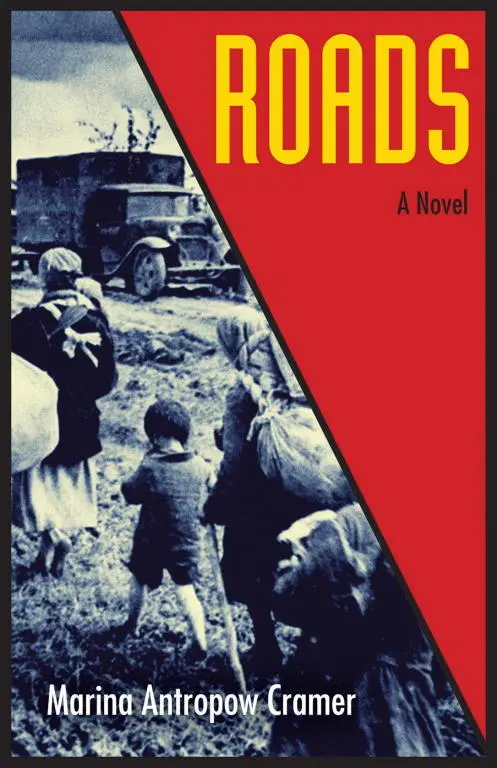
- Название:Roads
- Автор:
- Издательство:Academy Chicago Publishers
- Жанр:
- Год:2017
- Город:Chicago
- ISBN:978-1-61373-558-9
- Рейтинг книги:5 / 5. Голосов: 1
-
Избранное:Добавить в избранное
- Отзывы:
-
Ваша оценка:
Roads: краткое содержание, описание и аннотация
Предлагаем к чтению аннотацию, описание, краткое содержание или предисловие (зависит от того, что написал сам автор книги «Roads»). Если вы не нашли необходимую информацию о книге — напишите в комментариях, мы постараемся отыскать её.
By winter 1945, Allied air raids destroy strategic sites; Dresden, a city of no military consequence, seems safe. The world knows Dresden’s fate.
Roads
Roads — читать онлайн бесплатно полную книгу (весь текст) целиком
Ниже представлен текст книги, разбитый по страницам. Система сохранения места последней прочитанной страницы, позволяет с удобством читать онлайн бесплатно книгу «Roads», без необходимости каждый раз заново искать на чём Вы остановились. Поставьте закладку, и сможете в любой момент перейти на страницу, на которой закончили чтение.
Интервал:
Закладка:
“Katya.” He tried out the name, aware, all at once, of the life in his hands, the concrete thread connecting him now to Galina in a whole new way. And to her family, to Ksenia, the new grandmother, and to Maksim and Ilya, who would never know this child, but whose legacy she embodied simply by being born.
She was not an idea. She was a person. A person who would soon outgrow the little hand-knit sweater that even now looked short on her thin arms. She would need food and a safe place to sleep and protection from all the dangers of the universe. Books , he thought. Where will I get books to teach her about the wonders of the world when I don’t even have a place to live?
He thought again about the previous evening, Ksenia having gone to get Katya from Galina’s friend Marfa, leaving Galina to ask—no, to beg—her landlady for permission to let him stay the night in their already cramped basement room.
“He is my husband, my baby’s father,” she had insisted, her eyes filled with frustrated tears.
“Today this one is the father. Tomorrow it will be another one. You girls have no pride. Bad enough we put up with the crying and your constant coming and going until late at night.” Before either of them could protest, they were facing a firmly closed door.
“She cries very little, our Katya,” Galina had said, shaking her head and stepping with him into the street. She told him that she cleaned guest rooms in the mornings; Ksenia worked afternoons and well into the evening hours in the tavern kitchen. “We arranged it so that one of us is always here. But sometimes Marfa, who is Katya’s godmother, helps us out, too.”
The burial took place on the third day. Ilya, washed and dressed in his freshly laundered clothes, lay in a plain coffin of new pine. The box, still redolent of aromatic resin, balanced on two chairs in the center of the church. People approached the casket to pay their respects to this man, a stranger yet one of them, a fellow traveler, a brother they had never known. They studied his pale face, the waxy skin now nearly colorless, as if at any moment it could melt away and reveal the bones underneath.
When the family came in, the small crowd parted to let them pass. They were dressed like everyone else, in the same travel-worn clothing as the day before, but were somehow different, marked by a dignity born of grief.
Filip recalled how that dignity had cracked two days ago, outside the infirmary. The women had made arrangements for the removal of the body, having first secured permission to wash and dress Ilya before moving him to the church. Payment, such as it was, had been settled. Through it all, they had maintained a detached reserve; he had been relieved at their businesslike demeanor, but suspected the emotional storm was yet to come.
And come it did. Once outside the convent gates, mother and daughter had collapsed into each other’s arms. Wailing and keening, they had stumbled along the road like a pair of drunks, giving in to a sorrow beyond words. The sounds they had made were unearthly, like the howling of wolves or the cries of shrouded night birds, morbid, timeless, and raw. Filip had stood apart, still holding his now sleeping child, speechless at the wrenching evidence of their dark suffering. He had felt like an intruder, a reluctant witness to something so private that it had left him shaken, his own mind filled with something like shame.
Now Ksenia appeared composed. She looked stately in her long black coat, her hair concealed under a dark-blue kerchief. Galina came in dry-eyed, but succumbed to silent weeping at the sight of her father. She handed little Katya to the ever-present Marfa and leaned heavily on Filip’s arm.
The service passed over him in a blur of monotonous prayers and repetitive incantations, the little church closing in on him in a haze of candle glow and incense. Filip’s mind wandered to contemplation. Why have funeral rites? Was it really imperative to gather like this, even among strangers, to speed the soul along to its mysterious destination? He saw again the dead piled near the railroad tracks, nameless and unmourned. Savko on the cement factory floor, his mouth filled with stone dust, his body consigned to cold-blooded incineration in the factory furnace. Borya, his remains tossed, no doubt, into a mass unmarked grave.
What was a soul? Was it more than the life force, that light in the eyes extinguished at the moment of death? Did a bear, a shrew, an ant have a soul, or was it coupled with a higher awareness, an ability to show mercy and compassion? He had sampled the works of philosophers, but wasn’t schooled enough to puzzle out these ponderous questions. He shifted his weight from one foot to the other and, to his own embarrassment, yawned.
Father Stefan’s sonorous basso cut through Filip’s fruitless ruminations. In a voice both louder and brighter than before, the deacon intoned the words vechnyi pokoi , eternal peace, for the departed. Filip closed his eyes and heard the congregation join in the singing of the final words, in a rising minor motif of such mournful beauty that even he felt the pricking of tears behind his eyelids. Beside him, Galina’s clear voice rose above the others, then broke down, the last “ Vechnaya Pamyat’” no more than a hoarse whisper between her barely stifled sobs. Eternal Memory.
Two men approached to secure the coffin lid. Ksenia held them back; with a swift, smooth gesture, she removed her wedding ring and slipped it onto her husband’s finger, the two slim bands resting against each other on his shapely hand. Someone gasped. “Mama…,” Galina whispered, but Ksenia silenced her, her steely face unreadable. Ksenia ignored all questioning glances and nodded to the men, who hammered nails into the soft wood with merciless finality.
Ilya was buried in the small but growing graveyard behind the church. Each person accepted a spoonful of Ksenia’s kutya , recognizing the traditional funeral dish of bulgur wheat sweetened with raisins and honey, and went on his or her way, leaving the family group huddled at the grave, while the sound of clodded earth hitting the casket echoed coldly in the late summer air.
7
IT WAS MARFA who resolved their housing dilemma.
“Why not take my room, Filip Vadimovich?” she suggested politely. “I think the owners would not mind. And I could stay with Ksenia Simyonovna, if she will have me.” Her gaze fluttered over the assembled group, like a bee among blossoms, flitting from one to another but lighting on none.
Filip found her strange, her presence ghostly; he did not yet know her story. She looked even more angular and plain next to Galina’s beauty. Her small, dark, close-set eyes seemed to absorb the light rather than reflect it; there was no life in them. But the women were kind to her, and her attachment to Katya seemed genuine, so he said nothing about her constant presence. Soon, when there was time to talk, he might learn the reasons.
The solution pleased everyone, not least the two landladies—one who would be rid of the child’s crying, and the other who could offer the little family an adjoining alcove in addition to their attic room, at double the rent.
“You will need new papers, too, whether you look for work here or decide to move on.” Ksenia stood in the windowless alcove, her head bent sideways to keep from hitting the slanted ceiling. Filip and Galina sat at either end of a small table, sipping tea they had been permitted to brew in the kitchen.
“We are all Yugoslav now,” Galina explained, setting Katya on her lap. “Comrade Stalin wants us back, but the Americans don’t ask for much proof of citizenship. Learn a few words of Serbian, tell them your things were destroyed in Dresden, and you will have your stateless passport. That’s what we did.” She dipped a crust of bread into her cup and fed it to the child.
Читать дальшеИнтервал:
Закладка:
Похожие книги на «Roads»
Представляем Вашему вниманию похожие книги на «Roads» списком для выбора. Мы отобрали схожую по названию и смыслу литературу в надежде предоставить читателям больше вариантов отыскать новые, интересные, ещё непрочитанные произведения.











Обсуждение, отзывы о книге «Roads» и просто собственные мнения читателей. Оставьте ваши комментарии, напишите, что Вы думаете о произведении, его смысле или главных героях. Укажите что конкретно понравилось, а что нет, и почему Вы так считаете.