Marina Cramer - Roads
Здесь есть возможность читать онлайн «Marina Cramer - Roads» весь текст электронной книги совершенно бесплатно (целиком полную версию без сокращений). В некоторых случаях можно слушать аудио, скачать через торрент в формате fb2 и присутствует краткое содержание. Город: Chicago, Год выпуска: 2017, ISBN: 2017, Издательство: Academy Chicago Publishers, Жанр: Историческая проза, на английском языке. Описание произведения, (предисловие) а так же отзывы посетителей доступны на портале библиотеки ЛибКат.
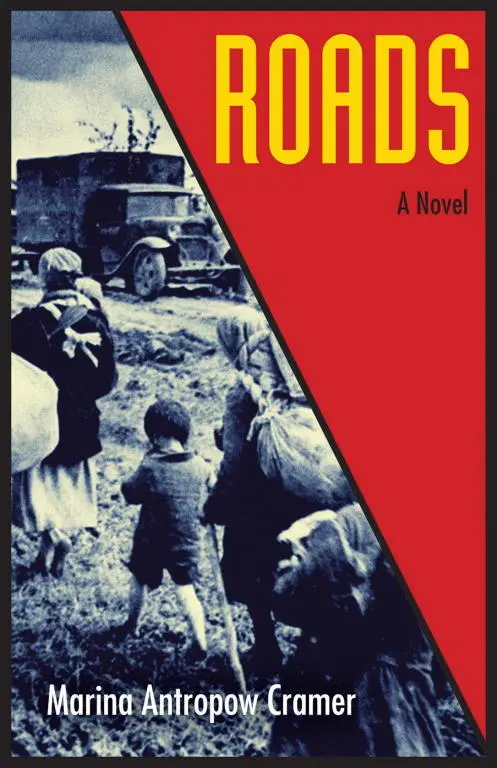
- Название:Roads
- Автор:
- Издательство:Academy Chicago Publishers
- Жанр:
- Год:2017
- Город:Chicago
- ISBN:978-1-61373-558-9
- Рейтинг книги:5 / 5. Голосов: 1
-
Избранное:Добавить в избранное
- Отзывы:
-
Ваша оценка:
Roads: краткое содержание, описание и аннотация
Предлагаем к чтению аннотацию, описание, краткое содержание или предисловие (зависит от того, что написал сам автор книги «Roads»). Если вы не нашли необходимую информацию о книге — напишите в комментариях, мы постараемся отыскать её.
By winter 1945, Allied air raids destroy strategic sites; Dresden, a city of no military consequence, seems safe. The world knows Dresden’s fate.
Roads
Roads — читать онлайн бесплатно полную книгу (весь текст) целиком
Ниже представлен текст книги, разбитый по страницам. Система сохранения места последней прочитанной страницы, позволяет с удобством читать онлайн бесплатно книгу «Roads», без необходимости каждый раз заново искать на чём Вы остановились. Поставьте закладку, и сможете в любой момент перейти на страницу, на которой закончили чтение.
Интервал:
Закладка:
Filip, holding his daughter, was first to speak. “Musa?”
Musa faced them, treating them to the full dazzle of his smile. “Filip. Galina. How good to see you again. I guess we all come here sooner or later.” He gestured around the dining hall. “Our home away from home.”
Filip handed Katya to Galina and clasped Musa’s extended hand, the mixed emotions of their parting forgotten in the pleasure of seeing a familiar face.
“Let’s sit outside,” Musa suggested. “Enjoy the last of this autumn sunshine.”
The men talked while Galina fed the child, helping her dip bread crusts into her soup, spooning carrot slices and bits of meat into her mouth. “What are you doing now,” she heard Filip ask, “with the war over?”
Musa shrugged. “I… procure things.”
“Things?” Filip scraped the last of his buckwheat kasha onto his fork and offered it to Katya, who leaned forward to receive it.
“Whatever’s needed. Papers. Clothing. Rooms. Promises of work. I get by.”
They went on like this, the men engaged in conversation that Galina followed only sporadically. Katya, seated on her lap, was absorbed in following the single-minded progress of an ant across the table’s uneven surface, her finger tracing its stops and starts, her mouth opening to accept bites of cooked apple as if on cue.
Finally, aggravated by the mindless topics, Galina could stand it no longer. “Dresden,” she interrupted. “How did you survive?”
Musa stopped in midsentence. “I soaked a blanket at a burst water pipe, threw it over my head, and ran.”
“Ran? Ran where?”
“Ha! To the zoo. Remember the zoo?”
“Wasn’t that burning, too?”
“Of course. But with more open space and all that concrete, it didn’t go up quite as fast.”
“Musa”—Galina took a deep breath—“what happened to the animals?”
“The animals. Most of them roasted in their cages. The keepers did what they could; they opened some of the cages to give the captive beasts a chance to escape, but I doubt any survived. What’s a giraffe to do, loose in a city savaged by bombs, fire everywhere, pandemonium rampant? There were rumors of a leopard on the prowl in the hills outside the city, but I never saw it, and don’t know anyone who did.”
He stopped talking, laid a hand on the table for Katya to explore. She patted his palm with a squeal of delight, then lost interest and went back to tracking the ant’s industrious wanderings.
“Honestly,” Musa resumed. “No one was thinking about the animals. People were dying everywhere, screaming in agony. Parents, their own clothing on fire, ran with charred, lifeless children in their arms. Others lay crushed under the rubble of collapsing buildings, with no hope of rescue.”
He pulled deeply on his cigarette, blew a plume of smoke over Galina’s head. “I saw one house, the outer wall demolished, the rooms exposed like a child’s dollhouse—beds, dining tables, sofas crashing through the floors to apartments below, the occupants mere darting shadows backlit by burning draperies and exploding glass.”
“How horrible…,” she started to say, but he went on gravely, with none of the carefree arrogance she remembered from their previous encounter.
“Death. Death was everywhere. The air, thick with gritty smoke, filled my mouth and burned my eyes; my lungs felt too big for my chest, hot against my ribs. I ran blindly, tripping over bodies, fearing the open spaces as much as the flaming houses.”
“Why?” Filip asked. “Wouldn’t you be a little safer out in the open, away from the falling buildings?”
“They came back, our allies. After the first wave of bombing, there was another. I learned later they targeted the hospital, intent on killing wounded soldiers and medical personnel, along with incidental sick women and old people. Then, before leaving the area, the planes turned, flying low, and strafed the visible survivors with machine guns—people who had crowded into parks and outlying areas, believing they might have escaped the worst, mowed down like ducks in a carnival shooting gallery. Or so I heard.”
They sat, Filip and Galina unable to speak, or even to look at each other, their own travails receding into irrelevance. “Ababalalalammm,” the child babbled, her expression as serious as the adults around her.
“ Sha ,” Galina whispered. “Katyusha, hush.”
“I thought about you,” Musa said after a while. “I wondered what happened, whether you got away. Whether I could have helped you.”
Katya’s ant had found a bread crumb and disappeared with its treasure into a crack between two boards. The child squirmed and pushed against her mother, her feet planted on the table’s edge. She let out a wail. Galina rose to walk with her, past the dining hall’s open door, to the end of the row of weatherworn tables and their mismatched chairs.
She came back as Musa was saying, “Maybe I can help you now. What do you need?”
Filip thought a moment. “Galina earns a little money. We have new papers, clothes, this cafeteria, and a room…”
“Work.” Galina faced Musa, holding Katya’s head against her shoulder, rocking the child to quiet her crying. “My husband needs work.”
“What can you do, Filip?”
“Nothing.” Filip spread his hands, then dropped them into his lap. What wouldn’t he do to avoid the filthy subterranean entombment of coal mining? He caught Galina’s sharp glance and sighed. “Anything.”
What, really, could he do? Germany’s factories were still in shambles; there might be salvage work, but there were many German hands to do it, and to fill the jobs once the reconstruction was done. As it should be , he thought. It’s their country.
He had no trade, not enough education, none of the credentials needed to gain entry into the professional world for which he felt destined. His book of sketches, his knowledge of literature and languages, his inclination toward art—all these amounted to nothing that could be turned into a way to support himself and his family in a country reeling from defeat and destruction.
So, yes, he would take anything for now, until he found the door leading to the future, where his tools would be a sharp pencil, a T square, India ink, and the imaginative capacity of his own mind.
Musa did not find any better prospects. He advised Filip to sign up for Belgium. “It’s dirty work, but steady,” he said. “And you’ll be safer there than in Germany. Once you and your family settle in, you can see what else turns up.”
Filip’s heart sank. Another derailment, his life’s course again controlled by others with only their own benefit in mind. He felt trapped; he might as well already be underground, struggling to breathe foul, thin air, his skin and clothes grimy with coal dust, with no relief from the ache in his muscles and bones. “What about America?” he asked, desperate for any alternative.
“Be patient, old man,” Musa sighed. “This war was bigger than any catastrophe we’ve ever known. So much chaos, so many impoverished displaced people. It will take time to return to any kind of normal life. I don’t know what you’ve heard, but so far the American relief effort is focused on food and clothing. Cornflakes and powdered milk. Go to Belgium. Take your wife and child—”
“And my mother-in-law,” Filip interrupted.
“Of course. The grandmother. She can be a big help. Don’t look at me like that. Just keep your ear to the ground.” He twisted a corner of his mouth in a rueful grin at Filip’s stricken expression. “Sorry. You know what I mean. You’re a smart boy.”
9
“WILL YOU TAKE THESE?” Galina rested her hand on the stamp albums lying on the table. Everything else—his shirts, pants, shaving brush, and other essentials—was already packed.
Читать дальшеИнтервал:
Закладка:
Похожие книги на «Roads»
Представляем Вашему вниманию похожие книги на «Roads» списком для выбора. Мы отобрали схожую по названию и смыслу литературу в надежде предоставить читателям больше вариантов отыскать новые, интересные, ещё непрочитанные произведения.








Обсуждение, отзывы о книге «Roads» и просто собственные мнения читателей. Оставьте ваши комментарии, напишите, что Вы думаете о произведении, его смысле или главных героях. Укажите что конкретно понравилось, а что нет, и почему Вы так считаете.